Organization Profile: Olive Ridley Project
Organization Profile: Olive Ridley Project
Status: draft, awaiting review. Facts sourced to the organization's own site (accessed 2026-06-11).
Who they are
The Olive Ridley Project (ORP) is a registered charity founded by Dr. Martin Stelfox in 2013, after he repeatedly encountered olive ridley turtles entangled in ghost nets (abandoned, lost, or discarded fishing gear) while working as a biologist in the Maldives. ORP works to protect sea turtles and their habitats through rescue and conservation medicine, research, and education.
Focus
Sea turtles — rescue and rehabilitation (including a Marine Turtle Rescue Centre in the Maldives), ghost-net research, photo-ID of individual turtles, and education. Primary regions include the Maldives and the wider Indian Ocean.
What they offer a commons contributor
- A working model of turtle photo-ID and ghost-net data collection that can inform turtle observation guides and dataset cards.
- Educational material and species expertise relevant to commons turtle pages (verify licensing before reuse).
- A citizen-science pathway: divers and travelers can report turtle sightings and entanglements.
How to engage responsibly
Through ORP's official channels at oliveridleyproject.org. Any turtle observation guidance in the commons must follow ETHICS.md and ORP's own reporting protocols; do not publish precise nesting-beach locations.
Sources (3)
Every claim traces to one of the citations below. Anything that could not be sourced was left out.
Related in the commons
Great Barrier Reef, Australia
The Great Barrier Reef, off the coast of Queensland in northeastern Australia, is the world's largest coral reef ecosystem. The Great Barrier Reef Marine Park stretches about 2,300 km along the coast and covers approxima
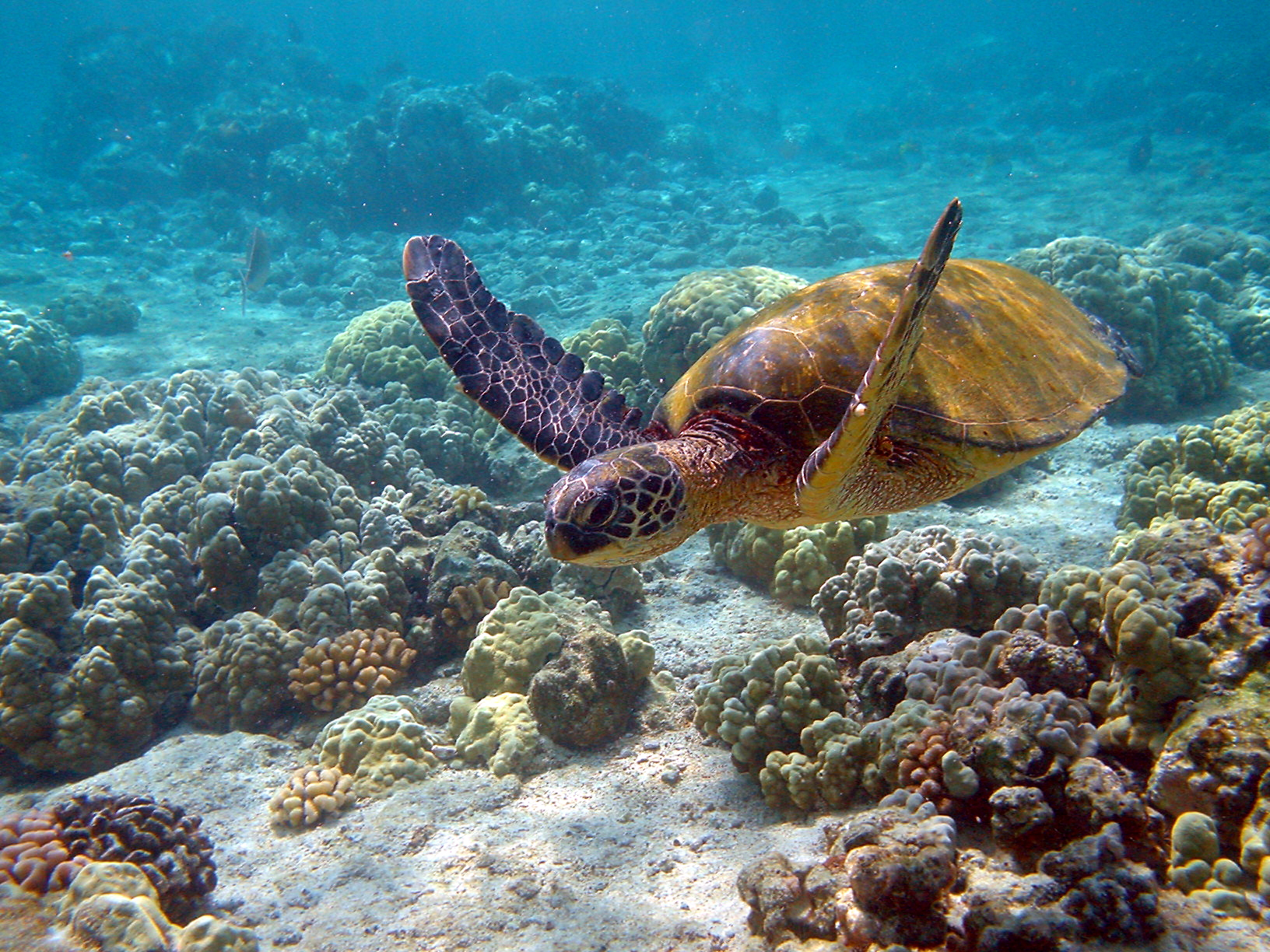
Image: Brocken Inaglory / CC BY-SA 3.0
Green Turtle (Chelonia mydas)
A large sea turtle with a smooth, often mottled carapace, a single pair of prefrontal scales, and a small rounded head. Named for the greenish color of its body fat, not its shell. Adults are largely herbivorous, grazing
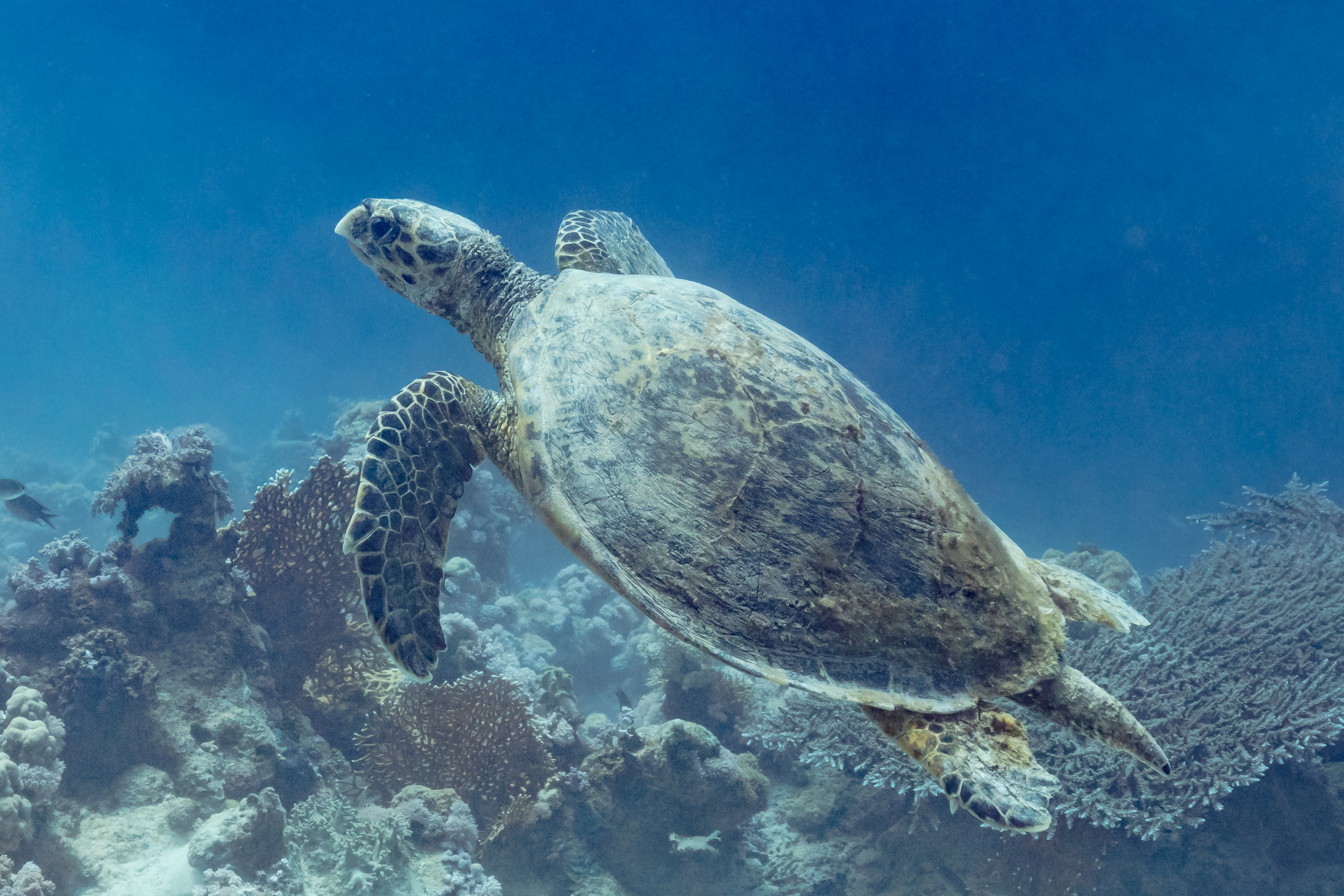
Image: Diego Delso / CC BY-SA 4.0
Hawksbill Turtle (Eretmochelys imbricata)
The hawksbill is named for its narrow, hawk like beak, which it uses to reach prey in reef crevices (NOAA Fisheries). Its carapace is strikingly mottled in amber, orange, red, yellow, black, and brown, with serrated rear
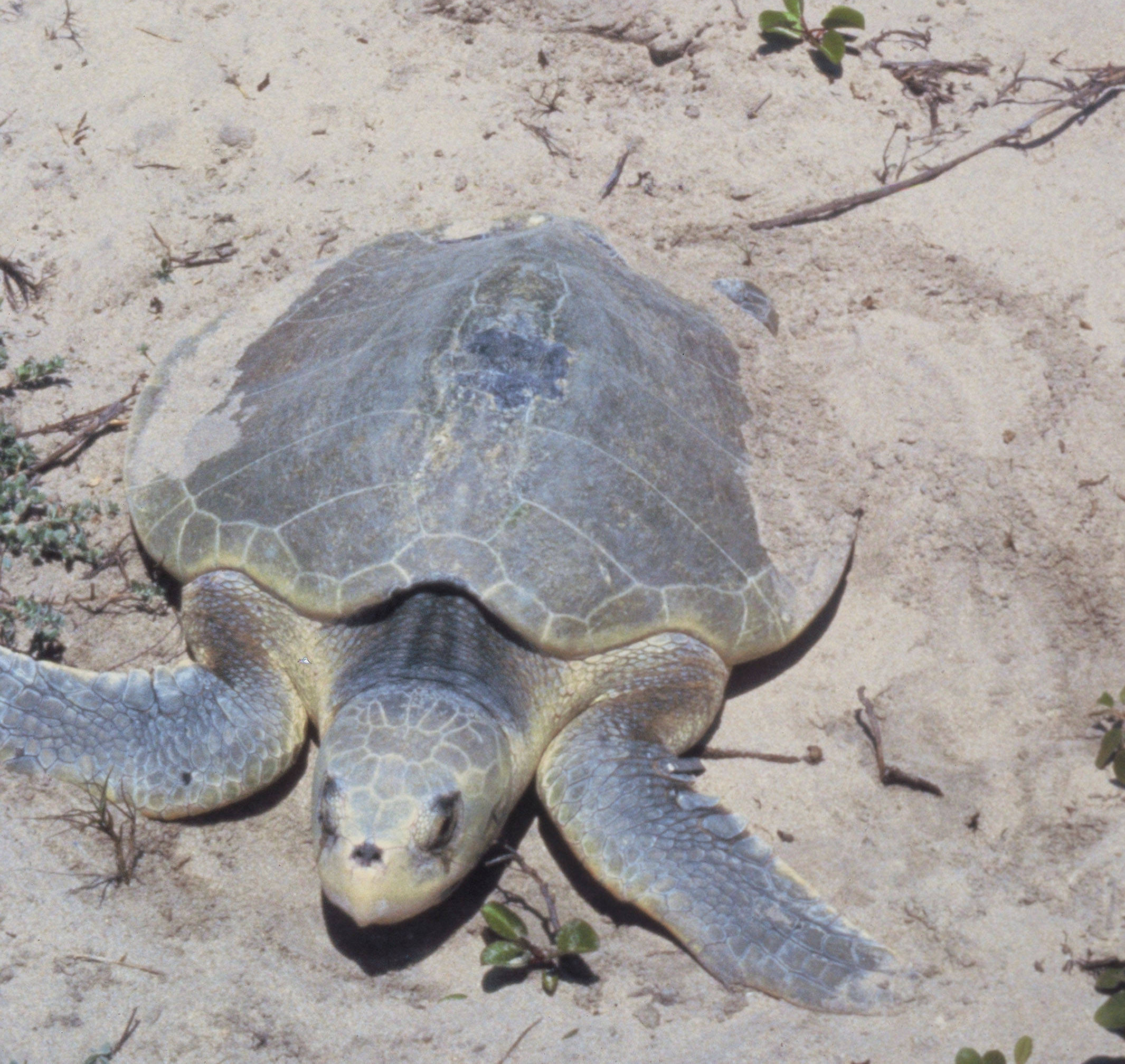
Image: uploaded by Johntex / Public domain
Kemp's Ridley Turtle (Lepidochelys kempii)
Kemp's ridley is the smallest sea turtle: adults weigh about 70–100 pounds and measure roughly 2 feet in length (NOAA Fisheries). The carapace is often as wide as it is long, grayish green above with a pale yellowish und