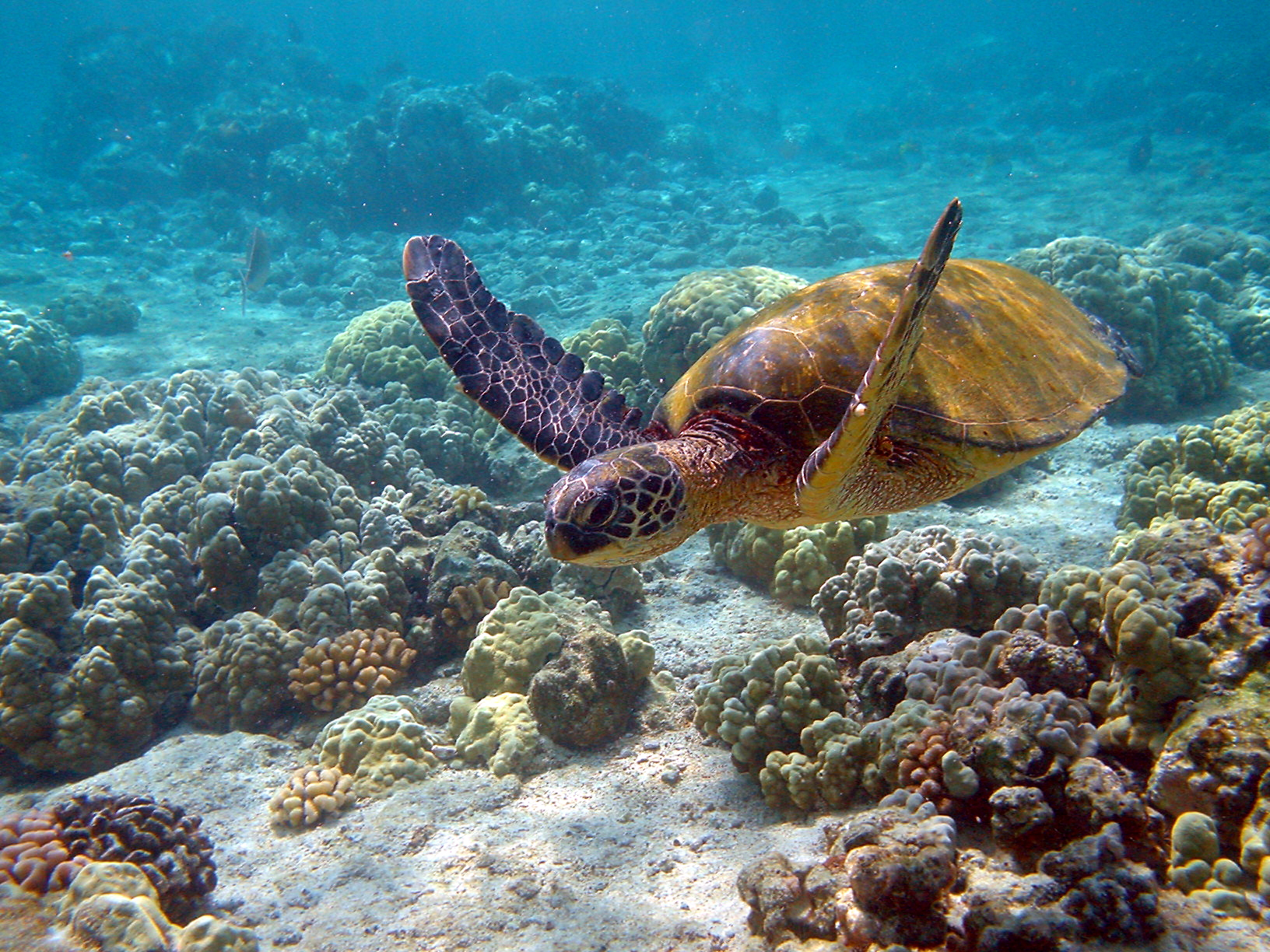
Green Turtle
Chelonia mydas
Green turtle (Chelonia mydas), Hawai'i, USA.
- Guild
- turtles
- Reading level
- beginner
- Sources
- 3
Green Turtle (Chelonia mydas)
Status: needs expert review. The IUCN reclassified this species in 2025; a science reviewer should confirm the current global and subpopulation assessments before approval. The green turtle (Chelonia mydas) is a large, mostly herbivorous sea turtle of tropical and subtropical seas.
At a glance
| Field | Value | Source |
|---|---|---|
| Scientific name | Chelonia mydas | WoRMS / authority |
| Guild | turtle | — |
| IUCN status | Least Concern (downlisted from Endangered in 2025); some subpopulations still threatened | IUCN Red List |
| Population trend | Increasing globally (reported >28% rise since the 1970s) | IUCN / 2025 update |
| International trade | CITES Appendix I | CITES |
| Range | Tropical and subtropical oceans worldwide | IUCN Red List |
Identification
A large sea turtle with a smooth, often mottled carapace, a single pair of prefrontal scales, and a small rounded head. Named for the greenish color of its body fat, not its shell. Adults are largely herbivorous, grazing seagrass and algae.
Ecology and behavior
Green turtles migrate between feeding grounds (seagrass meadows, algal reefs) and natal nesting beaches, sometimes over long distances. Females return to nest on or near the beaches where they hatched. Grazing by green turtles helps maintain healthy seagrass meadows. Behavioral specifics should be cited to published research and confirmed in review.
Conservation status and threats
In 2025 the IUCN downlisted the green turtle from Endangered to Least Concern, citing a global population increase since the 1970s — a notable conservation success attributed to decades of protection. This is not "recovered everywhere": some regional subpopulations remain threatened (e.g. parts of the Indian Ocean), and the species remains on CITES Appendix I. Continuing threats include illegal egg and meat trade, bycatch, nesting-beach loss, and climate change (including temperature-driven sex ratios). Report figures as the cited authorities state them; a reviewer should confirm subpopulation specifics.
How to observe responsibly
This page does not provide approach guidance. Follow the reviewed observation guide and local regulations, which set distances and nesting-season protections. Never disturb nesting females, hatchlings, or nests; never use lights on nesting beaches. Nesting beaches are sensitive — this page keeps to regional granularity (ETHICS.md). Choose operators that keep their distance and do not handle turtles.
How you can help
- Log sightings to a recognized citizen-science platform (see the iNaturalist dataset card).
- Support turtle conservation and bycatch-reduction through credible organizations such as the Olive Ridley Project.
- On nesting coasts, support lights-out and beach-protection programs.
Sources (3)
Every claim traces to one of the citations below. Anything that could not be sourced was left out.
Related in the commons
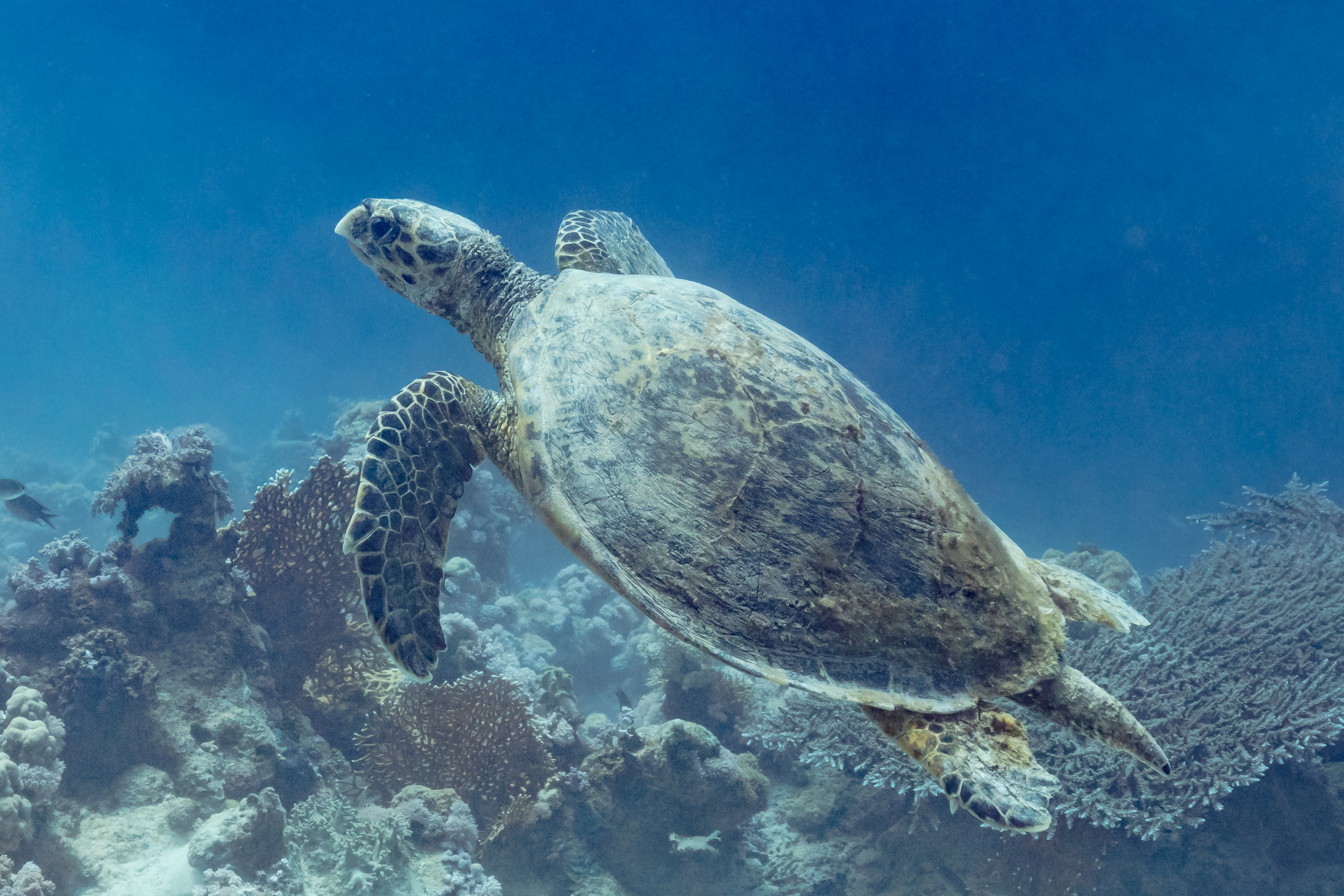
Image: Diego Delso / CC BY-SA 4.0
Hawksbill Turtle (Eretmochelys imbricata)
The hawksbill is named for its narrow, hawk like beak, which it uses to reach prey in reef crevices (NOAA Fisheries). Its carapace is strikingly mottled in amber, orange, red, yellow, black, and brown, with serrated rear
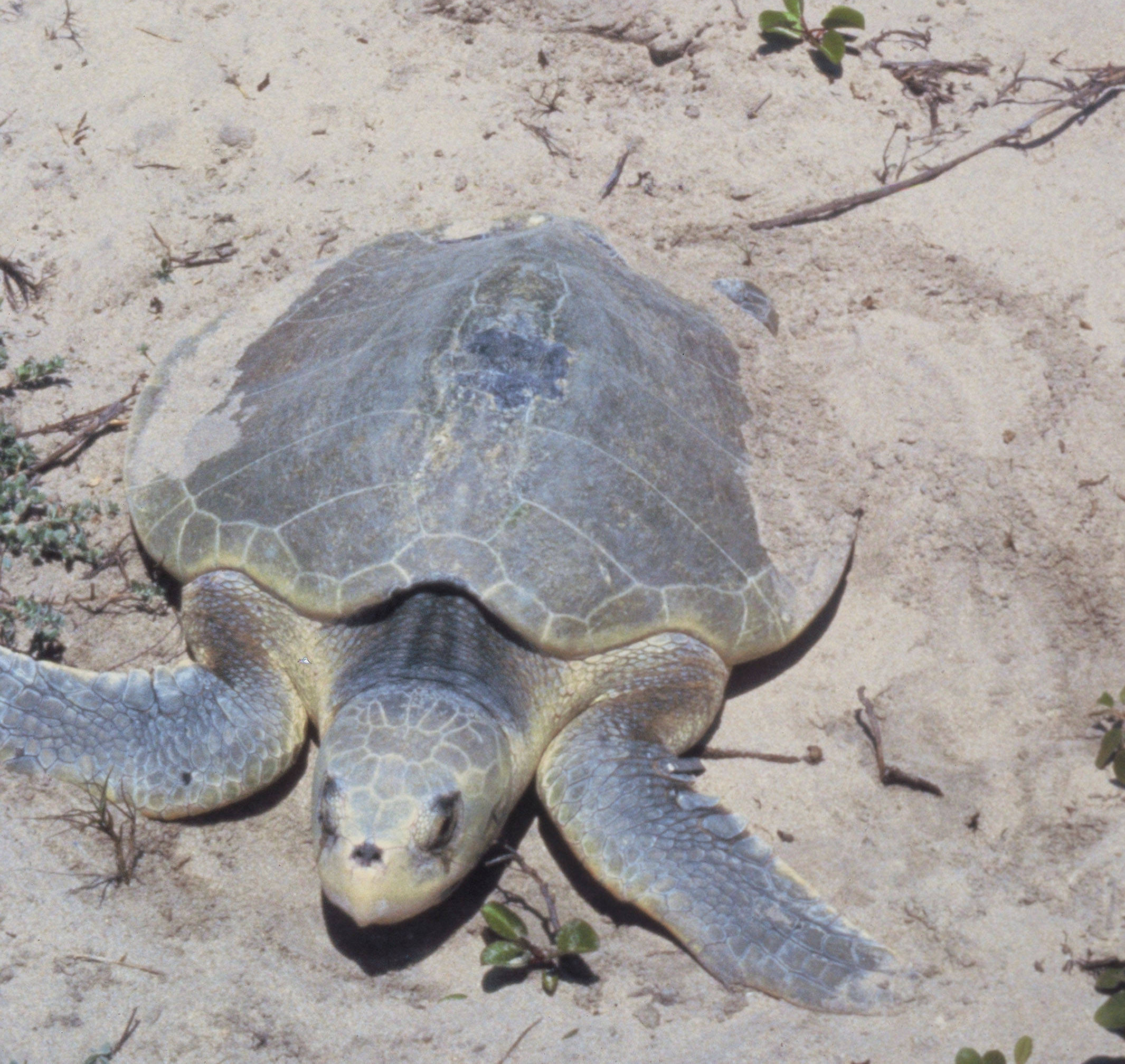
Image: uploaded by Johntex / Public domain
Kemp's Ridley Turtle (Lepidochelys kempii)
Kemp's ridley is the smallest sea turtle: adults weigh about 70–100 pounds and measure roughly 2 feet in length (NOAA Fisheries). The carapace is often as wide as it is long, grayish green above with a pale yellowish und
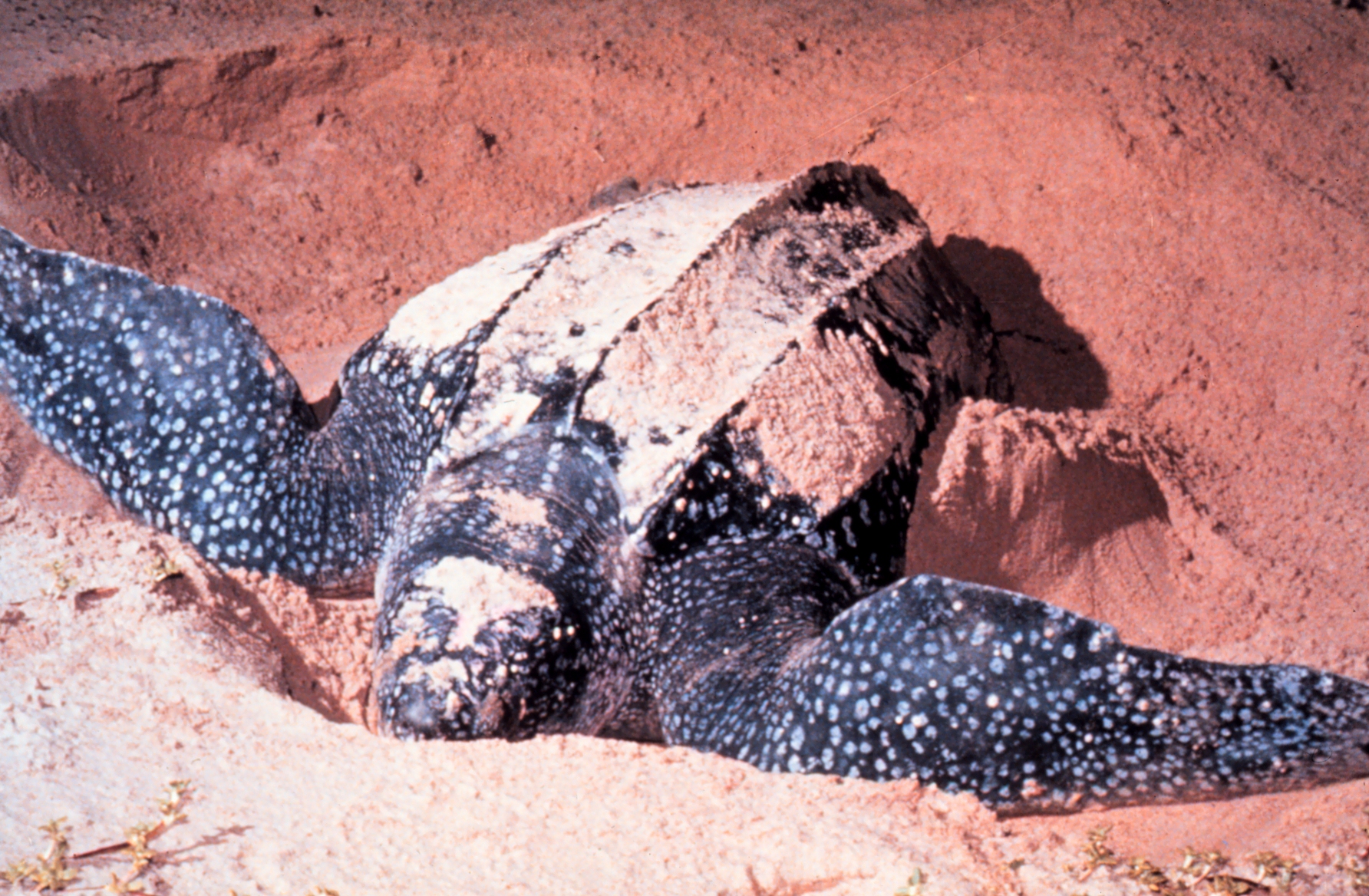
Image: National Oceanic and Atmospheric Administration, NOAA / Public domain
Leatherback Turtle (Dermochelys coriacea)
The leatherback is unmistakable: it is the largest living turtle, with adults reaching about 5–6 feet in length and weighing roughly 750–1,000 pounds (NOAA Fisheries). Unlike all other sea turtles, it lacks scales and a
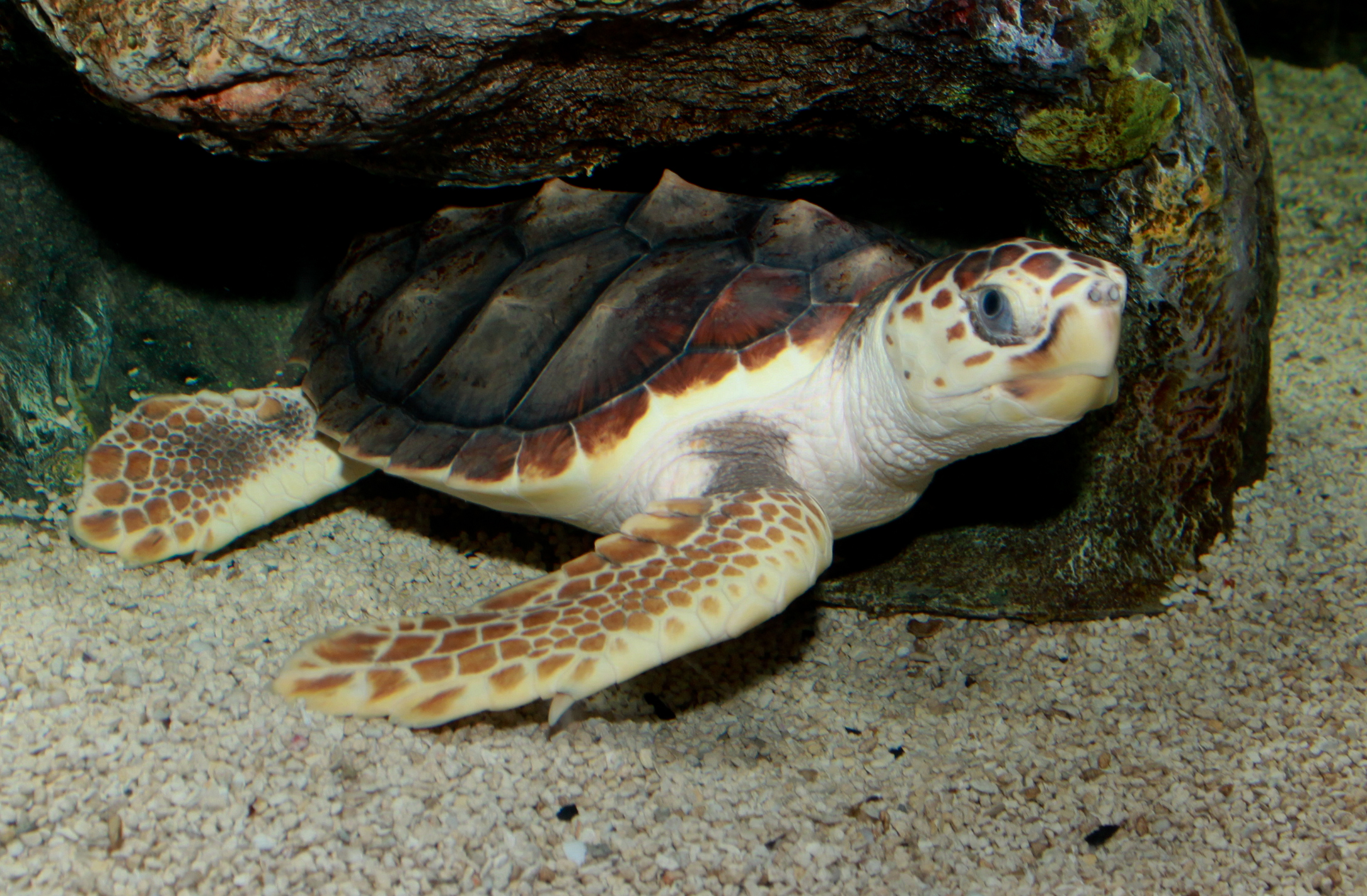
Image: Brian Gratwicke / CC BY 2.0
Loggerhead Turtle (Caretta caretta)
The loggerhead is named for its large head and powerful jaws. Adults are about 2.5–3.5 feet long and weigh roughly 200–350 pounds (NOAA Fisheries). The carapace is reddish brown in adults and sub adults, over a pale yell