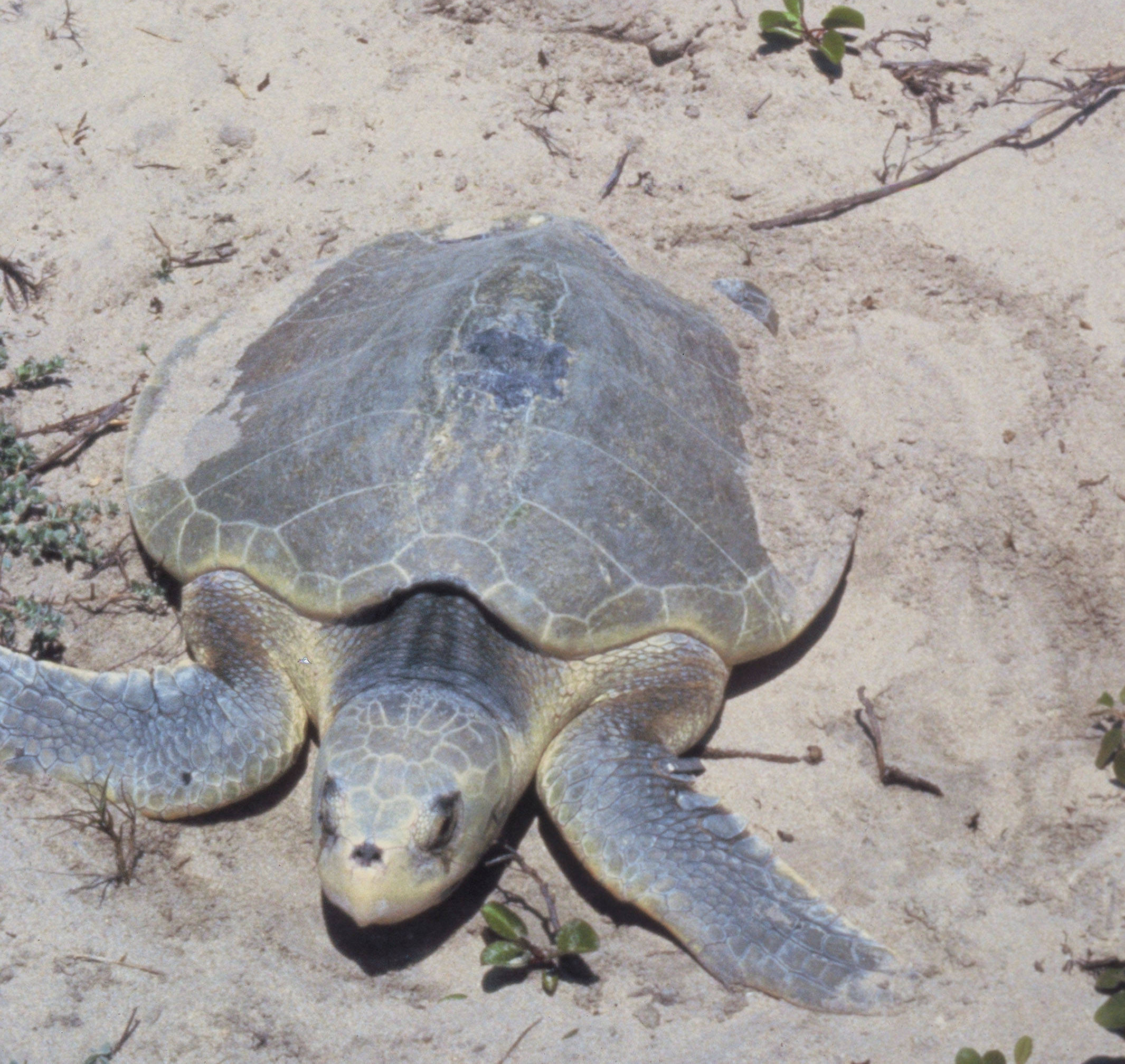
Kemp's Ridley Turtle
Lepidochelys kempii
Kemp's Ridley Turtle (Lepidochelys kempii) in an approved source image used for species identification.
- Status
- CR
- Guild
- turtles
- Reading level
- beginner
- Sources
- 3
Kemp's Ridley Turtle (Lepidochelys kempii)
Status: needs expert review. A science reviewer should confirm the current IUCN assessment and population trend before approval. The Kemp's ridley (Lepidochelys kempii) is the world's smallest and most endangered sea turtle. Because nesting is concentrated in a small area and the population is so reduced, this page keeps strictly to regional granularity for any location.
At a glance
| Field | Value | Source |
|---|---|---|
| Scientific name | Lepidochelys kempii | NOAA Fisheries |
| Guild | turtle | — |
| IUCN status | Critically Endangered (global; 2019 assessment) | IUCN Red List |
| US ESA status | Endangered | NOAA Fisheries |
| International trade | CITES Appendix I | CITES |
| Population trend | Reported increasing from a historic low, but remains Critically Endangered | IUCN Red List |
| Range | Primarily the Gulf of Mexico; juveniles disperse along the US Atlantic coast from Florida to Nova Scotia | NOAA Fisheries |
Identification
Kemp's ridley is the smallest sea turtle: adults weigh about 70–100 pounds and measure roughly 2 feet in length (NOAA Fisheries). The carapace is often as wide as it is long, grayish-green above with a pale yellowish underside (NOAA Fisheries). Its rounded, almost circular shell helps distinguish it from other sea turtles.
Ecology and behavior
After an early Sargassum-associated stage, juveniles move to coastal habitats where crabs are their preferred food (NOAA Fisheries). Kemp's ridleys nest in synchronized groups (arribadas) and are the only sea turtle that routinely nests during the day (NOAA Fisheries). Females produce on average 2–3 clutches per season of about 100 eggs each, which incubate roughly 50–60 days; the species reaches maturity around age 13, with an estimated lifespan exceeding 30 years (NOAA Fisheries). Specific behavioral claims should be cited to published research and confirmed in review.
Conservation status and threats
The IUCN Red List assesses Kemp's ridley globally as Critically Endangered (2019 assessment) — the most endangered of the sea turtles (IUCN Red List). NOAA Fisheries documents a catastrophic 20th-century decline: nesting fell to a record low of 702 nests in 1985, representing fewer than 250 nesting females, after historical over-harvest of eggs. In the United States it is listed as Endangered under the Endangered Species Act and is on CITES Appendix I (NOAA Fisheries; CITES). NOAA Fisheries identifies bycatch in fishing gear as the greatest threat today, alongside habitat degradation, vessel strikes, and marine pollution. The species' tiny range and concentrated nesting make it acutely sensitive. Report figures as the cited authorities state them; a reviewer should confirm the current population trend.
How to observe responsibly
This page does not provide approach guidance. Follow a reviewed observation guide and local regulations, which set minimum distances and nesting-season protections. As the world's most endangered sea turtle with nesting concentrated in a small area, the Kemp's ridley is exceptionally sensitive: this page publishes no precise nesting locations, only regional granularity. Never disturb nesting females, hatchlings, or nests, and never use lights on nesting beaches — artificial light disorients hatchlings (ETHICS.md; NOAA Fisheries). Choose operators that keep their distance and never handle turtles.
How you can help
- Log sightings to a recognized citizen-science platform (see the iNaturalist dataset card).
- Support bycatch-reduction work (e.g. turtle excluder devices) through credible organizations.
- Report stranded or cold-stunned turtles to the appropriate regional stranding network rather than intervening yourself.
- On nesting coasts, support lights-out and beach-protection programs.
Sources (3)
Every claim traces to one of the citations below. Anything that could not be sourced was left out.
- [1]Tier 1 · Peer-reviewedIUCN Red List — Lepidochelys kempii (Kemp's Ridley Turtle), global assessmentAccessed 2026-06-16
- [2]Tier 2 · InstitutionalNOAA Fisheries — Kemp's Ridley TurtleAccessed 2026-06-16
- [3]Tier 2 · InstitutionalCITES Appendices (Lepidochelys kempii listed Appendix I)Accessed 2026-06-16
Related in the commons
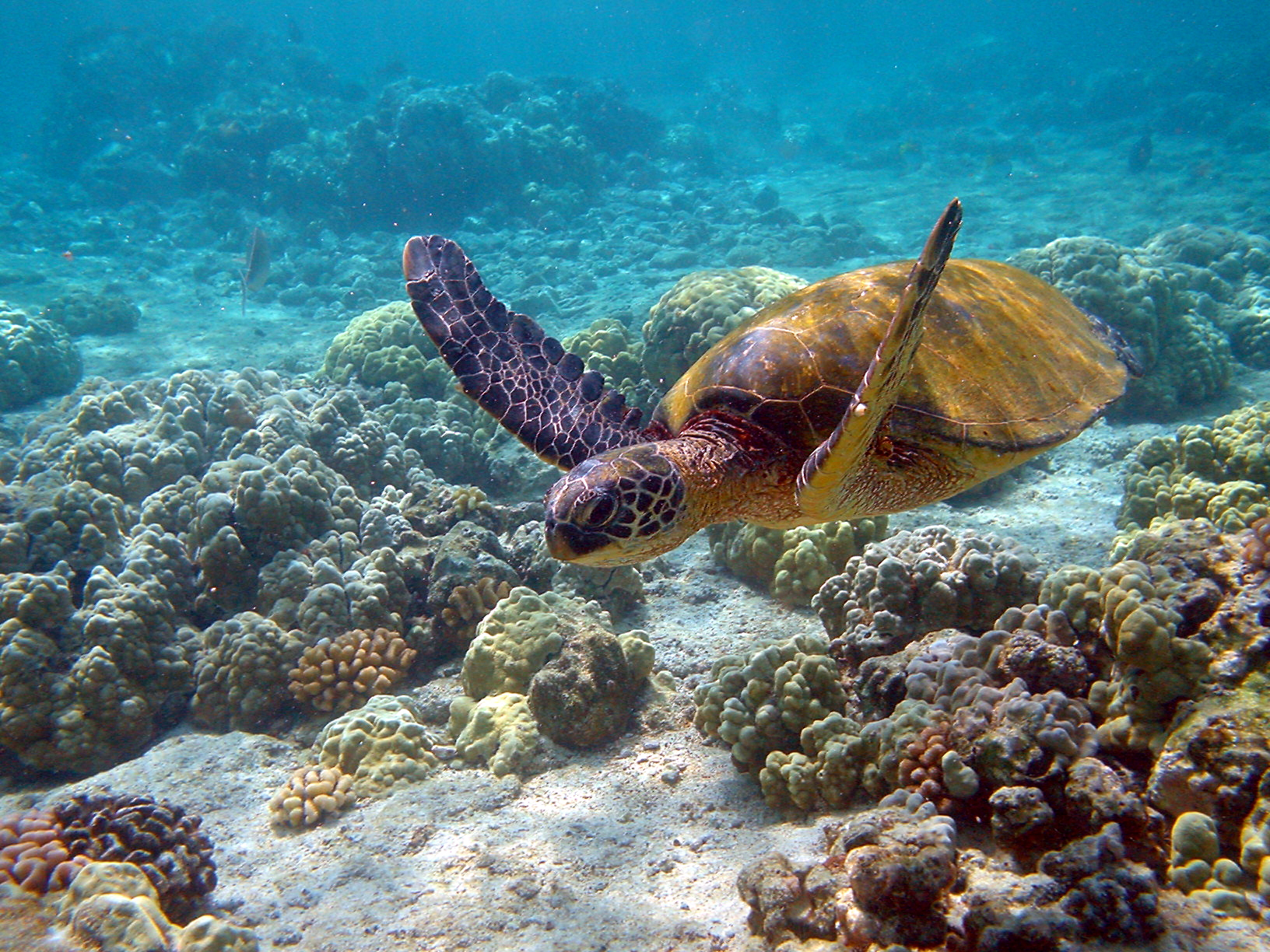
Image: Brocken Inaglory / CC BY-SA 3.0
Green Turtle (Chelonia mydas)
A large sea turtle with a smooth, often mottled carapace, a single pair of prefrontal scales, and a small rounded head. Named for the greenish color of its body fat, not its shell. Adults are largely herbivorous, grazing
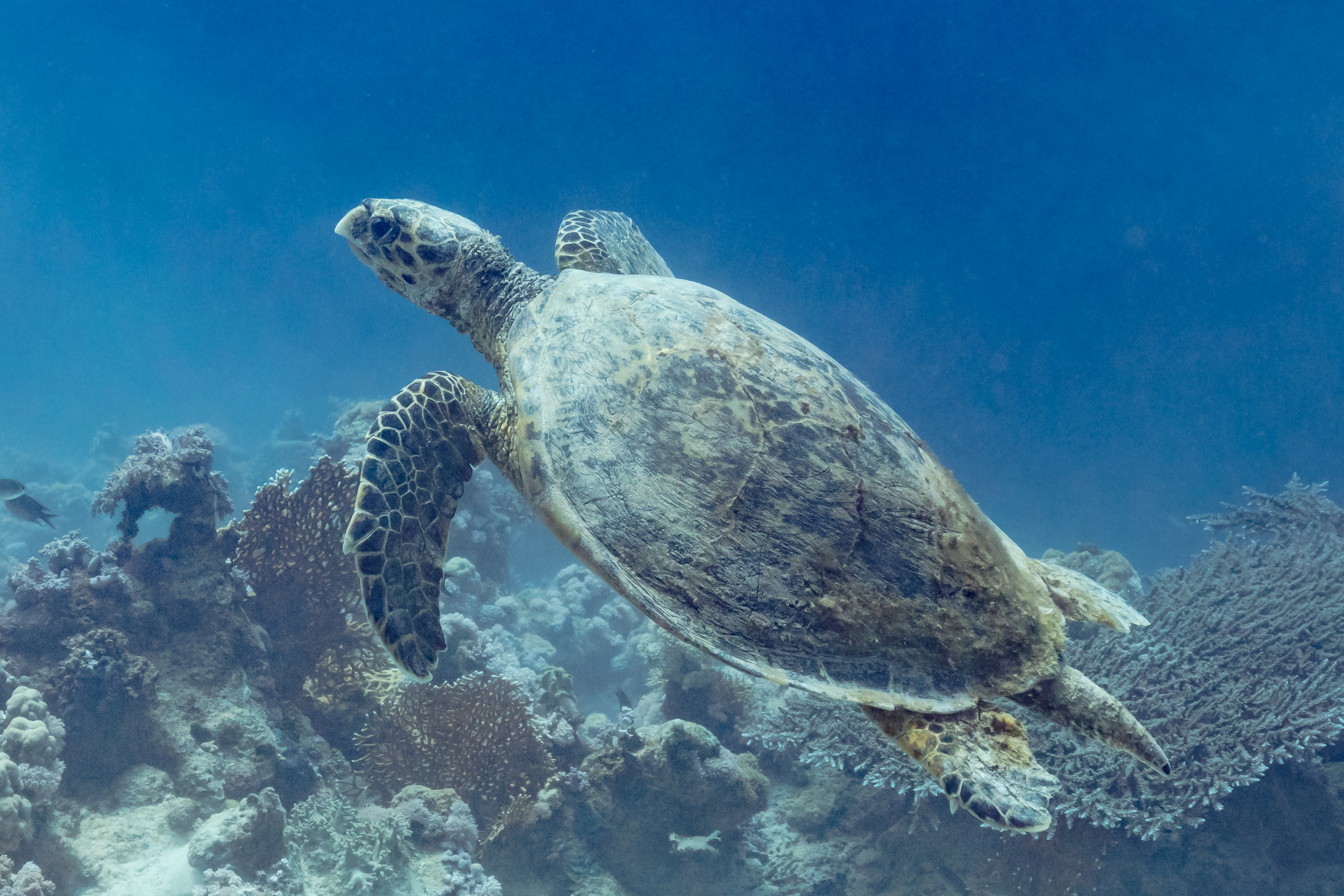
Image: Diego Delso / CC BY-SA 4.0
Hawksbill Turtle (Eretmochelys imbricata)
The hawksbill is named for its narrow, hawk like beak, which it uses to reach prey in reef crevices (NOAA Fisheries). Its carapace is strikingly mottled in amber, orange, red, yellow, black, and brown, with serrated rear
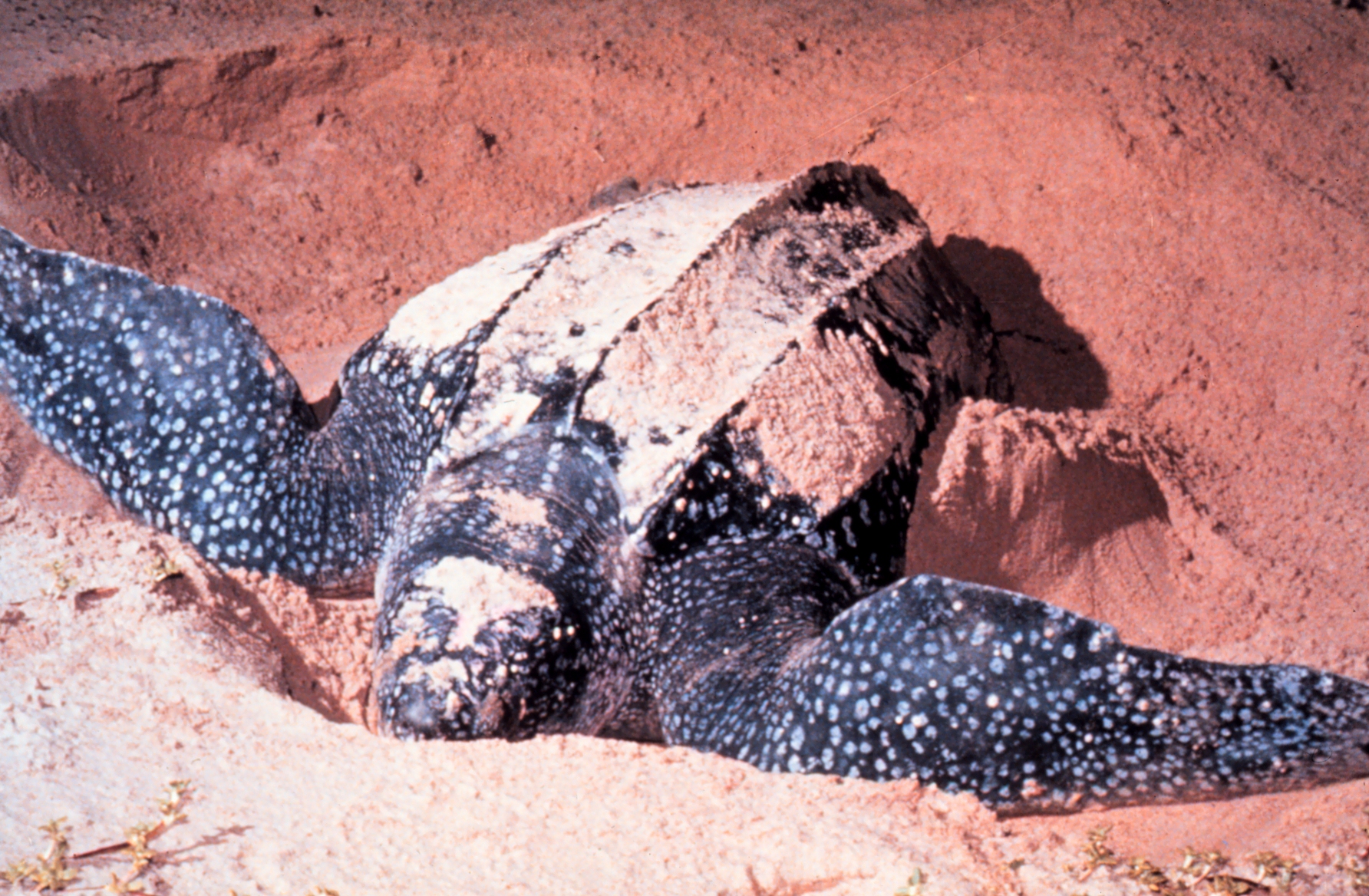
Image: National Oceanic and Atmospheric Administration, NOAA / Public domain
Leatherback Turtle (Dermochelys coriacea)
The leatherback is unmistakable: it is the largest living turtle, with adults reaching about 5–6 feet in length and weighing roughly 750–1,000 pounds (NOAA Fisheries). Unlike all other sea turtles, it lacks scales and a
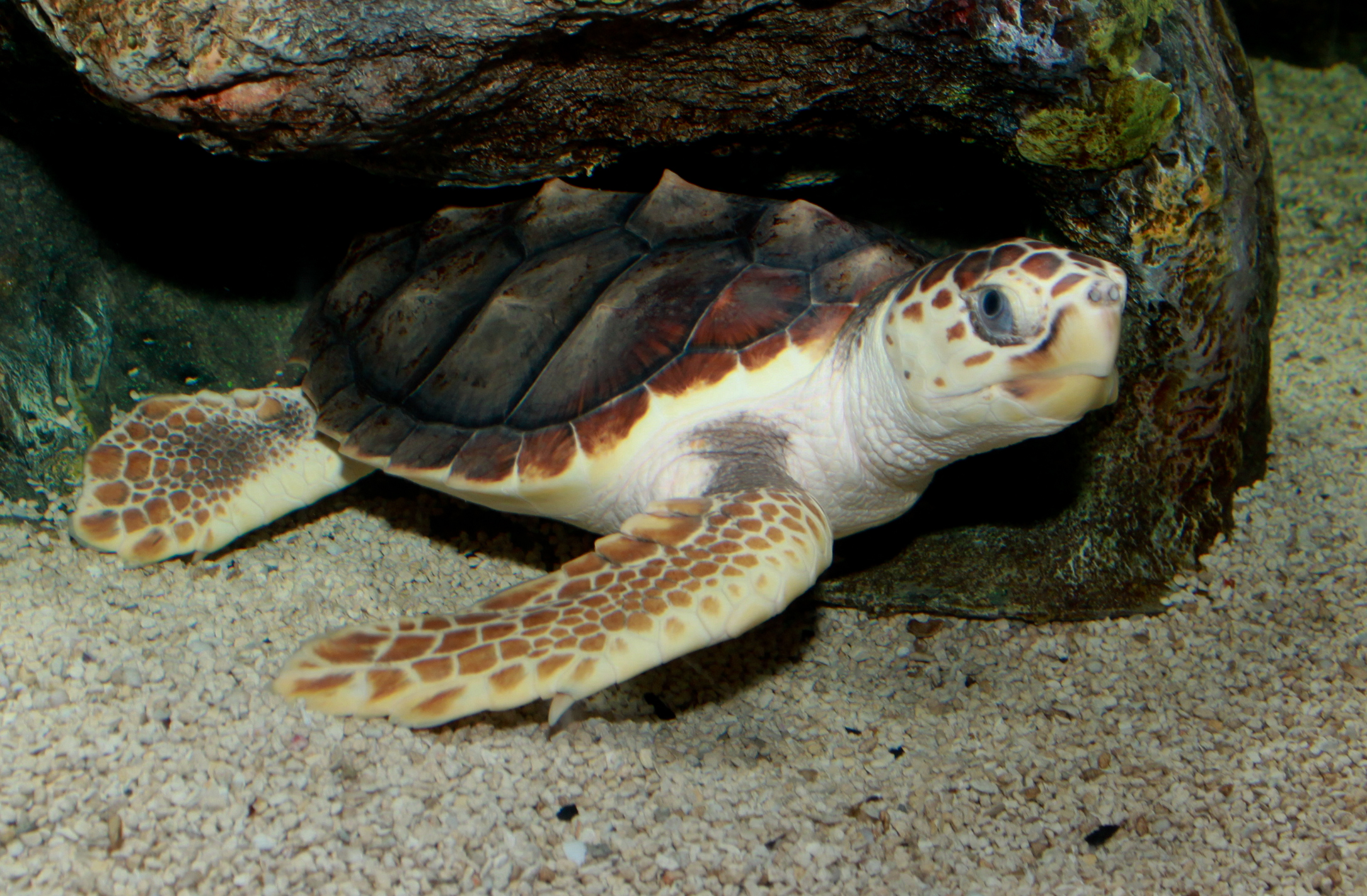
Image: Brian Gratwicke / CC BY 2.0
Loggerhead Turtle (Caretta caretta)
The loggerhead is named for its large head and powerful jaws. Adults are about 2.5–3.5 feet long and weigh roughly 200–350 pounds (NOAA Fisheries). The carapace is reddish brown in adults and sub adults, over a pale yell