Skip to content
Blue Life CommonsOcean Intelligence

Ocean life encyclopedia

Every animal entry, image, source, and credit in one living catalog

Blue Life Commons now has an image-first species encyclopedia: approved media hosted in Vercel Blob, source pages preserved, and every animal connected back to its cited public record.

31

Animal entries

Current public species pages in the commons.

31

Hosted images

Approved species images now served from Vercel Blob.

69

Cited sources

Unique source URLs represented by the species corpus.

6

Guilds

Species grouped for scanning and expansion.

31 approved images · 31 Blob-hosted images

Candidate media remains out of public rendering until approval.

7 entries

Sharks & Rays

Search full catalog
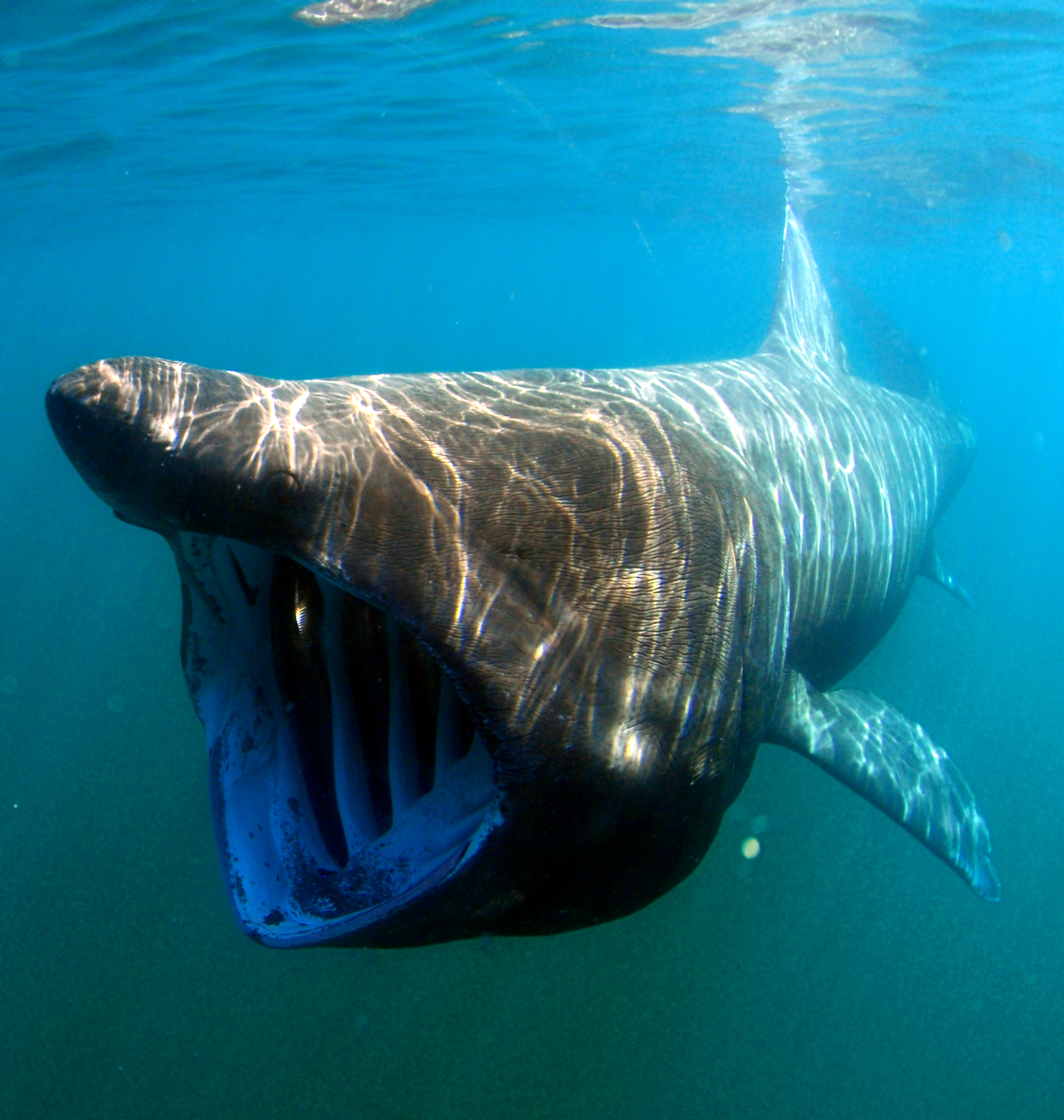
Basking shark (Cetorhinus maximus).
Sharks & RaysENEndangeredVercel hosted

Basking Shark (Cetorhinus maximus)

The basking shark is one of the most recognizable sharks: an enormous body, a bulbous conical snout, and very large gill slits that nearly encircle the head. The mouth is large and subterminal, with many small hooked tee

Sources
2
Image rights
public domain
Image source
commons.wikimedia.org

Image: Greg Skomal / NOAA Fisheries Service / Public domain

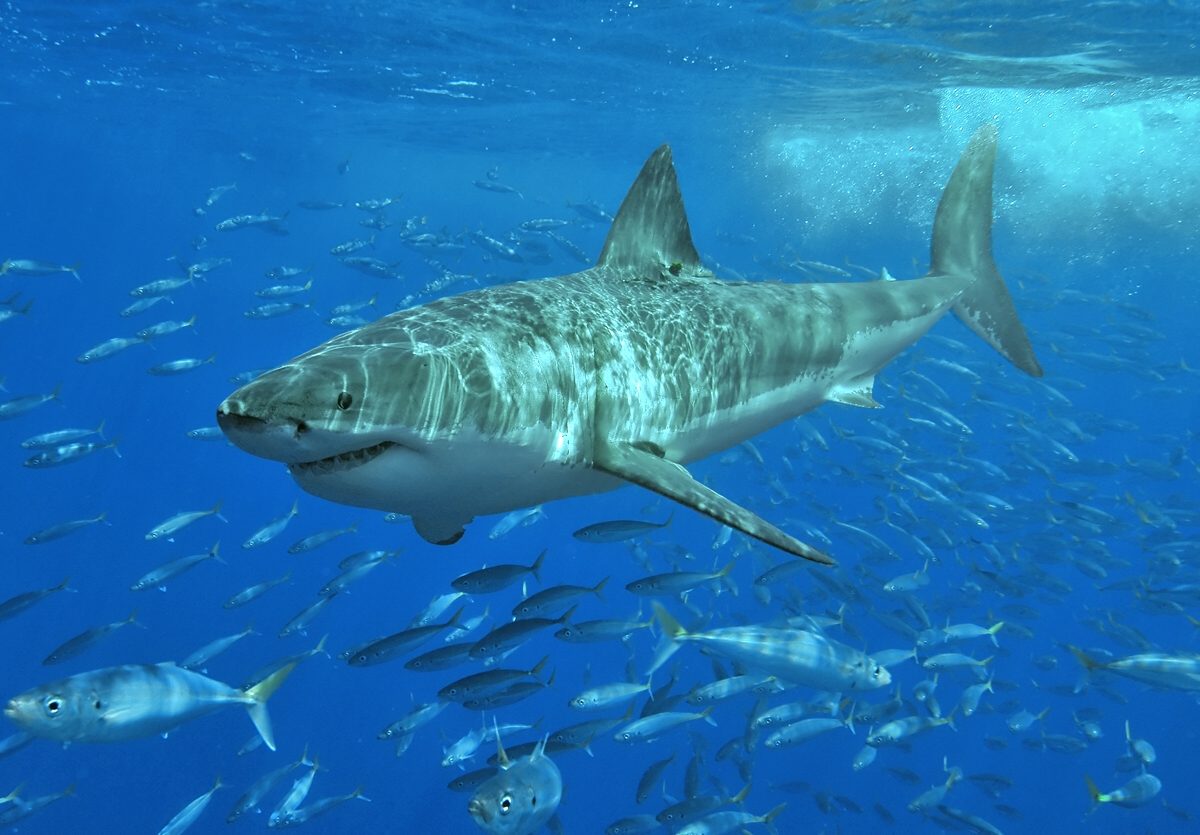
Great white shark at Isla Guadalupe, Mexico, August 2006. Shot with Nikon D70s in Ikelite housing, in natural light. Animal estimated at 11-12 feet (3.3 to 3.6 m) in length, age unknown.
Sharks & RaysVUVulnerableVercel hosted

Great White Shark

The great white shark, also known as the white shark, is a species of large lamniform shark found in the coastal surface waters of all major oceans. It is notable for its size, predatory capabilities, and role as an apex

Sources
2
Image rights
cc by
Image source
commons.wikimedia.org

Image: Pterantula (Terry Goss) at en.wikipedia / CC BY 2.5

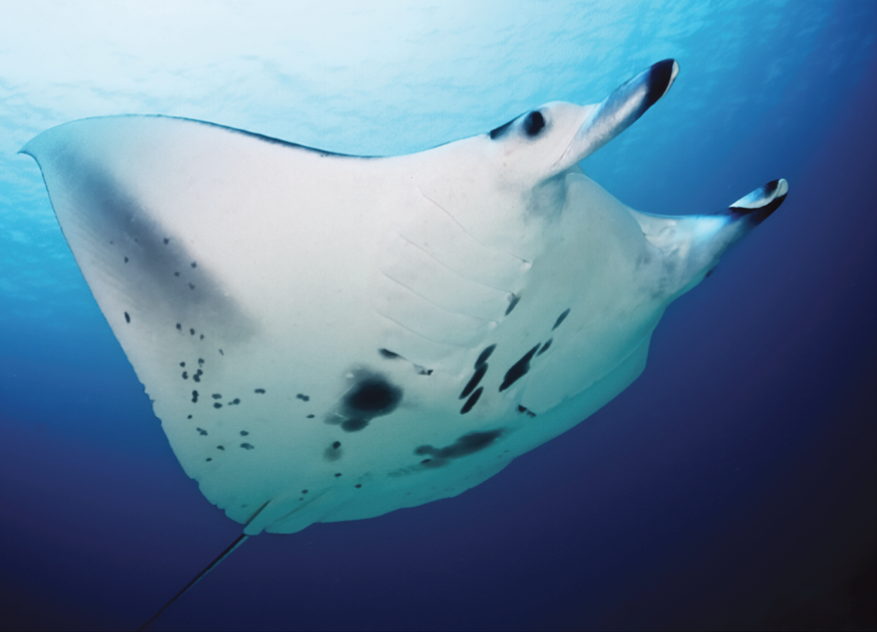
Reef Manta Ray (Mobula alfredi) in an approved source image used for species identification.
Sharks & RaysVUVulnerableVercel hosted

Reef Manta Ray (Mobula alfredi)

The reef manta ray is a very large ray with a kite shaped disc, broad wing like pectoral fins, and a pair of long, flexible cephalic ("head") lobes flanking a wide, terminal mouth. Individuals carry unique natural spot p

Sources
2
Image rights
cc by
Image source
commons.wikimedia.org

Image: Jaine FRA, Couturier LIE, Weeks SJ, Townsend KA, Bennett MB, et al. (2012) / CC BY 2.5

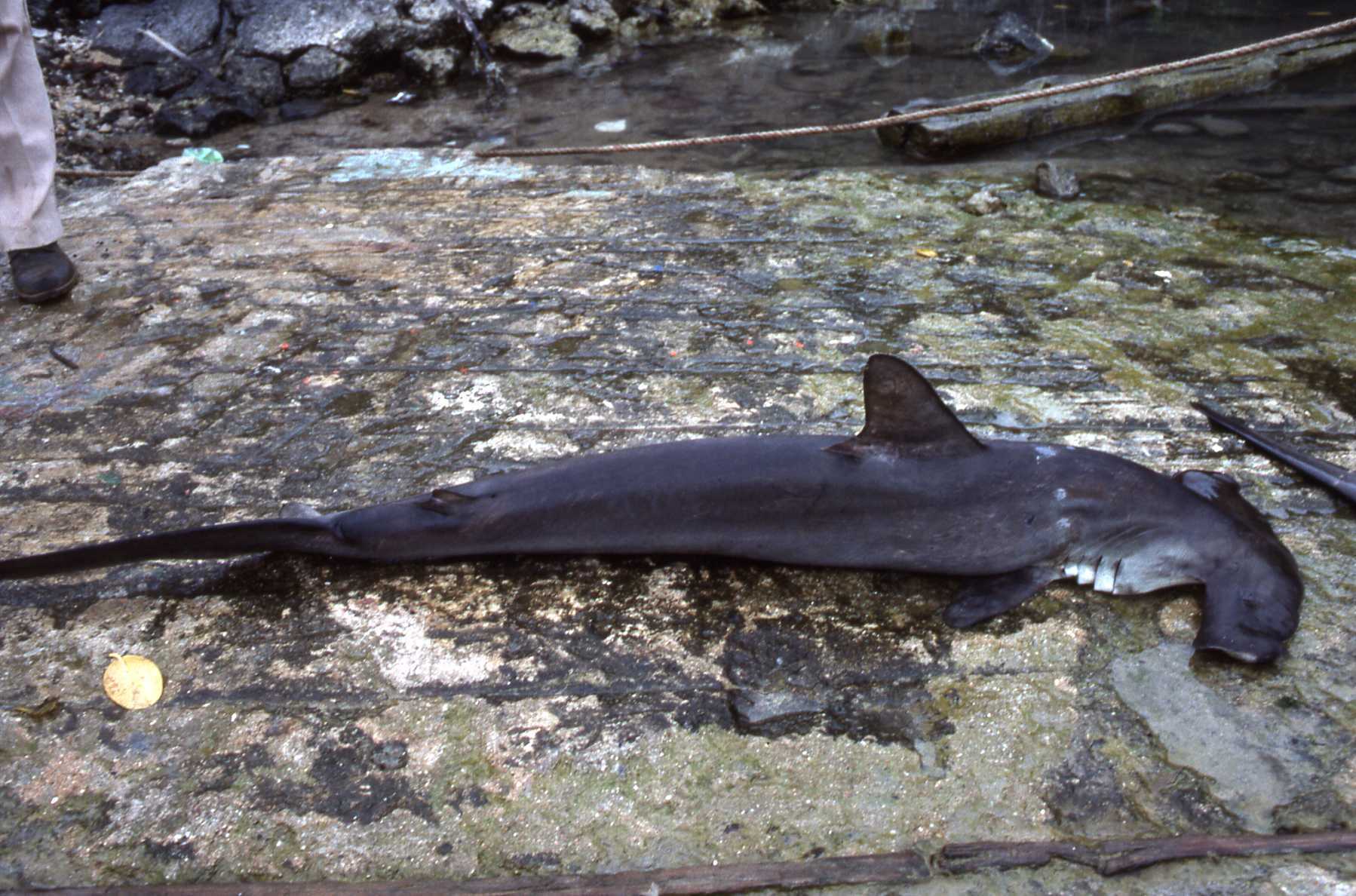
Sphyrna lewini (Griffith & Smith, 1834) 2422815227.
Sharks & RaysCRCritically EndangeredVercel hosted

Scalloped Hammerhead (Sphyrna lewini)

The scalloped hammerhead is named for the broad, flattened "hammer" (cephalic) head, the front edge of which is curved with a central indentation and lateral scallops — a feature that separates it from the great and smoo

Sources
2
Image rights
cc0
Image source
commons.wikimedia.org

Image: iNaturalist.org (Simon Tonge) (Simon%20Tonge) / CC0

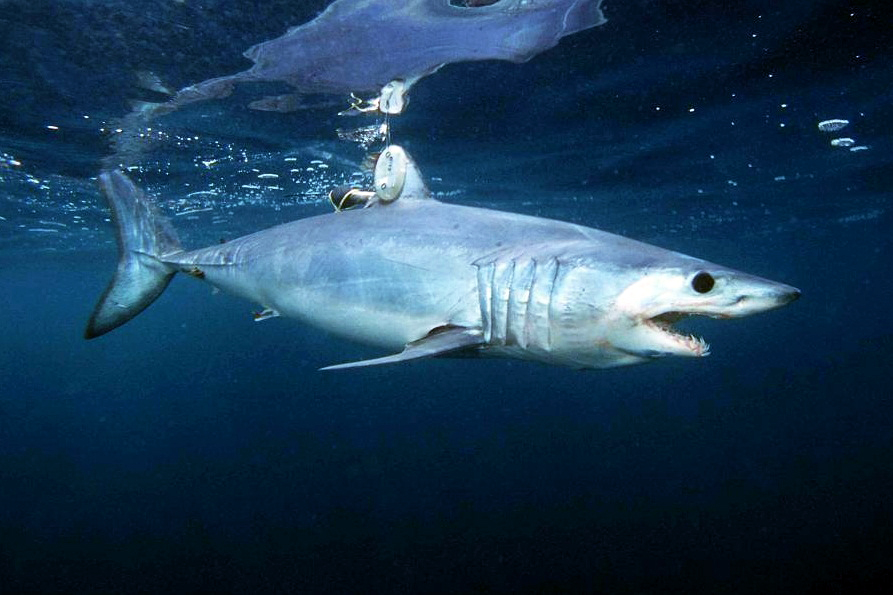
Shortfin mako shark (Isurus oxyrinchus).
Sharks & RaysENEndangeredVercel hosted

Shortfin Mako (Isurus oxyrinchus)

The shortfin mako is a large, highly migratory shark with a pointed (conical) snout, light metallic blue sides, and a white underside. It has relatively small eyes and pectoral fins compared with the closely related long

Sources
2
Image rights
public domain
Image source
commons.wikimedia.org

Image: Mark Conlin, SWFSC Large Pelagics Program / Public domain

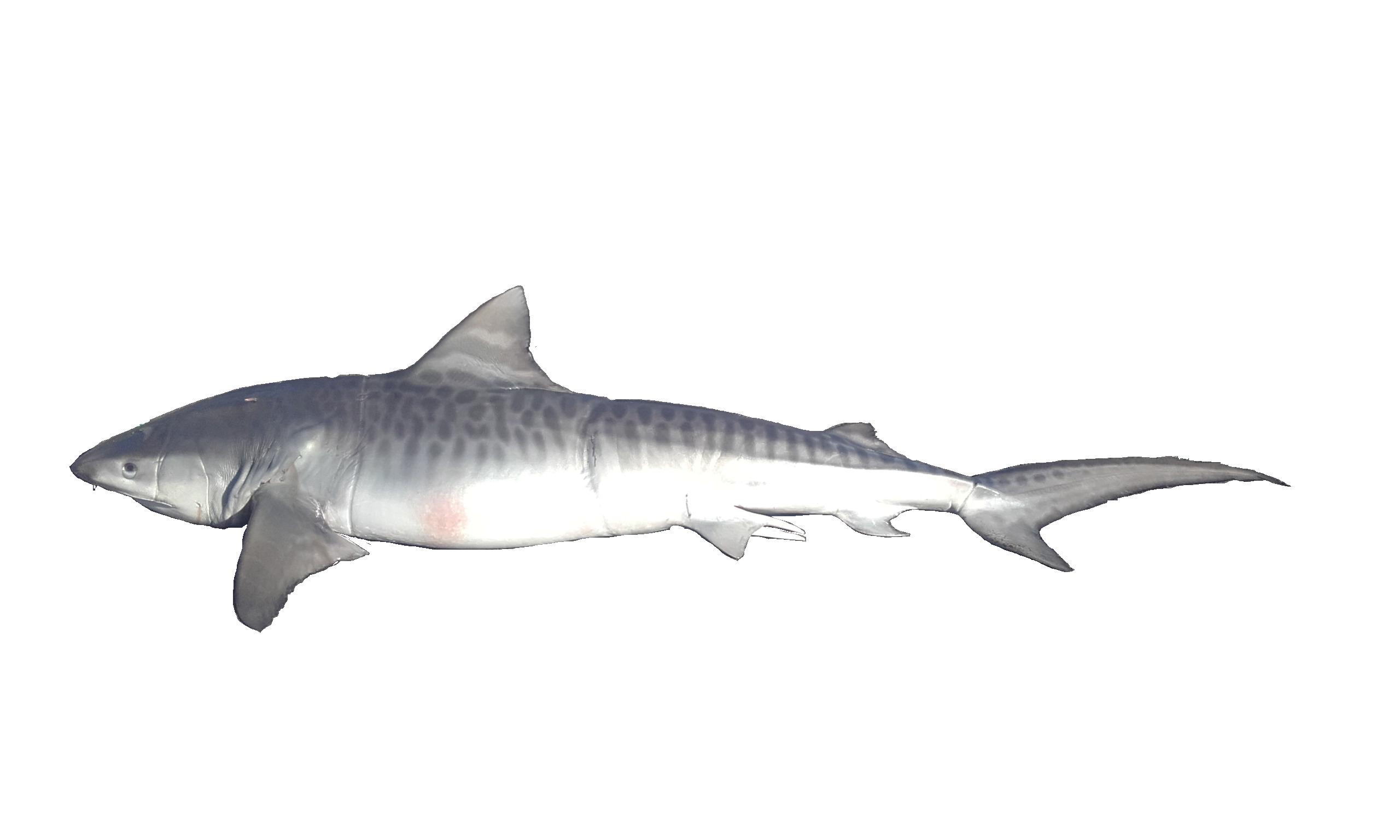
Tiger Shark (Galeocerdo cuvier) in an approved source image used for species identification.
Sharks & RaysNTNear ThreatenedVercel hosted

Tiger Shark (Galeocerdo cuvier)

The tiger shark has a robust body, a broad blunt snout, and large eyes. The dorsal surface is dark grey to brownish, fading to a pale white underside. Juveniles show pronounced dark vertical bars ("tiger" stripes) that f

Sources
2
Image rights
cc by
Image source
commons.wikimedia.org

Image: Fanchon Varenne (IFREMER, Délégation océan Indien (DOI), Département Ressources Biologiques et Environnement (RBE), F-97420 Le Port, France) / CC BY 4.0
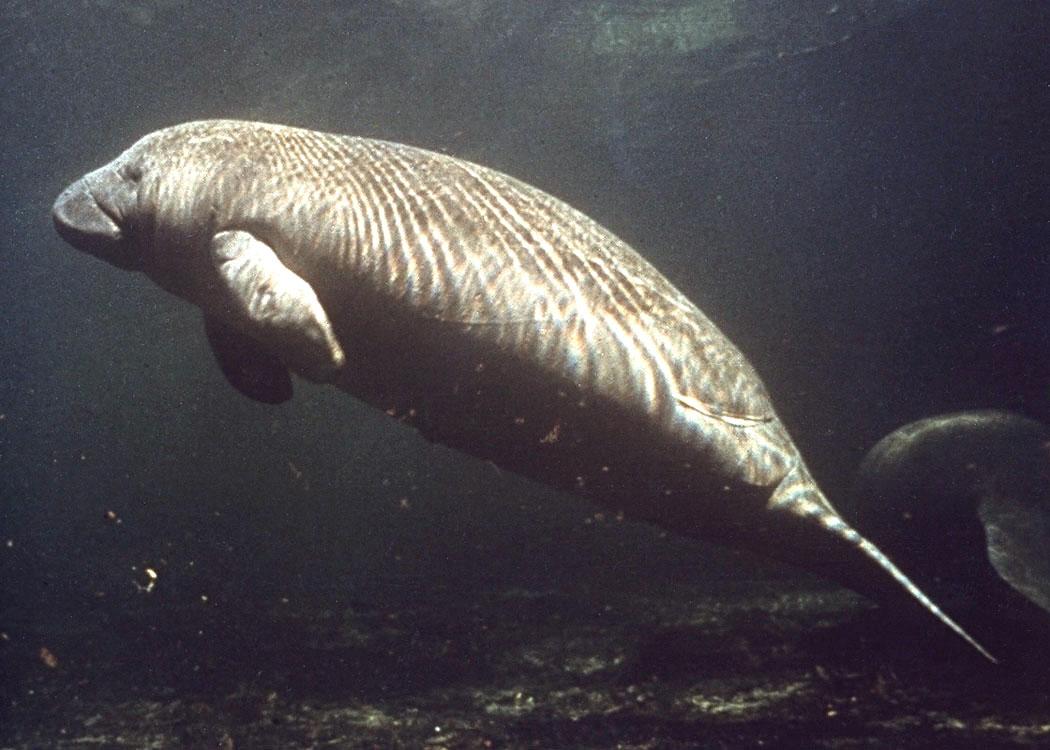
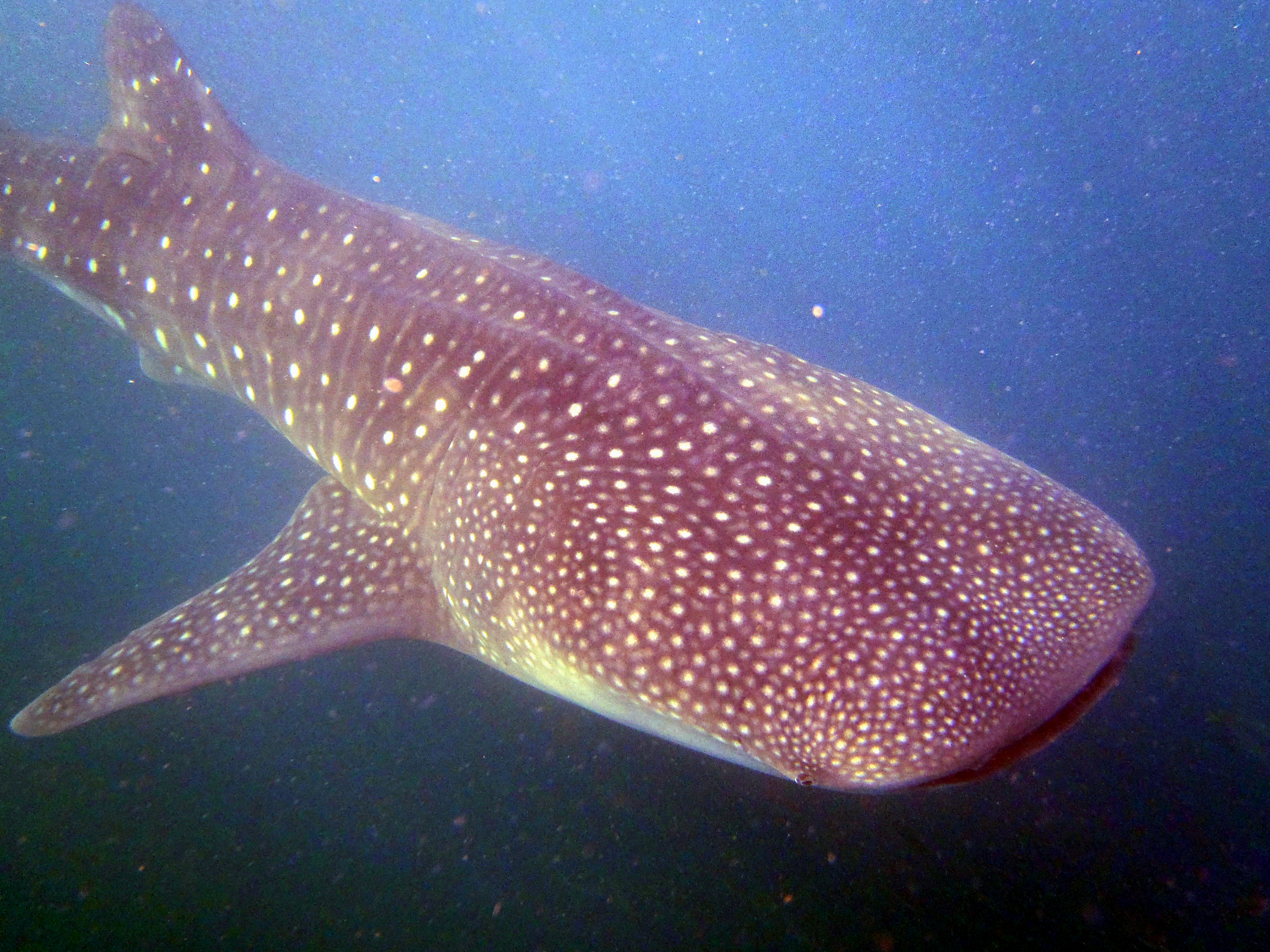
Whale Shark (Rhincodon typus) in an approved source image used for species identification.
Sharks & RaysVercel hosted

Whale Shark (Rhincodon typus)

The whale shark is unmistakable: a very large shark (the largest fish species), dark grey above with a distinctive pattern of pale spots and stripes, a broad flattened head, and a huge terminal mouth used for filter feed

Sources
3
Image rights
cc0
Image source
commons.wikimedia.org

Image: cotterillmike / CC0

6 entries

Cetaceans

Search full catalog
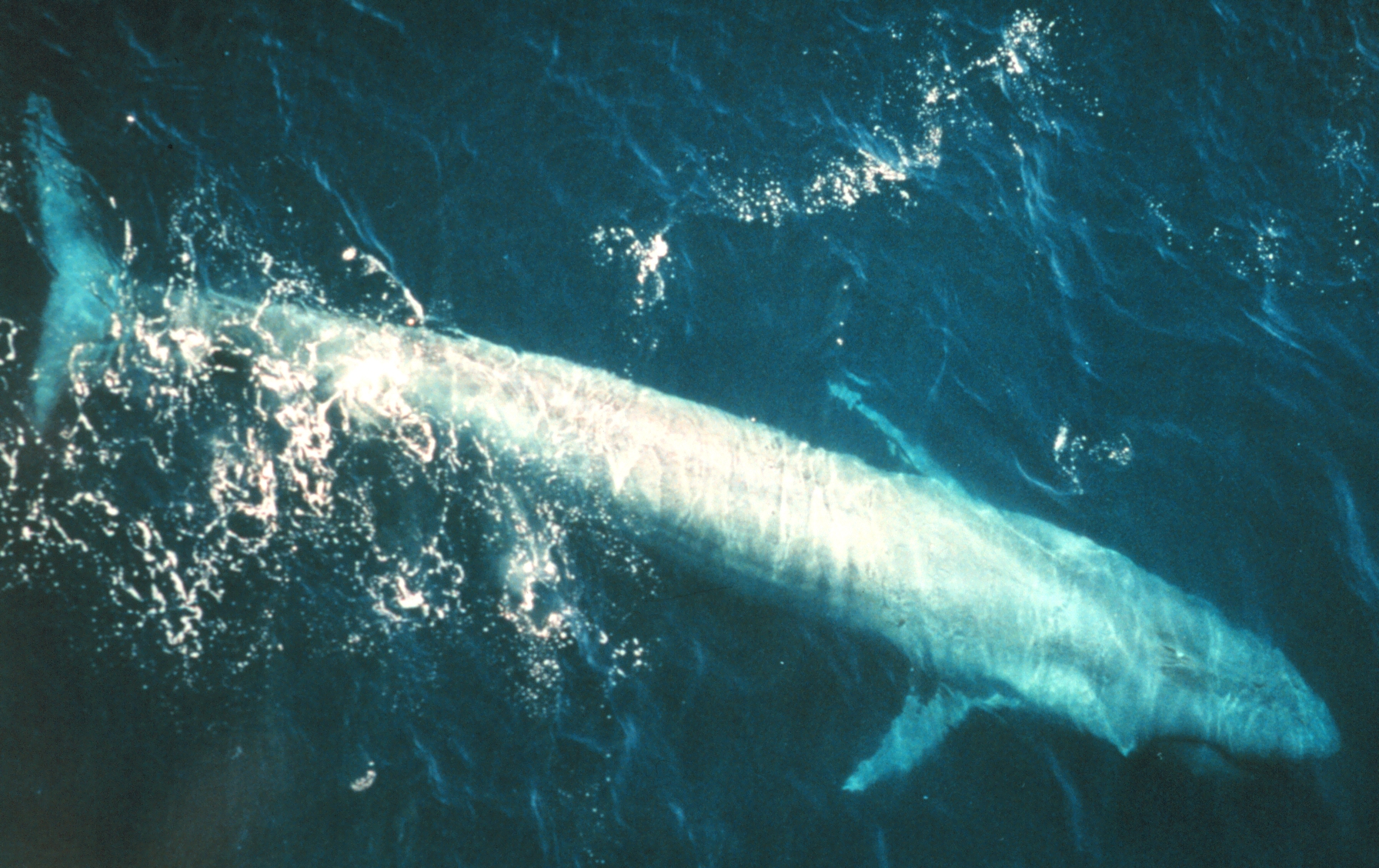
Adult blue whale (Balaenoptera musculus) from the eastern Pacific Ocean.
CetaceansENEndangeredVercel hosted

Blue Whale (Balaenoptera musculus)

A very large, slender baleen whale that NOAA Fisheries reports can reach roughly 110 feet (about 33 m) in length, with a long mottled blue grey body, a small dorsal fin set far back, and a broad flat head. The blow is ta

Sources
3
Image rights
public domain
Image source
commons.wikimedia.org

Image: NMFS Northeast Fisheries Science Center (NOAA) / Public domain

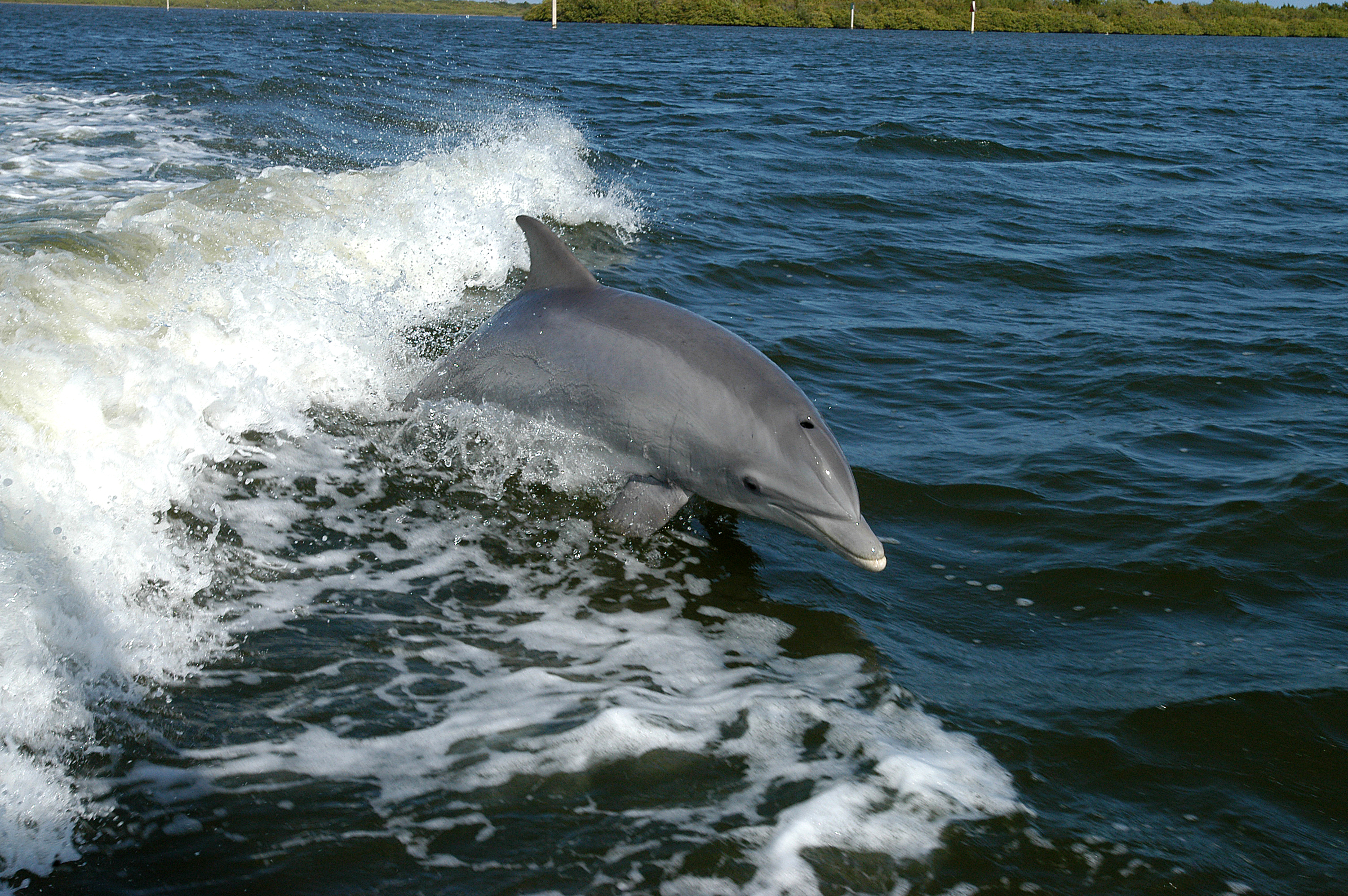
Bottlenose Dolphin - Tursiops truncatus A dolphin surfs the wake of a research boat on the Banana River - near the Kennedy Space Center.
CetaceansLCLeast ConcernVercel hosted

Common Bottlenose Dolphin (Tursiops truncatus)

A robust grey dolphin with a short, distinct beak and a curved (falcate) dorsal fin. NOAA Fisheries reports lengths of about 6 to 13 feet (roughly 2 to 4 m) and weights of about 300 to 1,400 pounds, with coastal and offs

Sources
3
Image rights
public domain
Image source
commons.wikimedia.org

Image: NASA / Public domain

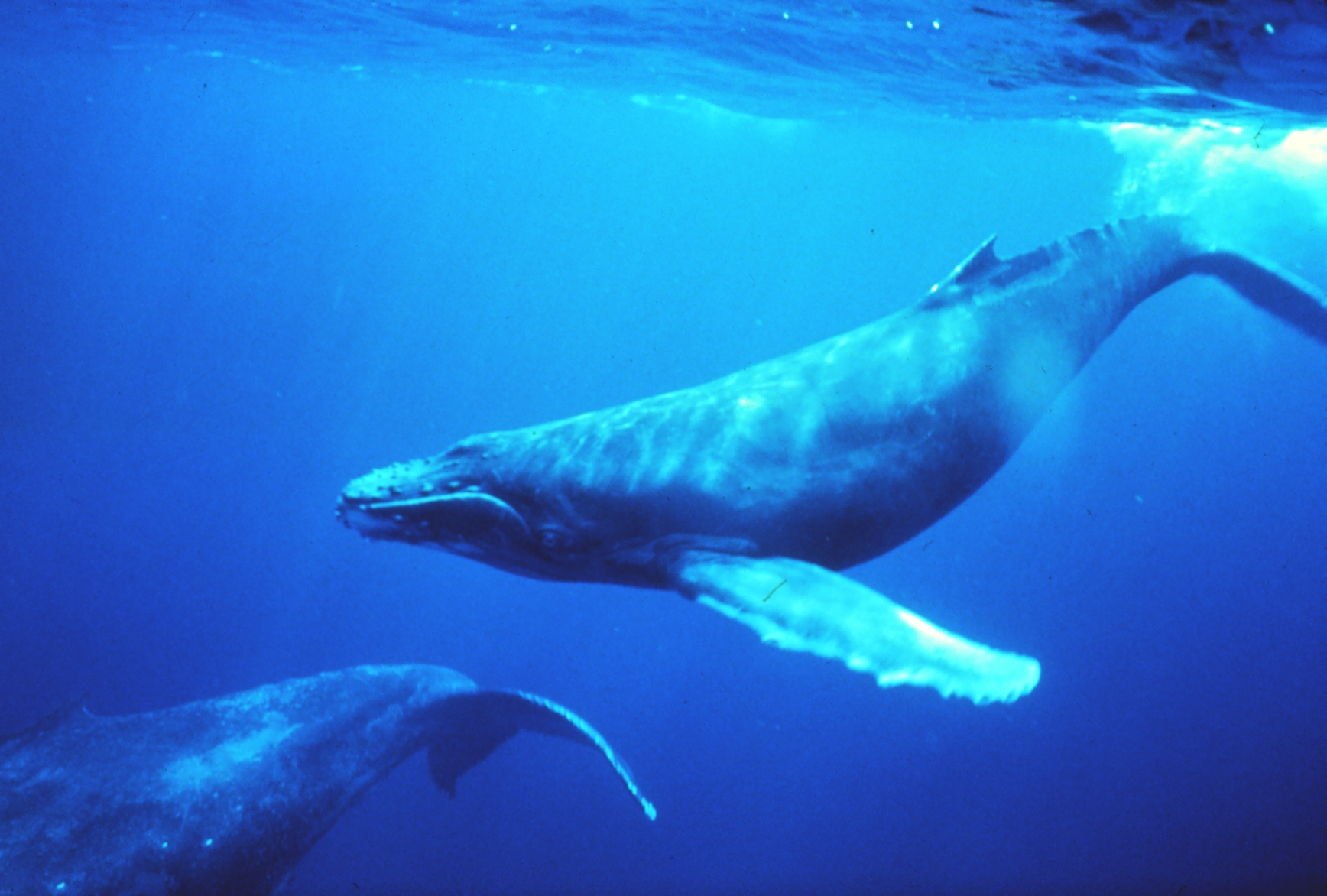
Humpback whales in the singing position. Humpback Whale NMS.
CetaceansVercel hosted

Humpback Whale (Megaptera novaeangliae)

A large baleen whale with very long pectoral fins (up to roughly a third of body length), a knobbly head (tubercles), and a small dorsal fin on a humped back. Often identified individually by the unique pattern on the un

Sources
3
Image rights
public domain
Image source
commons.wikimedia.org

Image: Dr. Louis M. Herman. / Public domain

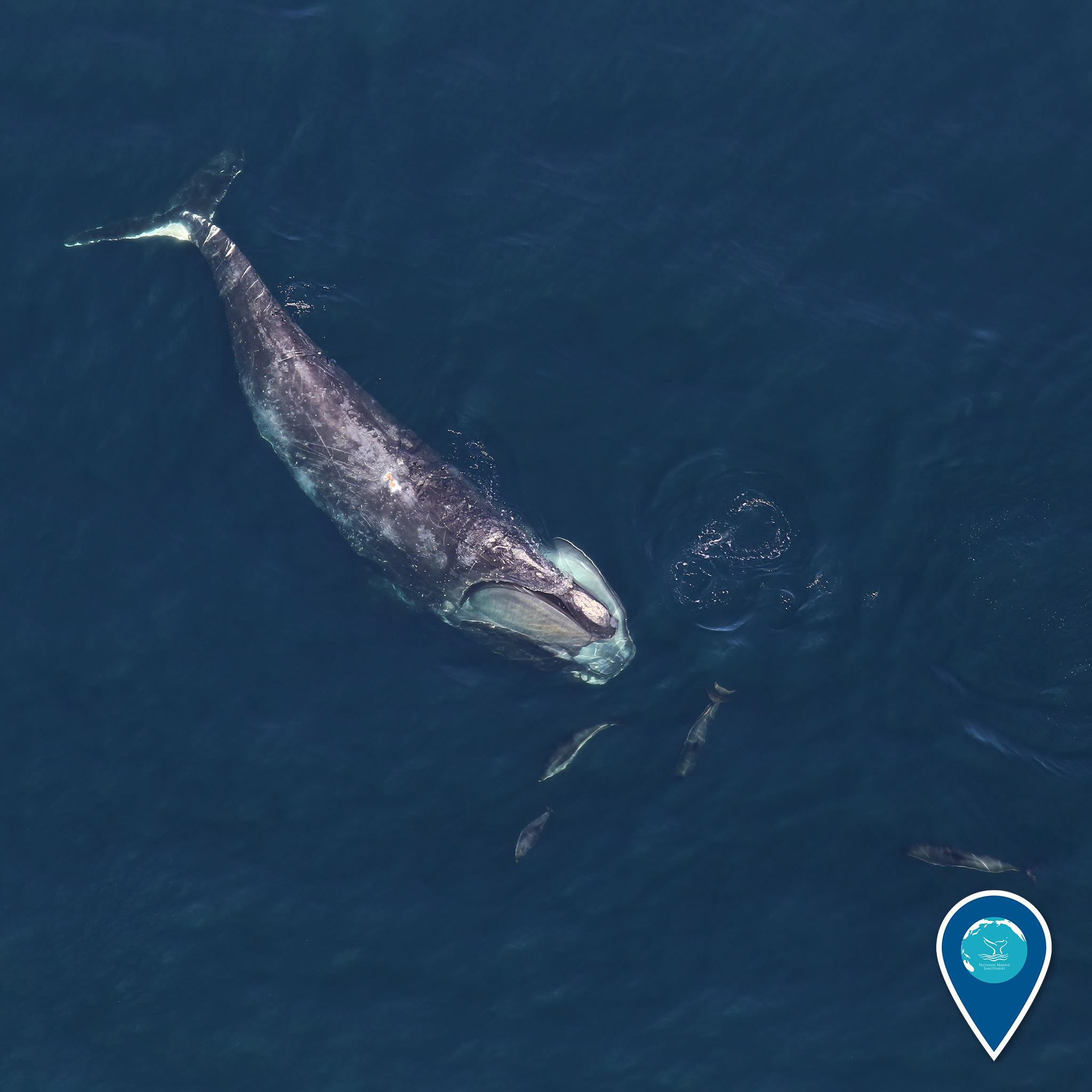
North Atlantic right whale as part of NOAA's Earth Is Blue series.
CetaceansCRCritically EndangeredVercel hosted

North Atlantic Right Whale (Eubalaena glacialis)

A stocky black baleen whale with no dorsal fin, a broad back, and a strongly arched mouthline. The head bears rough patches of thickened skin (callosities) whose pattern is unique to each individual — the basis for photo

Sources
3
Image rights
public domain
Image source
commons.wikimedia.org

Image: NOAA Gray's Reef NMS / Public domain

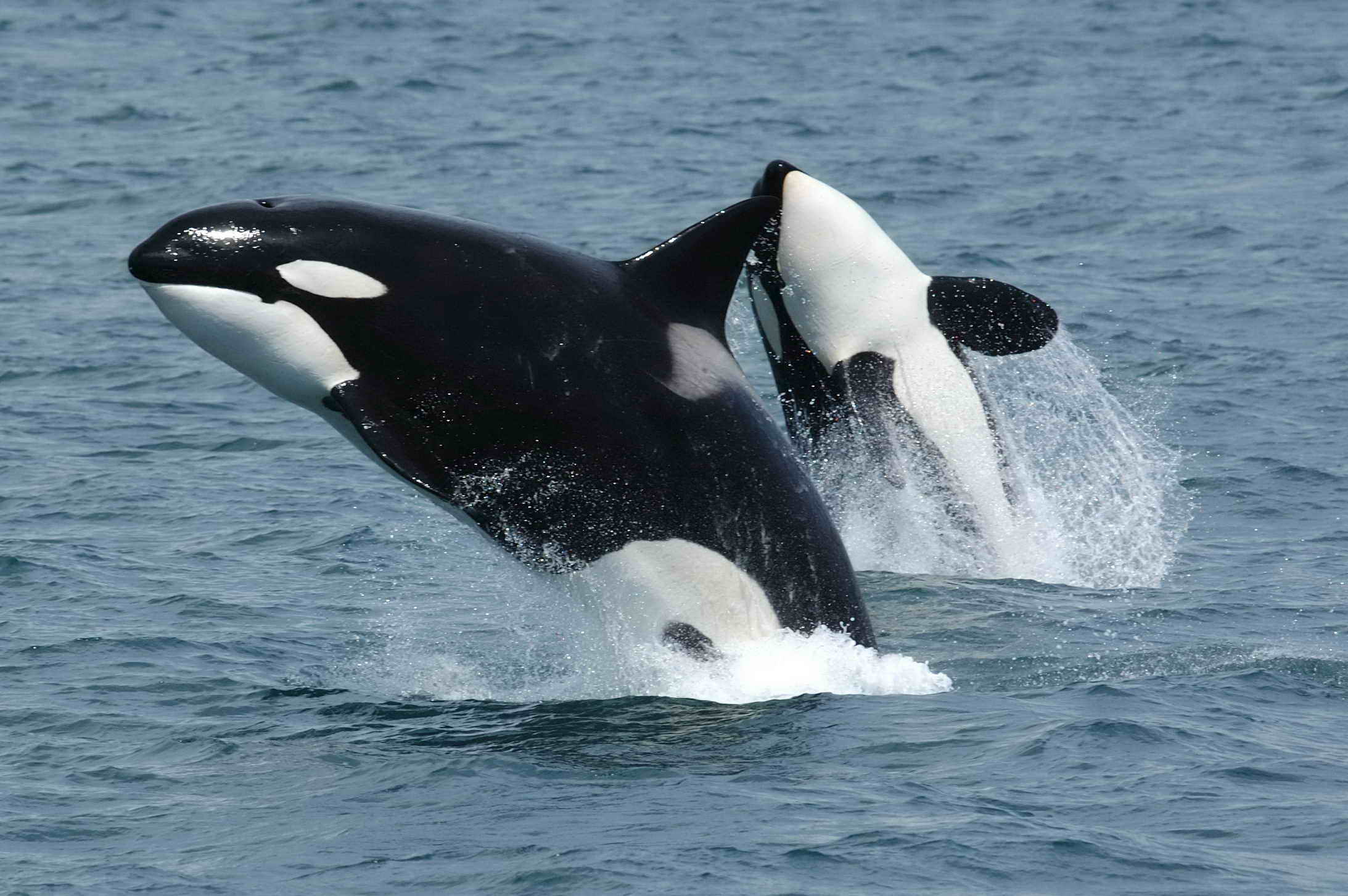
Orca (Orcinus orca) in an approved source image used for species identification.
CetaceansDDData DeficientVercel hosted

Orca (Orcinus orca)

A large black and white toothed cetacean. NOAA Fisheries reports lengths up to about 32 feet (roughly 10 m) and weights up to about 11 tons. Distinctive features include the tall dorsal fin (taller and straighter in adul

Sources
4
Image rights
public domain
Image source
commons.wikimedia.org

Image: Robert Pittman / Public domain

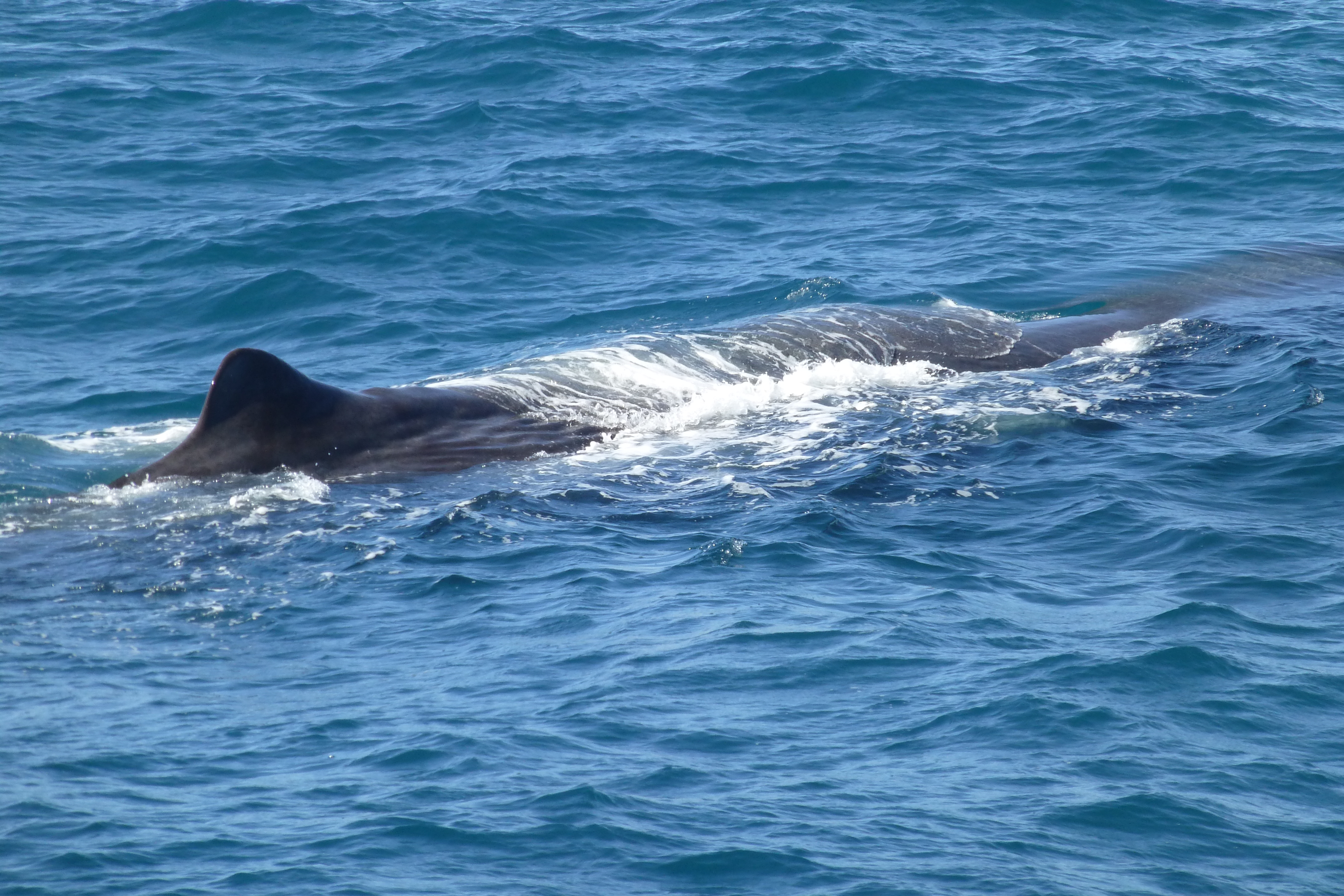
Sperm whale (Physeter macrocephalus) at Kaikoura, New Zealand.
CetaceansVUVulnerableVercel hosted

Sperm Whale (Physeter macrocephalus)

A large toothed whale with an enormous block shaped head (which holds the spermaceti organ), wrinkled skin, and a single blowhole set to the left of the head, producing a distinctive forward angled blow. NOAA Fisheries r

Sources
3
Image rights
cc0
Image source
commons.wikimedia.org

Image: Marion & Christoph Aistleitner / CC0

6 entries

Reefs & Habitat

Search full catalog
Elkhorn coral (Acropora palmata) on the crest of Gaulin Reef, San Salvador Island, Bahamas. June 24, 1999.
Reefs & HabitatCRCritically EndangeredVercel hosted

Elkhorn Coral (Acropora palmata)

A branching, flattened coral whose broad antler like ("elkhorn") branches grow rapidly toward the light, forming dense stands in shallow, high energy reef zones. Colonies build three dimensional reef structure on the wav

Sources
4
Image rights
cc0
Image source
commons.wikimedia.org

Image: Jstuby at en.wikipedia / CC0

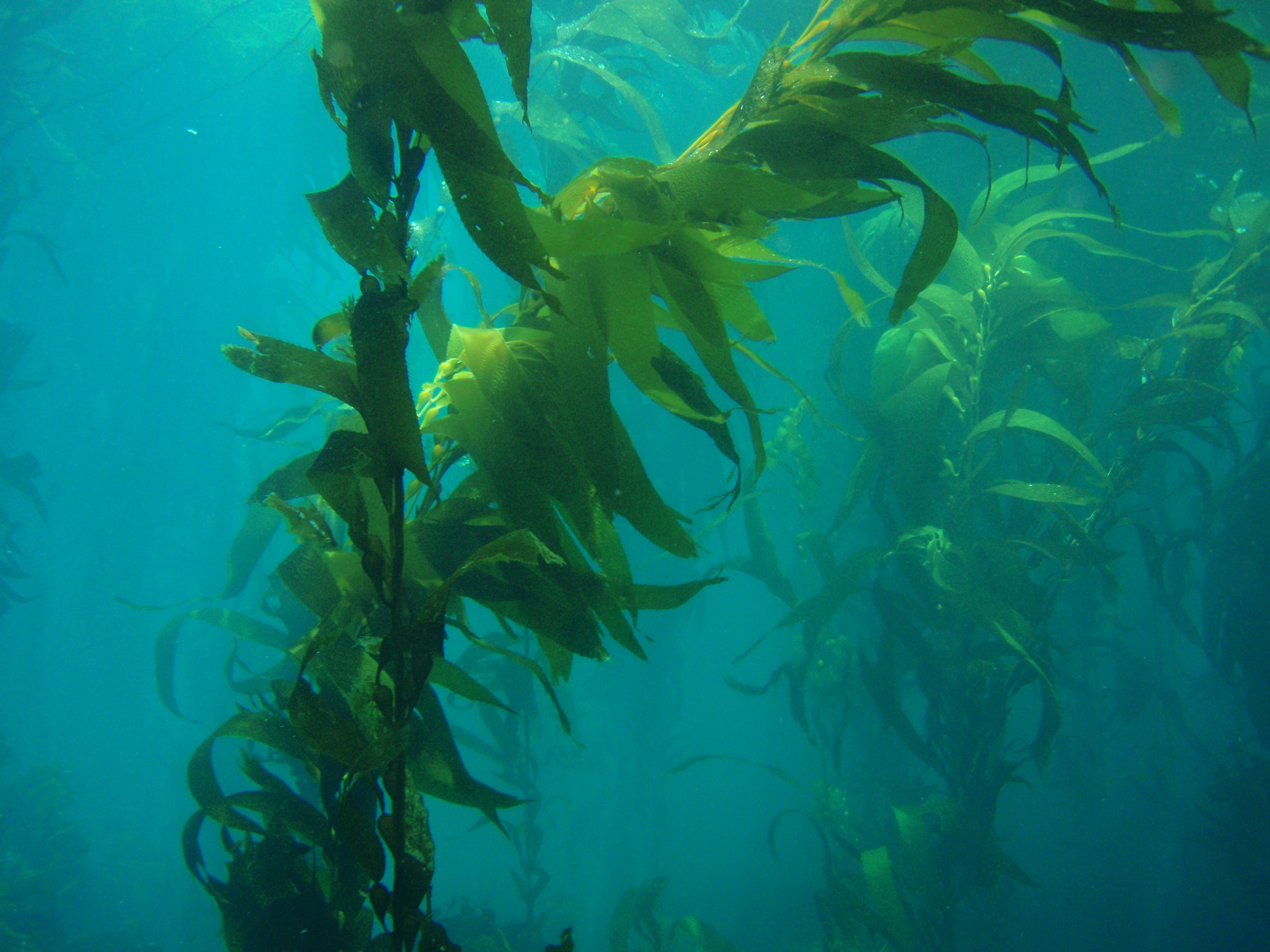
Giant kelp (Macrocystis pyrifera). California, Channel Islands NMS.
Reefs & HabitatVercel hosted

Giant Kelp (Macrocystis pyrifera)

A very large brown alga anchored to rocky substrate by a root like holdfast, with long stipes bearing blades, each kept buoyant by a gas filled float (pneumatocyst) at its base. Fronds reach the surface and form a floati

Sources
2
Image rights
public domain
Image source
commons.wikimedia.org

Image: Claire Fackler, CINMS, NOAA. / Public domain

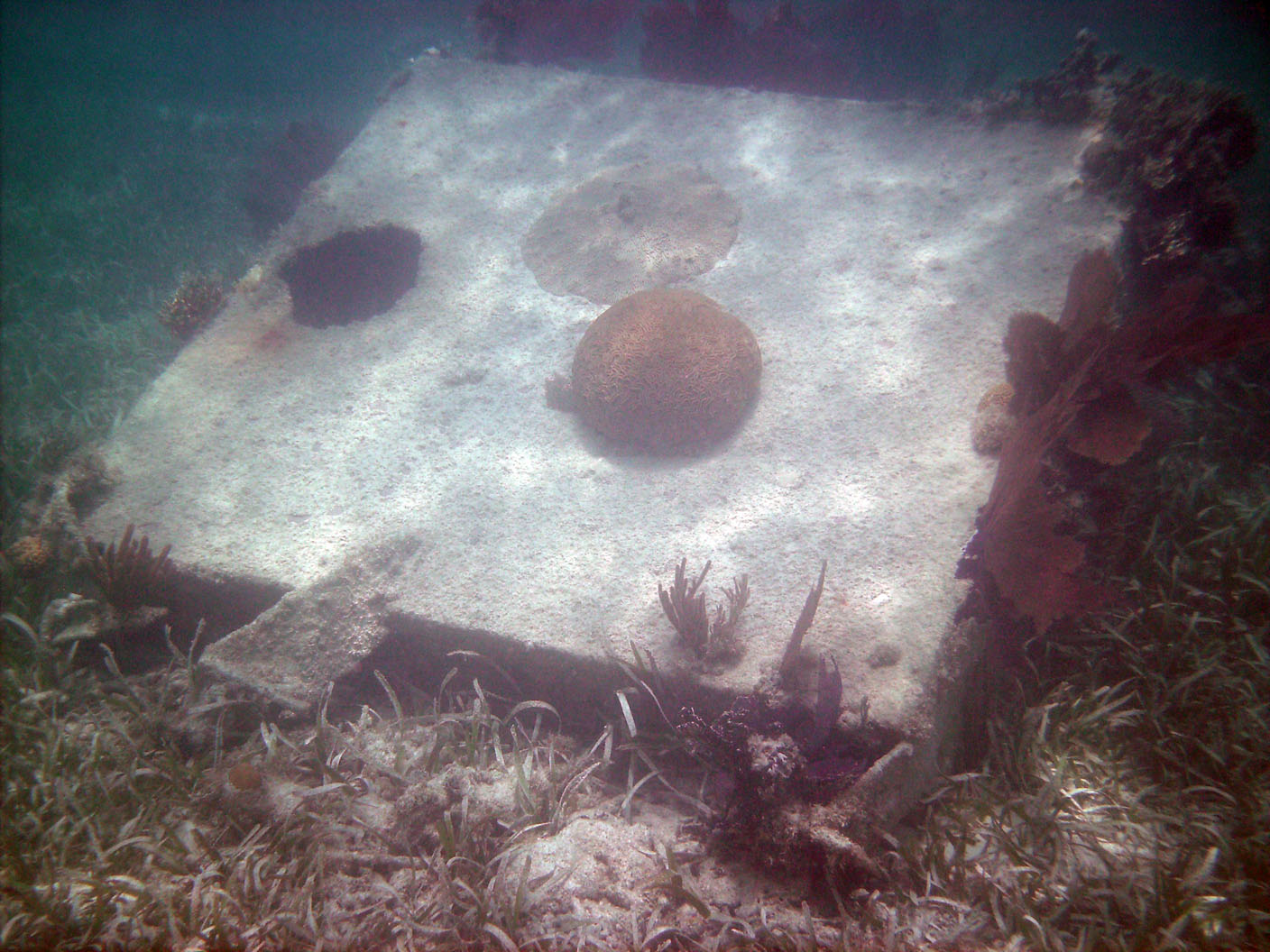
Metal block with corals on it (Diploria labyrinthiformis and Diploria strigosa) in shallow water next to Fort Jefferson, Dry Tortugas National Park, Florida.
Reefs & HabitatLCLeast ConcernVercel hosted

Grooved Brain Coral (Diploria labyrinthiformis)

A massive, rounded ("boulder" or "brain") coral whose surface is covered in deep, meandering grooves and ridges that resemble the folds of a brain — the feature that gives the genus its name. Unlike branching corals it g

Sources
4
Image rights
cc0
Image source
commons.wikimedia.org

Image: Jstuby / CC0

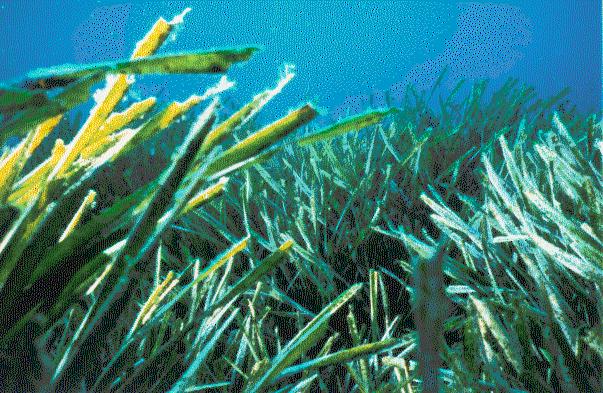
Posidonia oceanica.
Reefs & HabitatLCLeast ConcernVercel hosted

Neptune Grass (Posidonia oceanica)

A rooted marine flowering plant with long, ribbon like green leaves growing from a network of rhizomes anchored in seafloor sediment. Over centuries it builds raised "matte" terraces of intertwined rhizomes and trapped s

Sources
3
Image rights
public domain
Image source
commons.wikimedia.org

Image: National Oceanic and Atmospheric Administration / Public domain

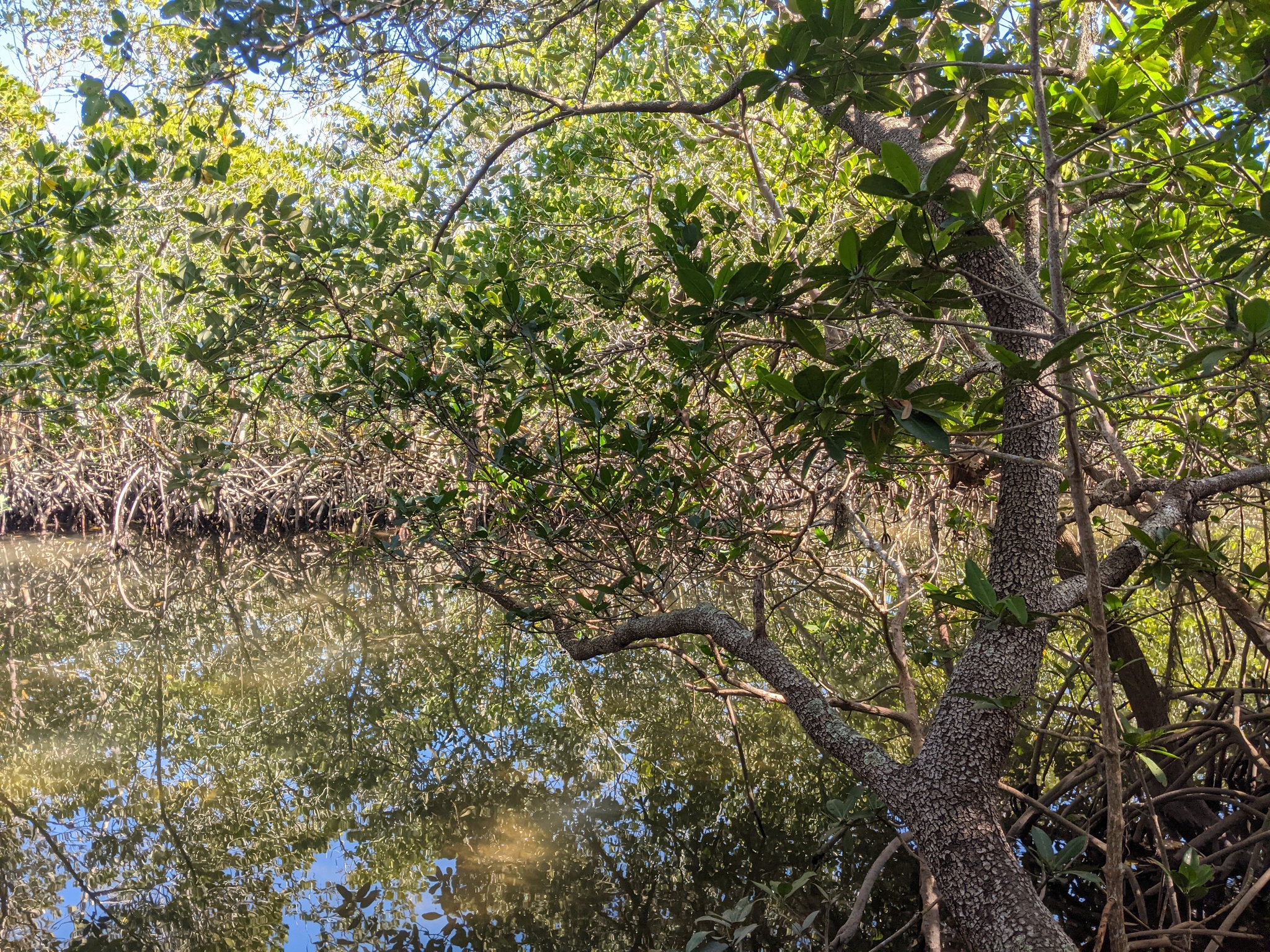
Photo of red mangrove uploaded from iNaturalist.
Reefs & HabitatLCLeast ConcernVercel hosted

Red Mangrove (Rhizophora mangle)

A small to medium evergreen tree of the intertidal coast, recognized by its arching "prop" or stilt roots that drop from the trunk and branches into the water. It is viviparous: seeds germinate while still attached to th

Sources
3
Image rights
cc0
Image source
commons.wikimedia.org

Image: no rights reserved / CC0

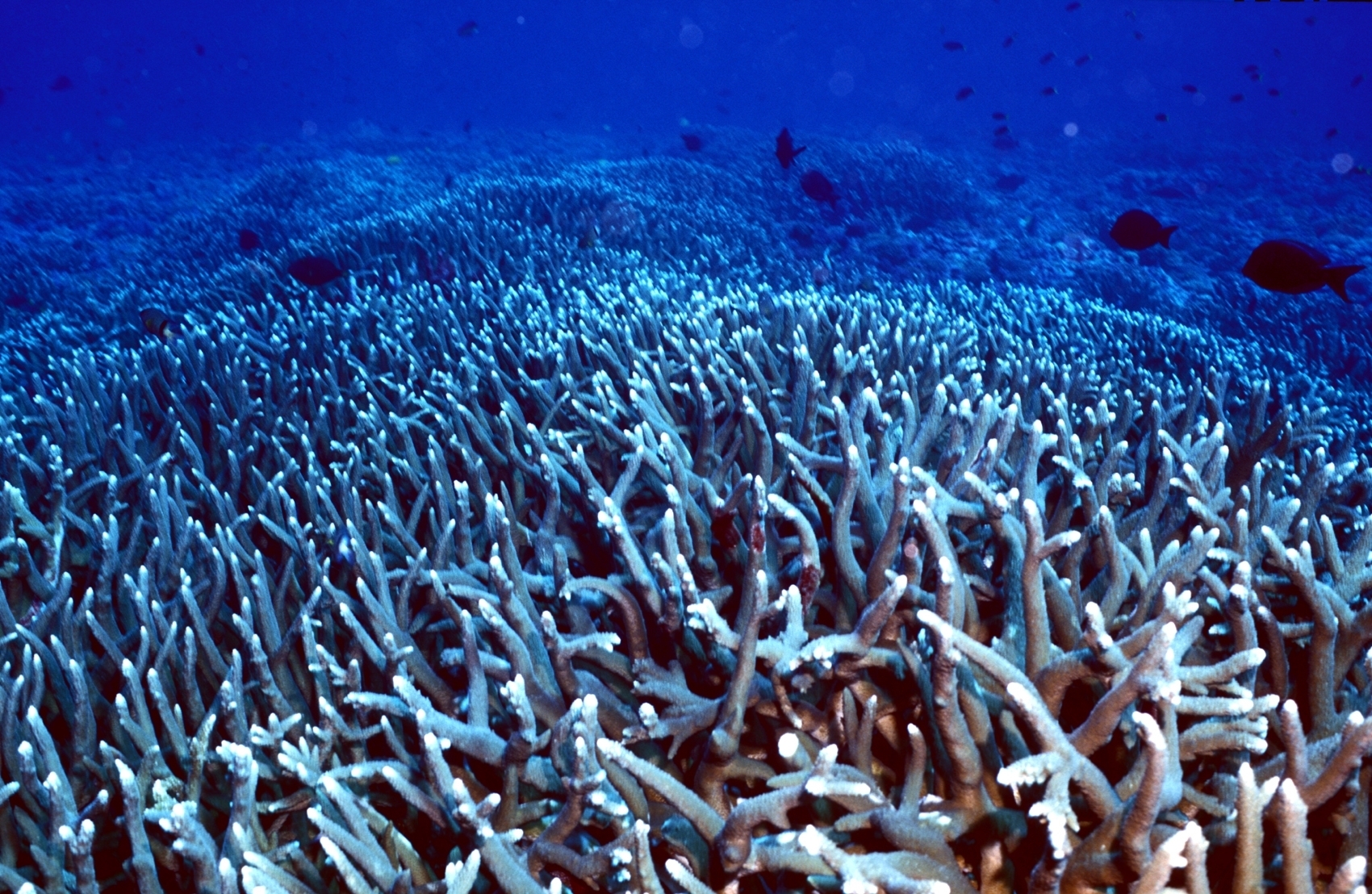
Beds of staghorn coral (Acropora Sp) undulate across the sea floor at Baker Island National Wildlife Refuge in the Pacific, some 1,600 miles southwest of Honolulu. (Jim Maragos/USFWS).
Reefs & HabitatVercel hosted

Staghorn Coral (Acropora cervicornis)

A branching, antler like ("staghorn") coral with cylindrical branches that grow rapidly, forming dense thickets. These thickets build three dimensional reef structure that shelters fish and invertebrates — making this a

Sources
3
Image rights
public domain
Image source
commons.wikimedia.org

Image: U.S. Fish and Wildlife Service Headquarters / Public domain

6 entries

Sea Turtles

Search full catalog
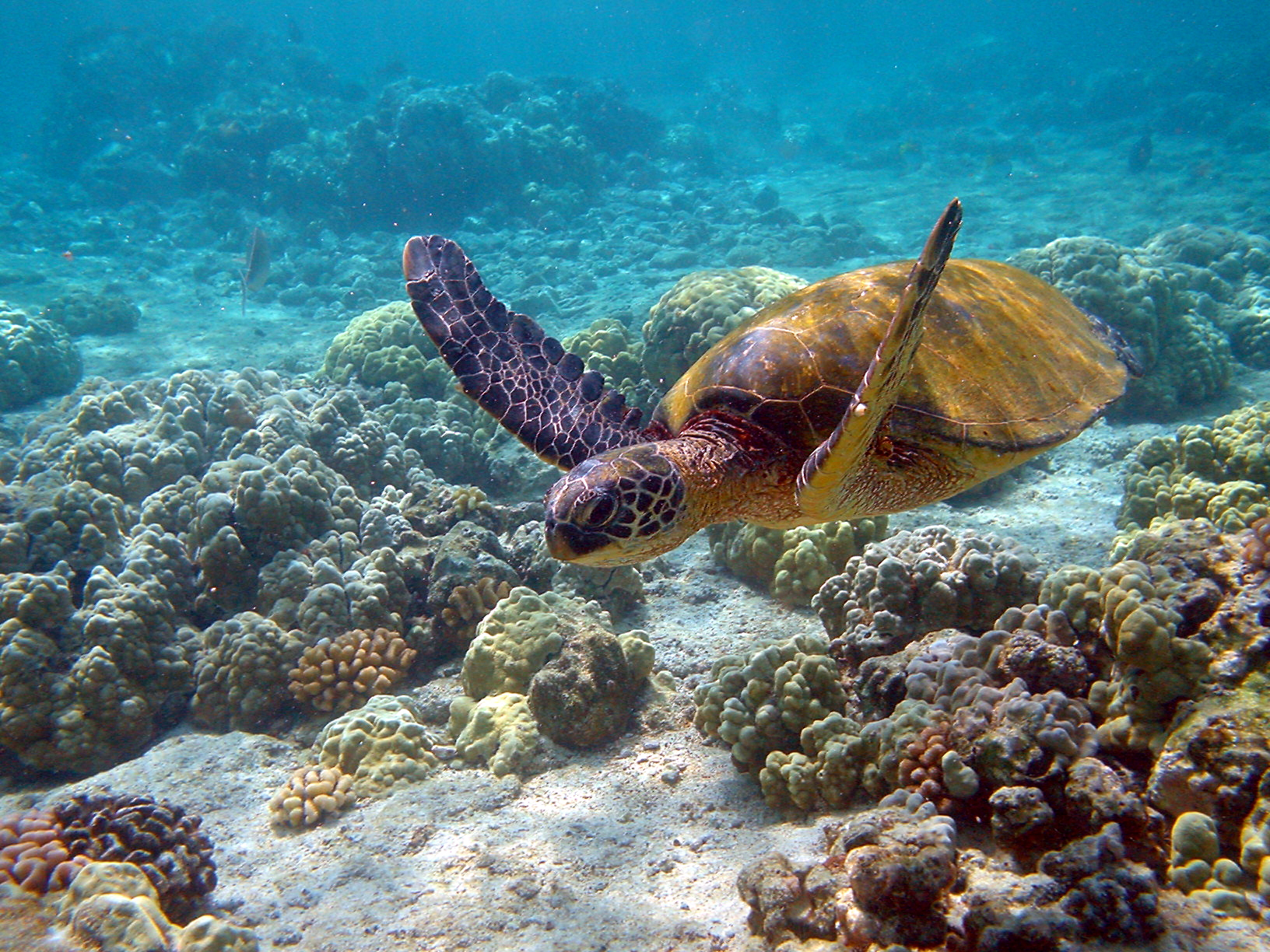
Green turtle (Chelonia mydas), Hawai'i, USA.
Sea TurtlesVercel hosted

Green Turtle (Chelonia mydas)

A large sea turtle with a smooth, often mottled carapace, a single pair of prefrontal scales, and a small rounded head. Named for the greenish color of its body fat, not its shell. Adults are largely herbivorous, grazing

Sources
3
Image rights
cc by sa
Image source
commons.wikimedia.org

Image: Brocken Inaglory / CC BY-SA 3.0

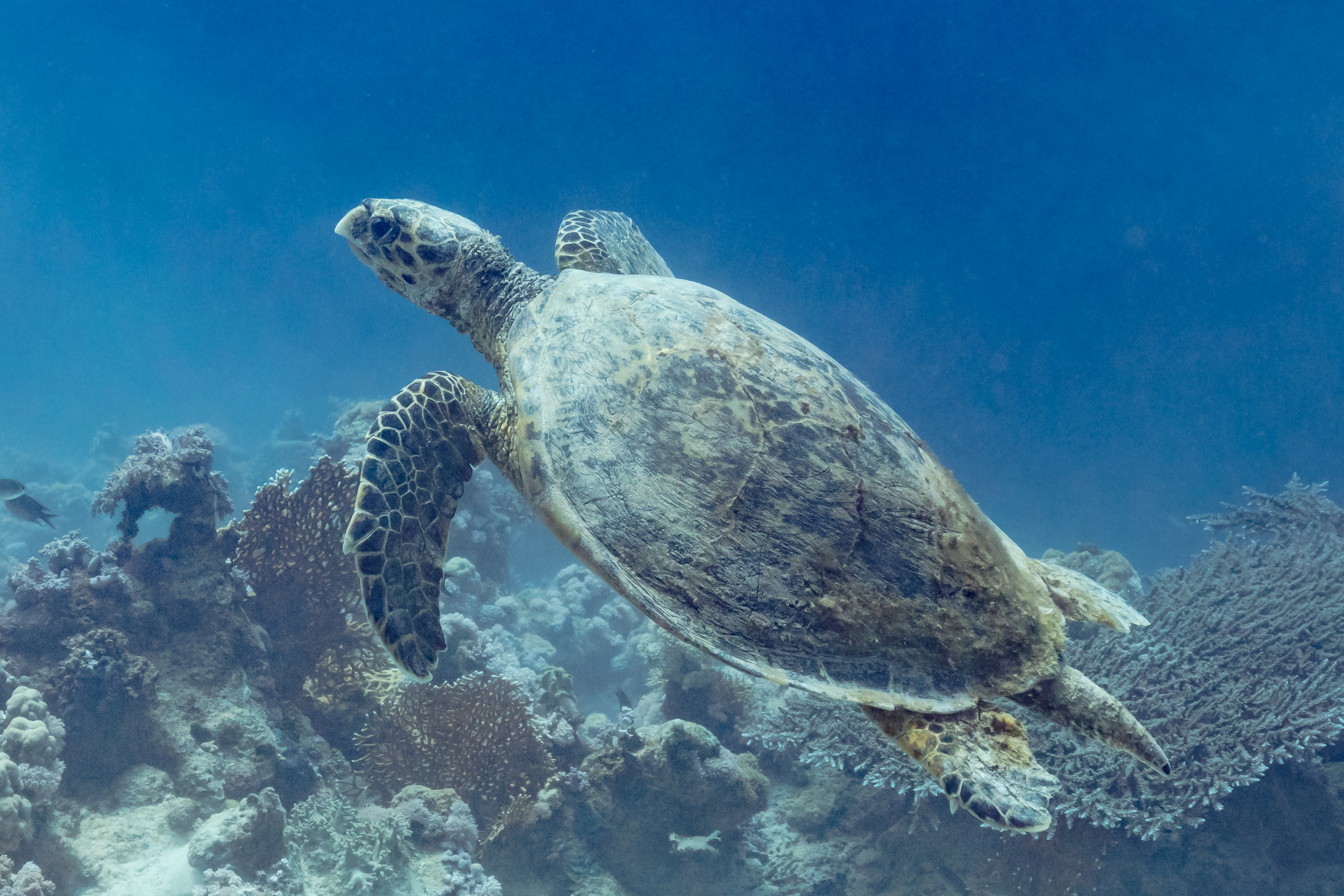
Hawksbill sea turtle (Eretmochelys imbricata), Ras Muhammad National Park, Egypt.
Sea TurtlesCRCritically EndangeredVercel hosted

Hawksbill Turtle (Eretmochelys imbricata)

The hawksbill is named for its narrow, hawk like beak, which it uses to reach prey in reef crevices (NOAA Fisheries). Its carapace is strikingly mottled in amber, orange, red, yellow, black, and brown, with serrated rear

Sources
3
Image rights
cc by sa
Image source
commons.wikimedia.org

Image: Diego Delso / CC BY-SA 4.0

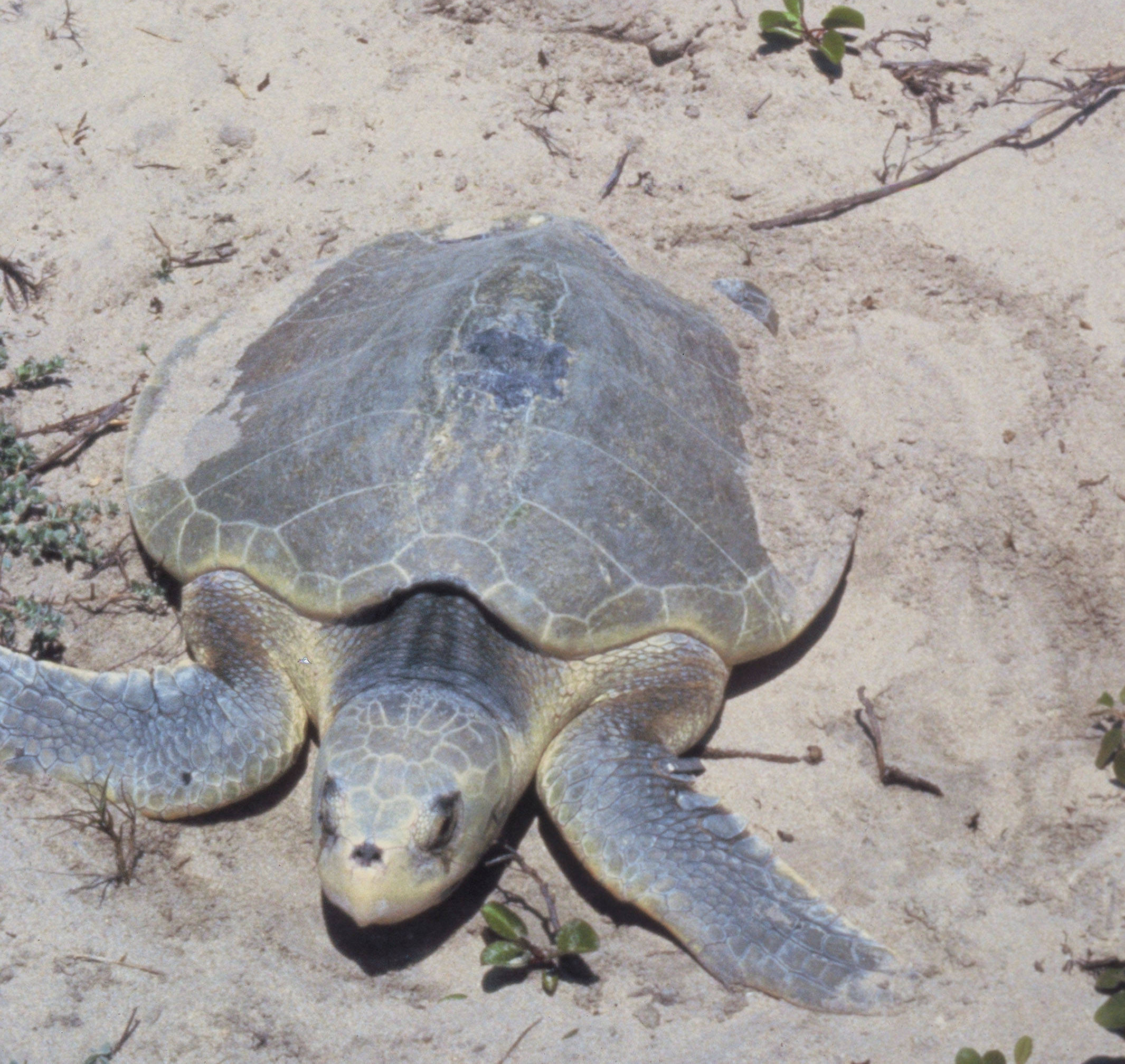
Kemp's Ridley Turtle (Lepidochelys kempii) in an approved source image used for species identification.
Sea TurtlesCRCritically EndangeredVercel hosted

Kemp's Ridley Turtle (Lepidochelys kempii)

Kemp's ridley is the smallest sea turtle: adults weigh about 70–100 pounds and measure roughly 2 feet in length (NOAA Fisheries). The carapace is often as wide as it is long, grayish green above with a pale yellowish und

Sources
3
Image rights
public domain
Image source
commons.wikimedia.org

Image: uploaded by Johntex / Public domain

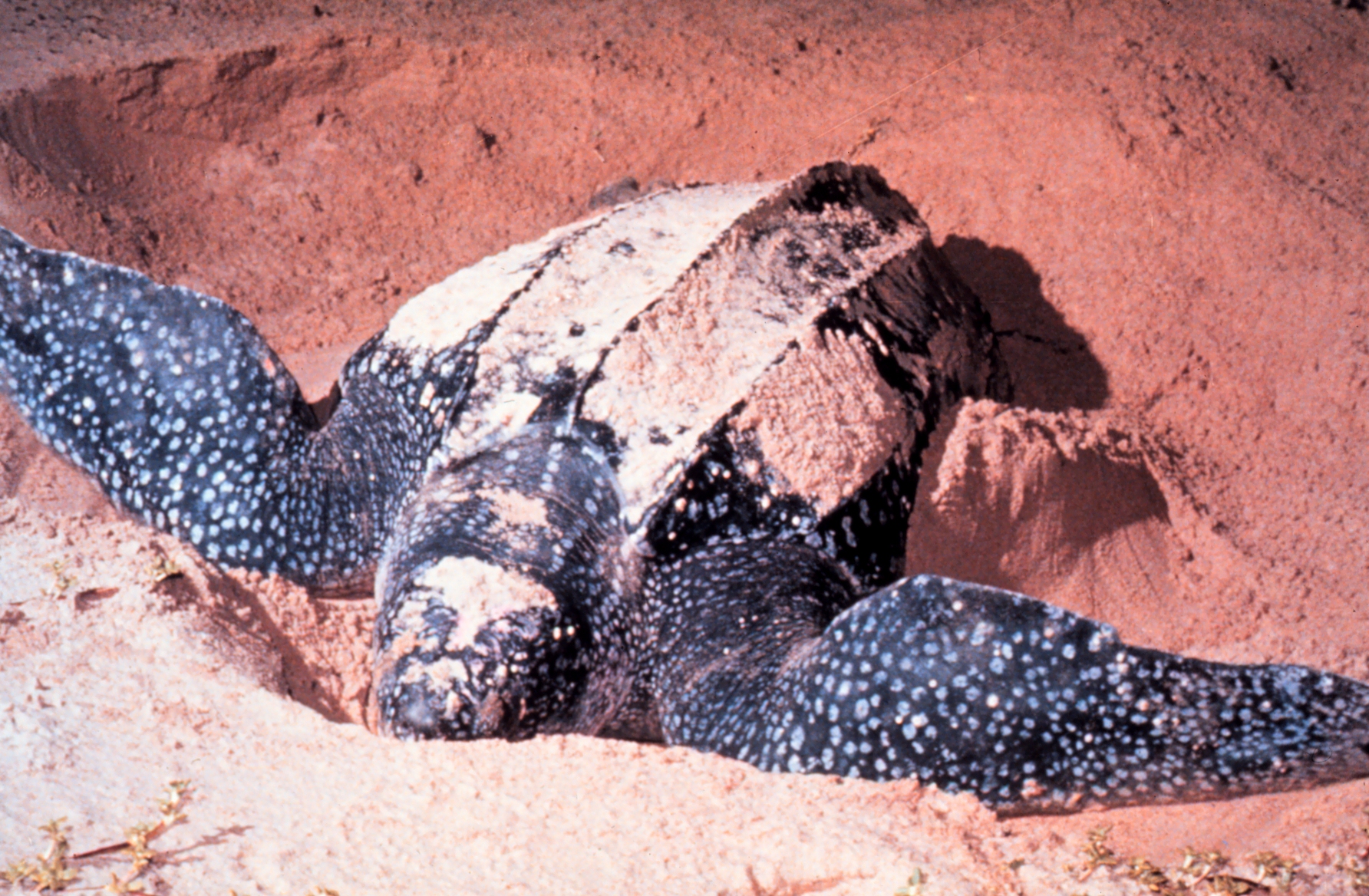
Adult Dermochelys coriacea, Leatherback Sea Turtle. In Las Baulas National Marine Park, Costa Rica.
Sea TurtlesVUVulnerableVercel hosted

Leatherback Turtle (Dermochelys coriacea)

The leatherback is unmistakable: it is the largest living turtle, with adults reaching about 5–6 feet in length and weighing roughly 750–1,000 pounds (NOAA Fisheries). Unlike all other sea turtles, it lacks scales and a

Sources
3
Image rights
public domain
Image source
commons.wikimedia.org

Image: National Oceanic and Atmospheric Administration, NOAA / Public domain

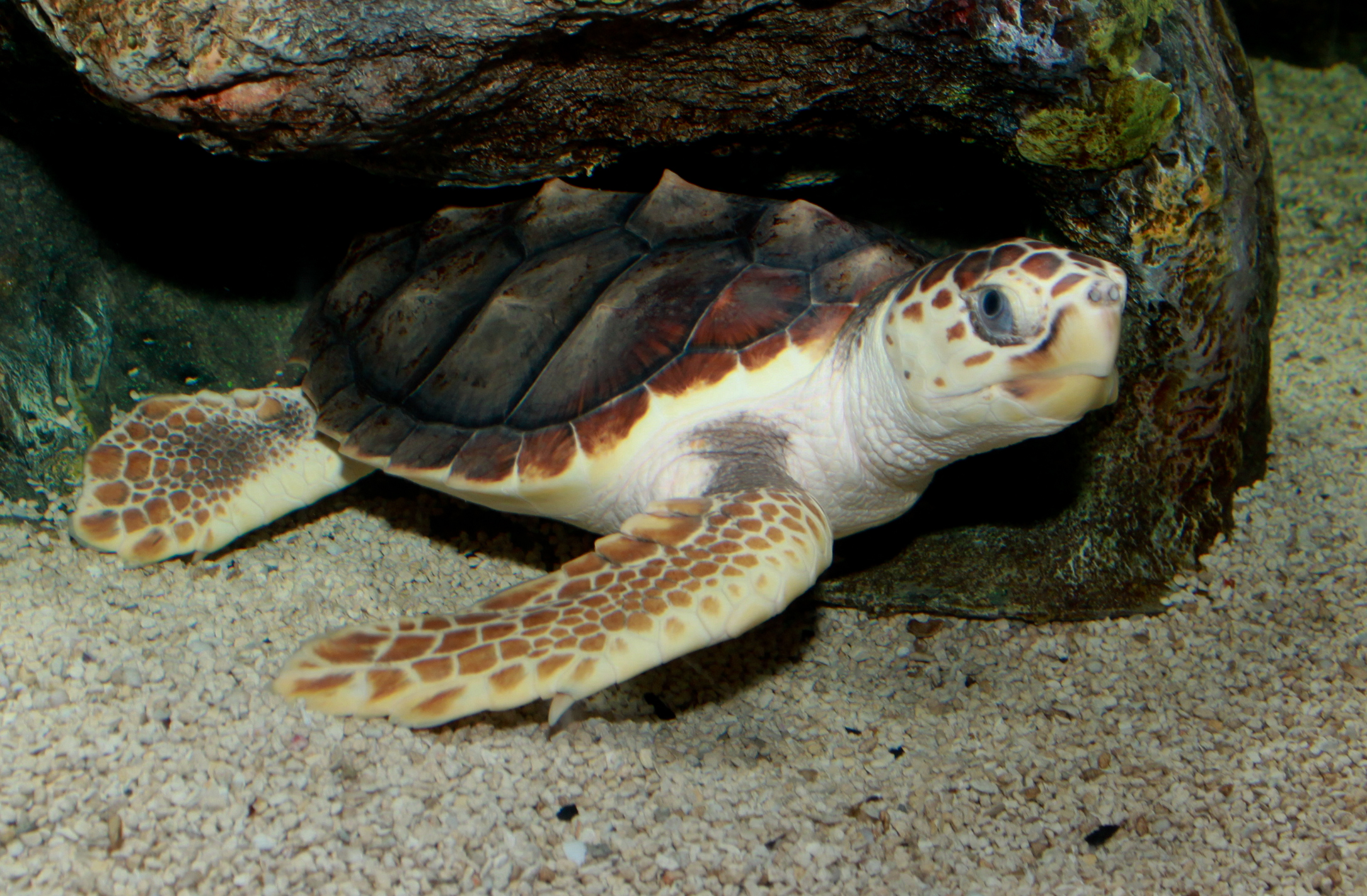
Loggerhead Sea Turtle (Caretta caretta).
Sea TurtlesVUVulnerableVercel hosted

Loggerhead Turtle (Caretta caretta)

The loggerhead is named for its large head and powerful jaws. Adults are about 2.5–3.5 feet long and weigh roughly 200–350 pounds (NOAA Fisheries). The carapace is reddish brown in adults and sub adults, over a pale yell

Sources
3
Image rights
cc by
Image source
commons.wikimedia.org

Image: Brian Gratwicke / CC BY 2.0

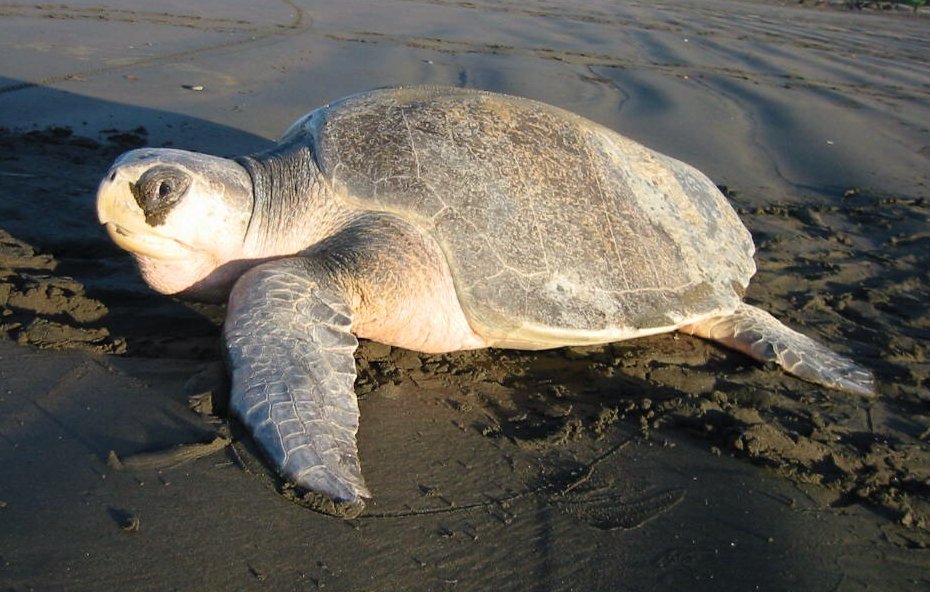
Olive Ridley Turtle (Lepidochelys olivacea) in an approved source image used for species identification.
Sea TurtlesVUVulnerableVercel hosted

Olive Ridley Turtle (Lepidochelys olivacea)

The olive ridley takes its name from the olive green color of its heart shaped carapace (NOAA Fisheries). It is among the smallest sea turtles: adults measure about 2–2.5 feet long and weigh up to roughly 100 pounds (NOA

Sources
3
Image rights
cc by sa
Image source
commons.wikimedia.org

Image: Remove "cropped" from file name and see original file / CC BY-SA 4.0

5 entries

Pinnipeds

Search full catalog
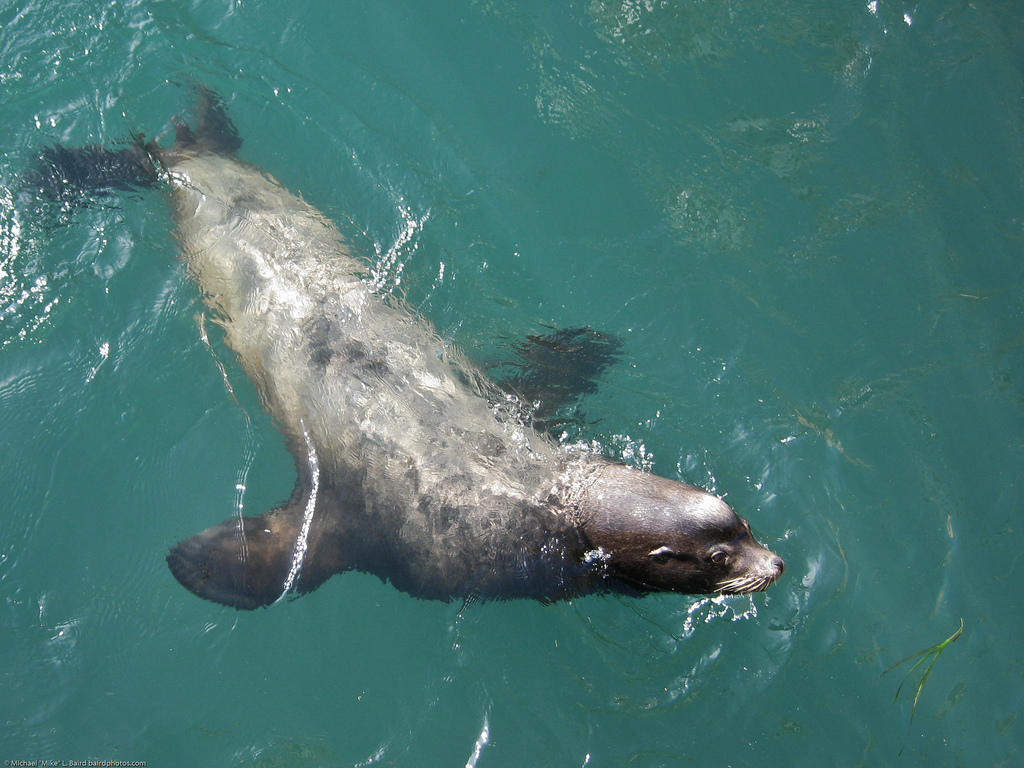
California Sea Lion in Morro Bay.
PinnipedsLCLeast ConcernVercel hosted

California Sea Lion (Zalophus californianus)

A medium large eared seal: males are much larger than females and develop a raised forehead crest (sagittal crest) with age, often appearing lighter on the crown. Unlike true seals, otariids have visible external ear fla

Sources
2
Image rights
cc by
Image source
commons.wikimedia.org

Image: https://www.flickr.com/photos/mikebaird/ Mike Baird / CC BY 2.0

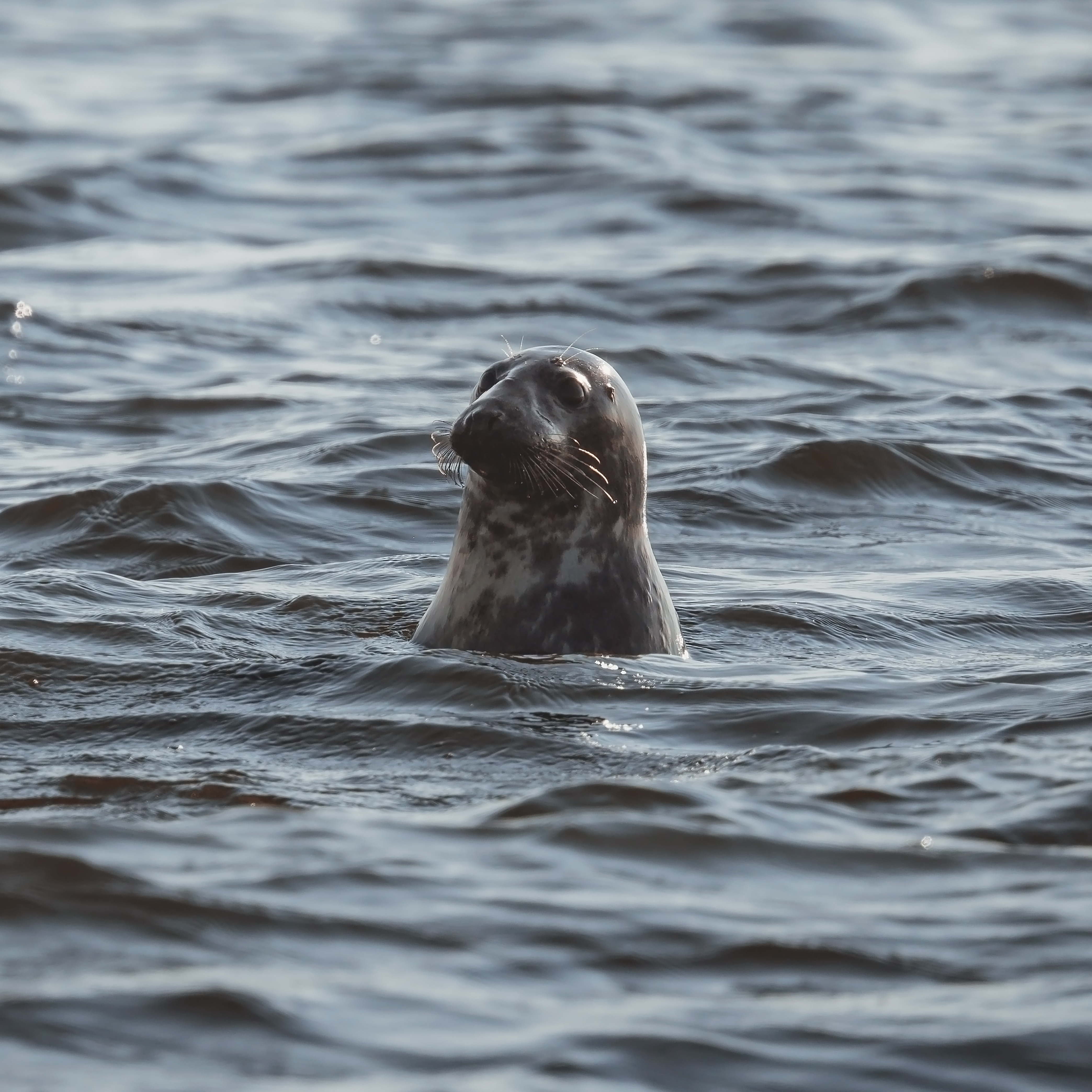
Grey seal in Baltic Sea, Poland.
PinnipedsLCLeast ConcernVercel hosted

Grey Seal (Halichoerus grypus)

A large phocid with a long, broad muzzle and a relatively flat profile — the genus name Halichoerus ("hook nosed sea pig") points to the distinctive snout. Adult males are darker and noticeably larger than females, with

Sources
3
Image rights
cc by
Image source
commons.wikimedia.org

Image: Aneta p / CC BY 4.0

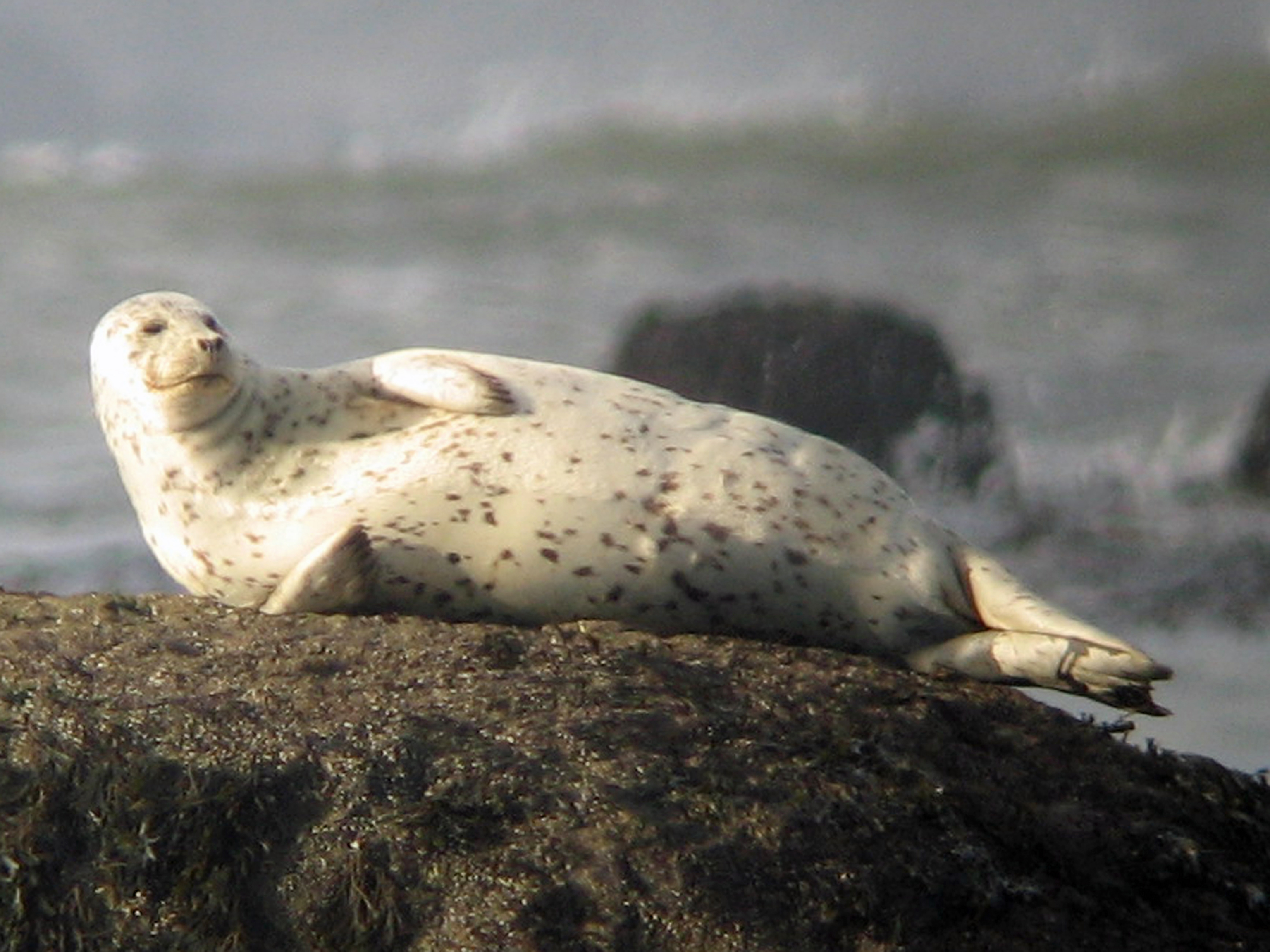
Harbor Seal, Phoca vitulina.
PinnipedsVercel hosted

Harbor Seal (Phoca vitulina)

A small to medium seal with a rounded head, V shaped nostrils, and a coat of spots and rings on a grey to brown background; no external ear flaps (a "true" / phocid seal). On land it moves by caterpillar like undulation;

Sources
2
Image rights
cc by
Image source
commons.wikimedia.org

Image: Greg Schechter from San Francisco, USA / CC BY 2.0

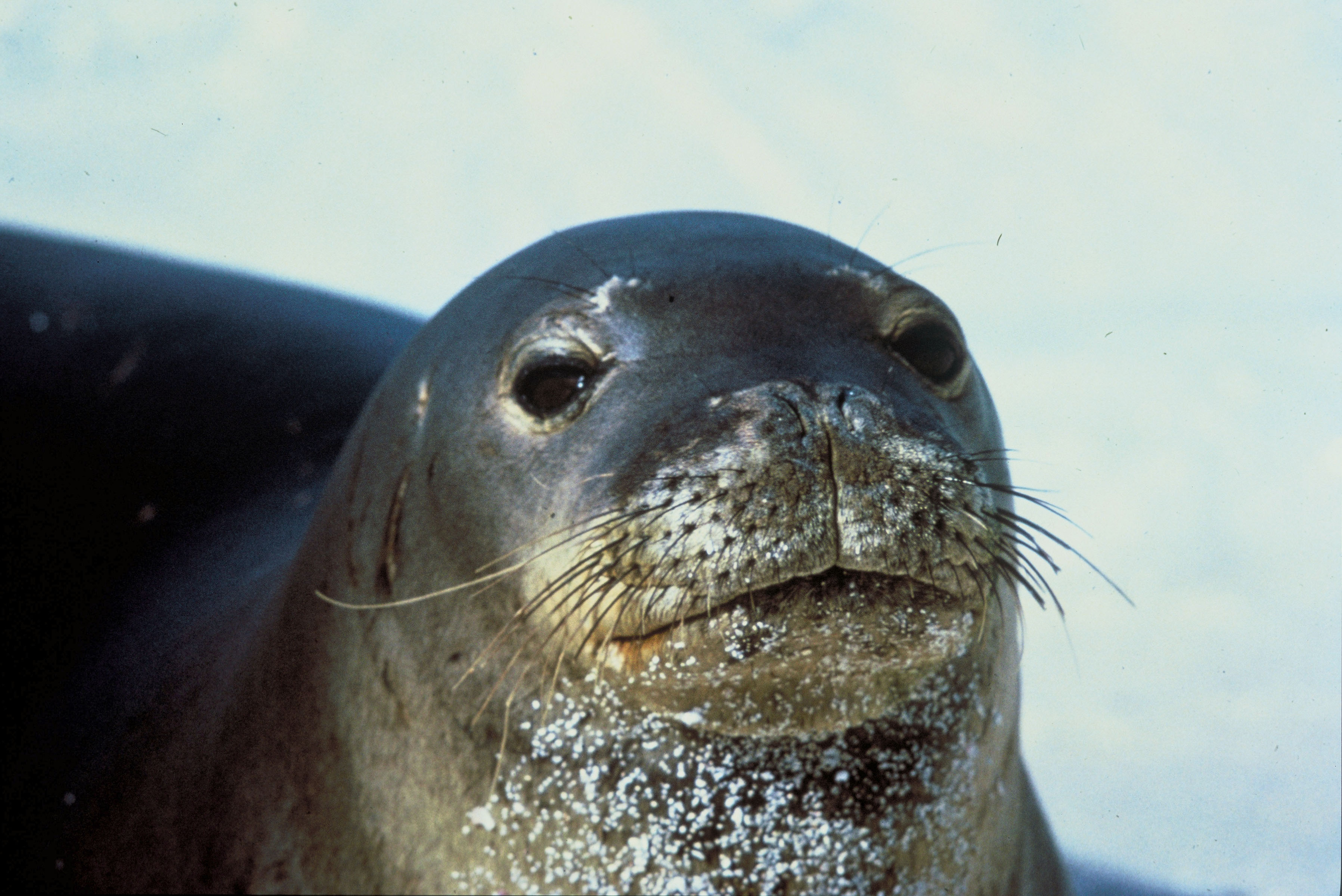
Hawaiian Monk Seal.
PinnipedsENEndangeredVercel hosted

Hawaiian Monk Seal (Neomonachus schauinslandi)

A robust true seal with a relatively slender body, a broad, rounded head, and short snout. Coloration is silvery grey to brown above and lighter below, often with green tinged algal films or scarring on adults; pups are

Sources
3
Image rights
public domain
Image source
commons.wikimedia.org

Image: U.S. Fish and Wildlife Service / Public domain

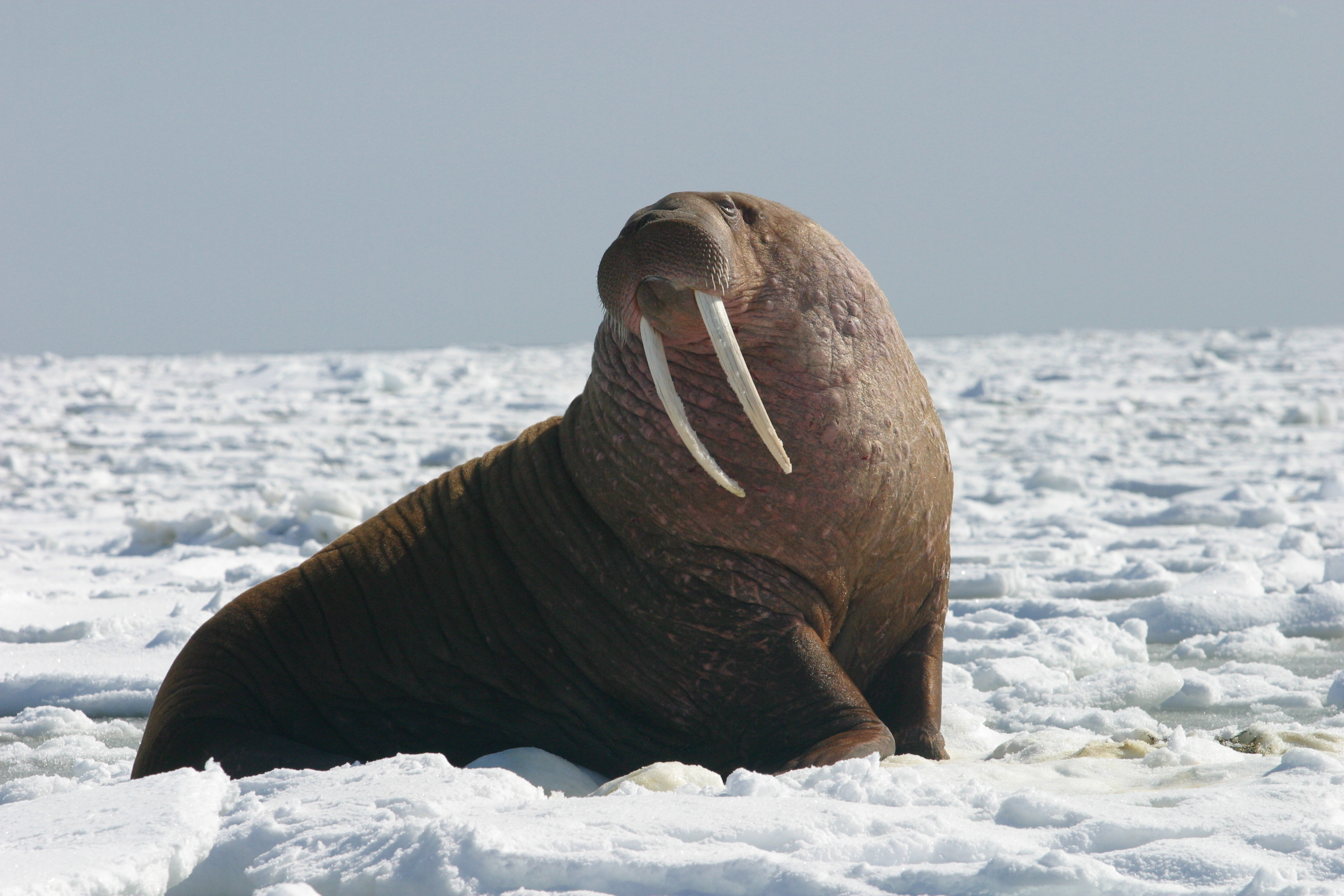
A large Pacific Walrus bull watches the camera. The adult bulls can weigh up to 3,700 pounds.
PinnipedsVUVulnerableVercel hosted

Walrus (Odobenus rosmarus)

Unmistakable among pinnipeds: a very large body, a broad muzzle dense with stiff whiskers (vibrissae), and long tusks (elongated canine teeth) present in both sexes, longer in males. Skin is thick and wrinkled, often app

Sources
3
Image rights
public domain
Image source
commons.wikimedia.org

Image: Joel Garlich-Miller, U.S. Fish and Wildlife Service / Public domain

1 entry

Sirenians

Search full catalog
West Indian manatee (Trichechus manatus) at Merritt Island's National Wildlife Refuge in Florida next to Kennedy Space Center.
SireniansVUVulnerableVercel hosted

West Indian Manatee (Trichechus manatus)

A large, slow moving, fully aquatic herbivore with a rounded, seal shaped body, paddle like fore flippers, and a broad, flattened, spoon shaped tail (distinguishing manatees from the fluke tailed dugong). The face has a

Sources
3
Image rights
public domain
Image source
commons.wikimedia.org

Image: NASA / Public domain