Antarctic Peninsula, Southern Ocean
Antarctic Peninsula, Southern Ocean
Status: needs expert review. Figures cite CCAMLR, the IUCN, peer-reviewed research, the British Antarctic Survey, the Antarctic Treaty Secretariat, and IAATO. Krill biomass and visitor-rule distances vary by source and scale; a reviewer should confirm the krill biomass figure and the current IAATO operational distances against primary documents before approval.
Overview
The Antarctic Peninsula is the northernmost reach of the Antarctic continent, extending toward South America and bordered by some of the most biologically productive waters in the Southern Ocean. It is also one of the fastest-warming regions on Earth, which makes it a frontline for observing how a polar marine ecosystem responds to climate change. The region's ecology rests on a single keystone species — Antarctic krill — and the whales, seals, and penguins that depend on it.
Key species & habitats
- Antarctic krill (Euphausia superba): CCAMLR describes krill as a keystone species of the Southern Ocean and estimates a biomass of around 379 million tonnes, forming the primary food source for whales, seals, penguins, squid, and fish (CCAMLR). The early life stages of krill are linked to sea ice, tying the species' fortunes to ice conditions.
- Baleen whales: Humpback whales (Megaptera novaeangliae) have recovered substantially since the end of commercial whaling and were reclassified by the IUCN as Least Concern in 2008, though some subpopulations remain endangered (IUCN). The Antarctic blue whale subspecies remains Critically Endangered. These whales feed heavily on Antarctic krill.
- Penguins: Adélie (Pygoscelis adeliae), gentoo (Pygoscelis papua), and chinstrap (Pygoscelis antarcticus) penguins breed along the Peninsula. Research documents a "reversal of fortunes" in which gentoo penguins expand southward as the climate warms while Adélie and chinstrap populations decline on the Peninsula (Clucas et al. 2014, Scientific Reports).
Conservation status & threats
The dominant pressure is climate change. The western Antarctic Peninsula has warmed rapidly and lost substantial sea ice, which affects the krill that underpins the entire food web (British Antarctic Survey; peer-reviewed research). Because so many predators concentrate on krill, changes at the base of the food web propagate to whales, seals, and penguins. The CCAMLR-managed krill fishery operates under precautionary catch limits — a conservative trigger level well below the estimated sustainable yield — specifically to protect krill-dependent predators (CCAMLR). A reviewer should note that the magnitude of long-term krill decline is itself an area of active scientific work and should be cited carefully rather than as a settled figure.
Protected-area status & rules
Antarctica is governed by the Antarctic Treaty (signed 1959, in force 1961) and its Environmental (Madrid) Protocol (signed 1991, in force 1998), which designates Antarctica "a natural reserve, devoted to peace and science" and prohibits mineral exploitation (Antarctic Treaty Secretariat). Marine living resources are managed by CCAMLR (Convention signed 1980, in force 1982).
CCAMLR has established marine protected areas including the South Orkney Islands Southern Shelf MPA (2009, the first MPA entirely within the high seas) and the Ross Sea Region MPA (2016, the world's largest MPA when designated). Further MPA proposals covering the Antarctic Peninsula region and the Weddell Sea remain unadopted, blocked under CCAMLR's consensus rule (CCAMLR; peer-reviewed reporting).
Tourism is self-regulated through IAATO operational procedures alongside Antarctic Treaty visitor site guidelines. IAATO requires visitors not to approach wildlife on shore closer than five metres, and applies operational limits including a cap on the number of passengers ashore from a vessel at one time and biosecurity cleaning before and after landings (IAATO). Whale-watching and seal-specific distances are larger; a reviewer should confirm the exact current figures from IAATO's operational documents before any are published.
Per ETHICS.md, this briefing describes the governing rules rather than promoting close approach.
How to visit responsibly
- Travel only with IAATO-affiliated operators and follow all crew instructions on distances, landing numbers, and timing.
- Hold the minimum five-metre distance from wildlife on shore, and greater distances for whales and seals; a curious animal approaching you does not lift the limit.
- Complete all biosecurity cleaning of boots and equipment before and after each landing to avoid introducing non-native organisms.
- Recognise that the Peninsula's wildlife is already under climate pressure; minimising added disturbance in a short breeding window matters.
How you can help
- Reduce your carbon footprint — climate warming and sea-ice loss are the dominant threats to this krill-based ecosystem.
- Support science-based management of the krill fishery and the adoption of the proposed Antarctic Peninsula and Weddell Sea MPAs.
- Choose operators with strong environmental and biosecurity records, and support Antarctic research and monitoring.
Sources (6)
Every claim traces to one of the citations below. Anything that could not be sourced was left out.
- [1]Tier 1 · Peer-reviewedKrill fisheries and sustainability — CCAMLRAccessed 2026-06-16
- [2]Tier 1 · Peer-reviewedHumpback whale on road to recovery, reveals IUCN Red List — IUCNAccessed 2026-06-16
- [3]Tier 1 · Peer-reviewedA reversal of fortunes: climate change winners and losers in Antarctic Peninsula penguins — Clucas et al., Scientific ReportsAccessed 2026-06-16
- [4]Tier 1 · Peer-reviewedEnvironmental (Madrid) Protocol — Antarctic Treaty SecretariatAccessed 2026-06-16
- [5]Tier 1 · Peer-reviewedMarine Protected Areas (MPAs) — CCAMLRAccessed 2026-06-16
- [6]Tier 2 · InstitutionalDon't Hug the Penguins, and Other Rules in Antarctica — IAATOAccessed 2026-06-16
Related in the commons
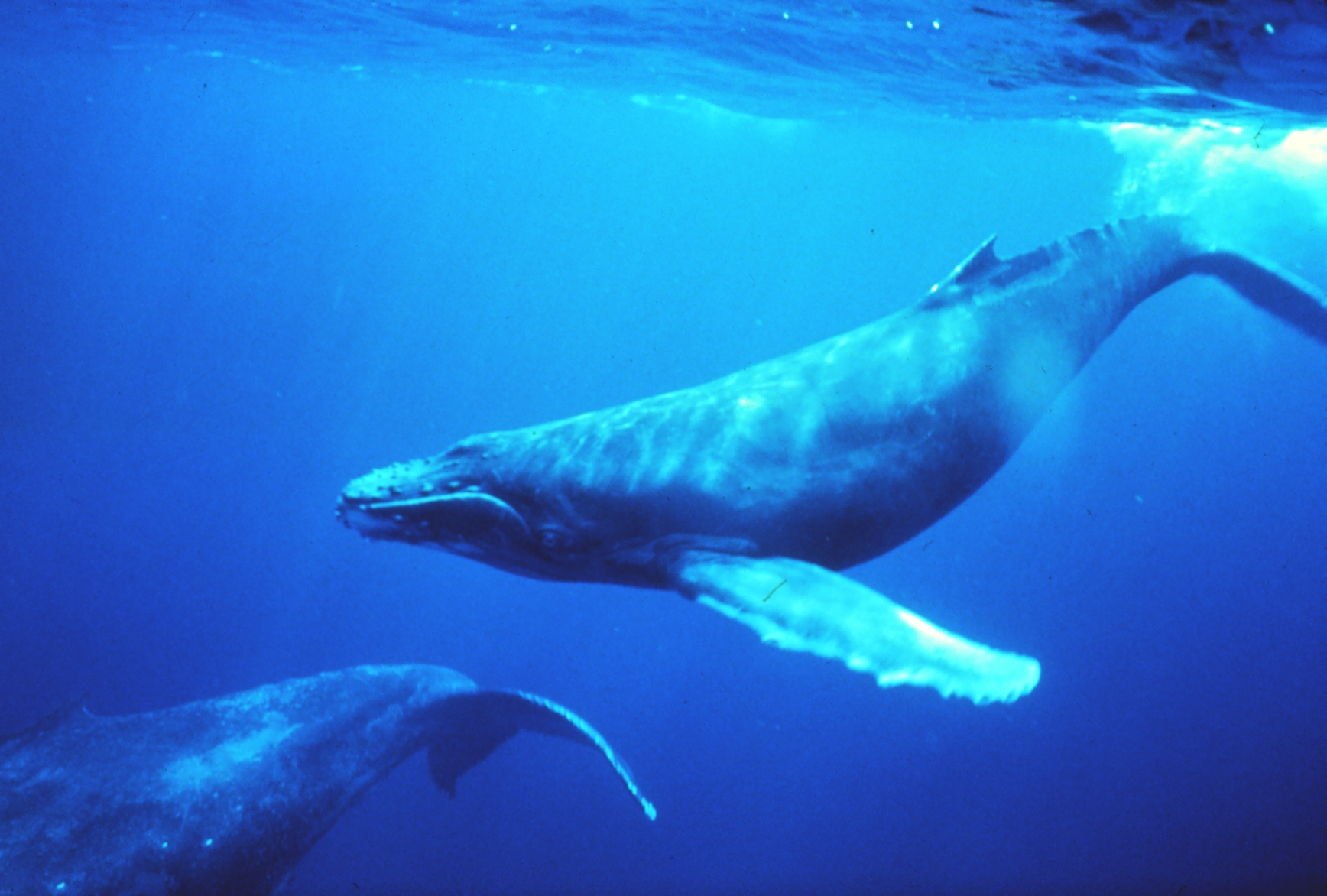
Image: Dr. Louis M. Herman. / Public domain
Humpback Whale (Megaptera novaeangliae)
A large baleen whale with very long pectoral fins (up to roughly a third of body length), a knobbly head (tubercles), and a small dorsal fin on a humped back. Often identified individually by the unique pattern on the un
Azores, Portugal
The Azores are a Portuguese archipelago in the central North Atlantic, sitting atop the Mid Atlantic Ridge. The volcanic islands rise from a seafloor studded with seamounts, and the deep water close to shore makes the ar
Great Barrier Reef, Australia
The Great Barrier Reef, off the coast of Queensland in northeastern Australia, is the world's largest coral reef ecosystem. The Great Barrier Reef Marine Park stretches about 2,300 km along the coast and covers approxima
Monterey Bay Marine Briefing
Monterey Bay is one of the most ecologically diverse marine regions in the world. Dominated by the massive underwater Monterey Canyon, which rivals the Grand Canyon in depth and scale, the bay brings cold, nutrient rich