Azores, Portugal
Azores, Portugal
Status: needs expert review. Figures cite the Governo dos Açores, the OSPAR Commission, the IUCN SSC Cetacean Specialist Group, and reporting on the 2024 marine-protection designation. A reviewer should confirm the in-force date of the 2024 MPA network and the exact whale-watching distances against the primary regional decree text before approval.
Overview
The Azores are a Portuguese archipelago in the central North Atlantic, sitting atop the Mid-Atlantic Ridge. The volcanic islands rise from a seafloor studded with seamounts, and the deep water close to shore makes the archipelago one of the most significant cetacean regions in the world. Around 28 cetacean species have been recorded in Azorean waters — roughly a third of all known cetacean species (World Cetacean Alliance).
Key species & habitats
The Azores host both resident and migratory cetaceans. Sperm whales (Physeter macrocephalus), along with bottlenose, common, and Risso's dolphins, are present year-round; blue whales (Balaenoptera musculus), fin whales, and sei whales pass through seasonally on migration (World Cetacean Alliance). The surrounding seamounts and the Mid-Atlantic Ridge support deep-sea habitats protected through a network of OSPAR high-seas marine protected areas, including the Milne Seamount Complex, Altair, Antialtair, and Josephine Seamount MPAs (OSPAR Commission).
Commercial whaling in the Azores ended in the mid-1980s, with the last whale taken in 1987; the region subsequently transitioned to a regulated whale-watching economy.
Conservation status & threats
On the IUCN Red List, the sperm whale is classified as Vulnerable and the blue whale as Endangered (IUCN SSC Cetacean Specialist Group). Modern pressures on Azorean cetaceans include vessel disturbance, underwater noise, fisheries interactions, and the broader effects of a warming, changing ocean. As a deep-water migratory crossroads, the region's cetacean populations are shaped by conditions far beyond the archipelago itself, which makes regional protection necessary but not sufficient on its own.
Protected-area status & rules
In October 2024 the Autonomous Region of the Azores designated a large marine protected area network — reported at about 287,000 km², covering roughly 30% of the Azores sea, split evenly between fully protected (no-extraction) and highly protected (low-impact only) zones (regional government announcement, 22 October 2024). A reviewer should confirm the legislation's in-force date against primary sources.
Whale-watching is a licensed, regulated activity governed by Azorean regional legislation (Decreto Legislativo Regional n.º 9/99/A and its amendments), administered by the Regional Directorate for Maritime Policies (Governo dos Açores). The regulations set minimum approach distances, limits on the number of boats near animals, time limits in the observation zone, and approach-angle rules, with additional protection for groups containing calves.
Per ETHICS.md, this briefing does not provide approach guidance. The specific metre-distances should be cited from the regional decree text by a reviewer before any operational figure is published, and licensed-operator conditions govern on the water.
How to visit responsibly
- Choose a licensed Azorean whale-watching operator; licensing is the mechanism through which the regional distance and conduct rules are enforced.
- Confirm the current approach-distance and boat-number limits through the Governo dos Açores before booking, and expect operators to keep greater distances from groups with calves.
- Do not request that a skipper approach more closely or pursue animals; a sighting is not owed.
- Withdraw if your presence changes the animals' movement or behaviour.
How you can help
- Log cetacean sightings to recognised research and citizen-science platforms supporting Azorean and North Atlantic monitoring.
- Support the OSPAR high-seas MPA network and the 2024 regional protection effort.
- Reduce single-use plastics and support fisheries-bycatch reduction, both of which affect migratory cetaceans across their range.
Sources (5)
Every claim traces to one of the citations below. Anything that could not be sourced was left out.
- [1]Tier 1 · Peer-reviewedWhale Watching Activities — Regional Directorate for Maritime Policies, Governo dos AçoresAccessed 2026-06-16
- [2]Tier 1 · Peer-reviewedStatus of the OSPAR Network of Marine Protected Areas in 2021 — OSPAR CommissionAccessed 2026-06-16
- [3]Tier 1 · Peer-reviewedRed List Status of Cetaceans — IUCN SSC Cetacean Specialist GroupAccessed 2026-06-16
- [4]Tier 2 · InstitutionalAzores Establishes Largest Marine Protected Area Network in North Atlantic (22 October 2024)Accessed 2026-06-16
- [5]Tier 2 · InstitutionalThe Azores — World Cetacean AllianceAccessed 2026-06-16
Related in the commons
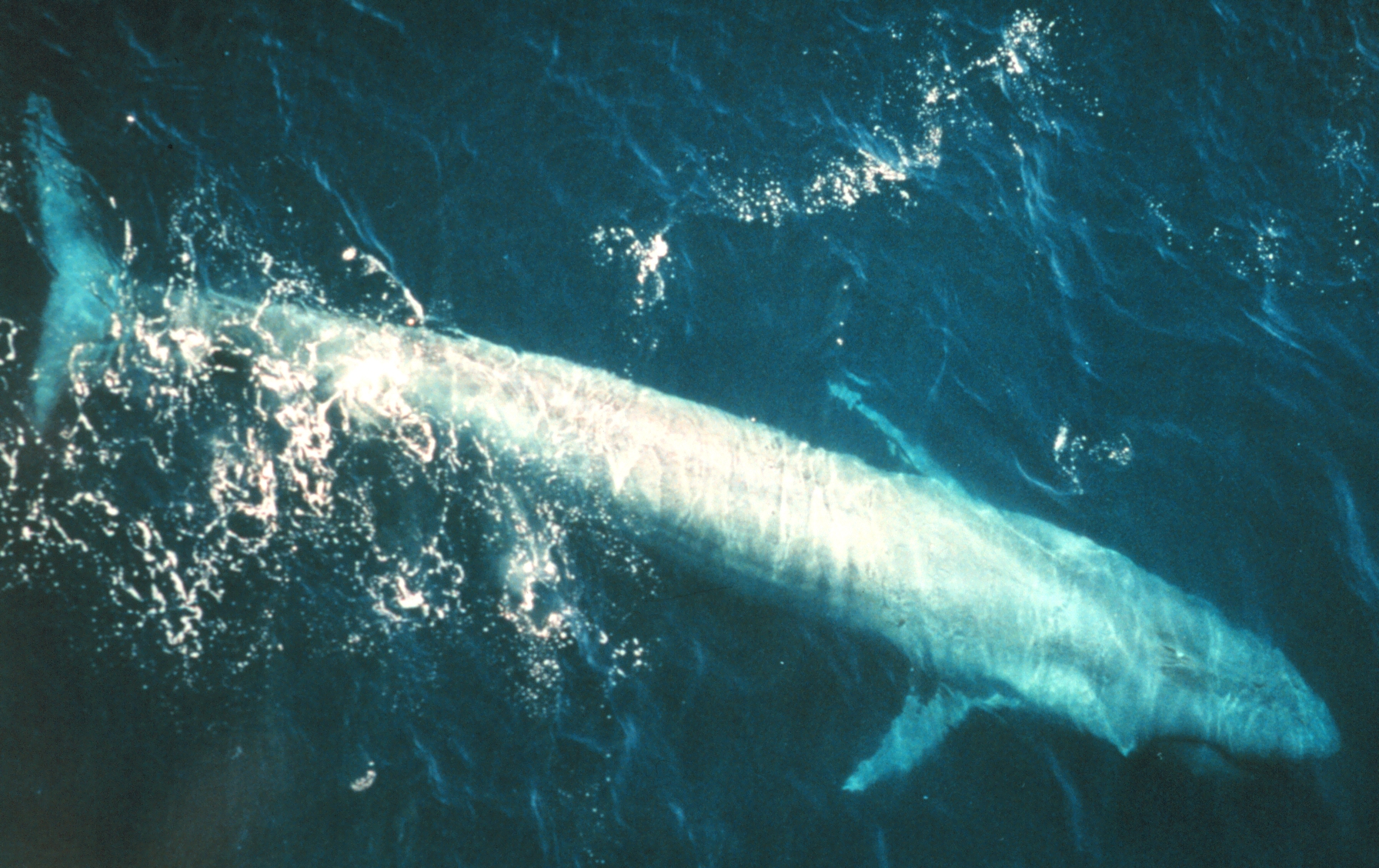
Image: NMFS Northeast Fisheries Science Center (NOAA) / Public domain
Blue Whale (Balaenoptera musculus)
A very large, slender baleen whale (rorqual). NOAA Fisheries describes animals that can reach roughly 110 feet (about 33 m) in the Antarctic, with a long mottled blue grey body, a small dorsal fin set far back, and a bro
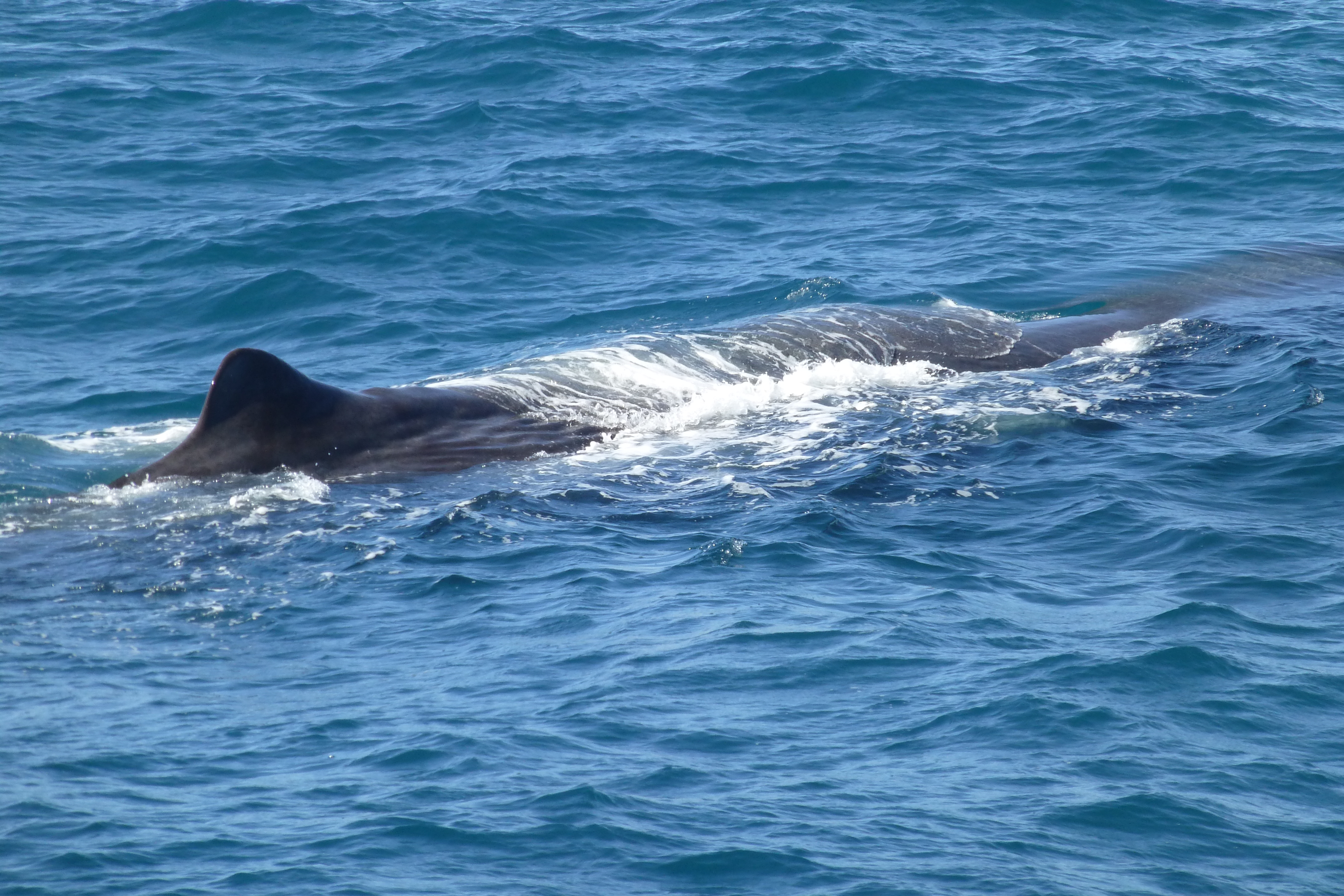
Image: Marion & Christoph Aistleitner / CC0
Sperm Whale (Physeter macrocephalus)
A large toothed whale with an enormous block shaped head (which holds the spermaceti organ), wrinkled skin, and a single blowhole set to the left of the head, producing a distinctive forward angled blow. NOAA Fisheries r
Welfare Assessment: North Atlantic Right Whale
Read WELFARE.md and ETHICS.md before writing. Center the animal's interests , not its feelings . Every welfare claim is cited and confidence tagged. The North Atlantic right whale ( Eubalaena glacialis ) is in a critical
Antarctic Peninsula, Southern Ocean
The Antarctic Peninsula is the northernmost reach of the Antarctic continent, extending toward South America and bordered by some of the most biologically productive waters in the Southern Ocean. It is also one of the fa