Salish Sea, Washington & British Columbia
Salish Sea, Washington & British Columbia
Status: needs expert review. Figures below cite NOAA Fisheries, Washington Department of Fish & Wildlife, Fisheries and Oceans Canada (DFO), a peer-reviewed diet study, and the SeaDoc Society. A reviewer should confirm the current population census number and the most recent vessel-distance rules before approval, as both change frequently.
Overview
The Salish Sea is a transboundary inland sea shared by the United States and Canada. The SeaDoc Society defines it as the connected marine waters that include Puget Sound, the San Juan Islands, and the waters off Vancouver, British Columbia, with a sea-surface area of about 16,925 square kilometres (SeaDoc Society). Its most closely watched residents are the Southern Resident killer whales (Orcinus orca), a fish-eating population whose decline has made this one of the most intensively managed marine regions in North America.
Key species & habitats
The Southern Resident community is organised into three pods, designated J, K, and L (NOAA Fisheries; Center for Whale Research). These whales are fish specialists rather than mammal hunters. Chinook salmon is their preferred prey; a peer-reviewed seasonal diet study found Chinook dominant in the spring and summer Salish Sea diet, with other salmonids supplementing at other times (Hanson et al. 2021, PLOS ONE). That tight dependence on a single salmon stock is central to the population's plight — when Chinook runs are low, the whales' primary food source is low.
The broader region also supports transient (mammal-eating) killer whales, harbour seals, harbour porpoises, and seasonal baleen whales, but the Southern Residents are the population that defines the region's conservation profile.
Conservation status & threats
Southern Resident killer whales were listed as Endangered under the U.S. Endangered Species Act in 2005 (NOAA Fisheries) and are listed as endangered under Canada's Species at Risk Act (NOAA Fisheries; DFO). NOAA Fisheries frames the population's recovery around three principal threats: prey availability (reduced Chinook salmon), vessel traffic noise and disturbance, and contaminants affecting health (NOAA Fisheries).
The population remains small. The mid-2025 census reported on the order of 74 individuals (NOAA Fisheries) — a number a reviewer should reconfirm against the Center for Whale Research's current census, as it is updated annually. Globally, the species Orcinus orca is listed as Data Deficient on the IUCN Red List because most populations are unassessed; the Southern Resident situation is captured by national listings rather than the global category.
Protected-area status & rules
NOAA Fisheries designated critical habitat in the inland waters of Washington State in 2006 and, in 2021, expanded it to include coastal waters off Washington, Oregon, and California (NOAA Fisheries).
Vessel rules in this region are unusually strict and differ on each side of the border. Contributors must not conflate them:
- Washington State law: As of 1 January 2025, state law requires vessels to stay 1,000 yards from Southern Resident killer whales, with additional speed and disengagement requirements at closer ranges (Washington Department of Fish & Wildlife).
- U.S. federal rule: A separate federal regulation requires vessels to stay at least 200 yards from killer whales and out of their path (NOAA Fisheries). The 1,000-yard buffer is the stricter, Southern-Resident-specific Washington standard.
- Canada: Fisheries and Oceans Canada and Transport Canada set interim-order approach distances for killer whales in southern British Columbia waters. These distances have been increased over time; a reviewer should cite the current season's interim order rather than a historical figure (Fisheries and Oceans Canada).
Per ETHICS.md, this briefing does not provide approach guidance. Where regulations differ, the strictest applicable standard governs.
How to visit responsibly
- Confirm and follow the current minimum approach distance for your jurisdiction before any on-water activity — Washington State's 1,000-yard buffer, the U.S. federal 200-yard rule, and Canada's interim-order distance are all in force in their respective waters.
- Choose shore-based viewing where possible; it imposes no vessel-noise cost on a noise-sensitive, prey-stressed population.
- Treat disturbance as cumulative: even a compliant approach adds to the aggregate pressure that the large mandatory buffers exist to limit.
- Report stranded, injured, or entangled marine mammals to the regional stranding network rather than approaching.
How you can help
- Support Chinook salmon recovery — habitat restoration and watershed protection address the prey-availability threat NOAA identifies as primary.
- Log marine mammal sightings to recognised platforms rather than publishing precise locations of the whales.
- Reduce contaminant inputs (the PCB-class pollutants that bioaccumulate in this population) through stormwater and household-chemical choices.
- Back the quieter-vessel and slowdown programs that address underwater noise.
Sources (6)
Every claim traces to one of the citations below. Anything that could not be sourced was left out.
- [1]Tier 1 · Peer-reviewedSaving the Southern Resident Killer Whales — NOAA FisheriesAccessed 2026-06-16
- [2]Tier 1 · Peer-reviewedKiller Whale — NOAA FisheriesAccessed 2026-06-16
- [3]Tier 1 · Peer-reviewedKiller whale resources and regulations for boaters — Washington Department of Fish & WildlifeAccessed 2026-06-16
- [4]Tier 1 · Peer-reviewedManagement measures to protect Southern Resident killer whales — Fisheries and Oceans CanadaAccessed 2026-06-16
- [5]Tier 1 · Peer-reviewedEndangered predators and endangered prey: Seasonal diet of Southern Resident killer whales — Hanson et al., PLOS ONEAccessed 2026-06-16
- [6]Tier 2 · InstitutionalAbout the Salish Sea — SeaDoc SocietyAccessed 2026-06-16
Related in the commons
Monterey Bay Marine Briefing
Monterey Bay is one of the most ecologically diverse marine regions in the world. Dominated by the massive underwater Monterey Canyon, which rivals the Grand Canyon in depth and scale, the bay brings cold, nutrient rich
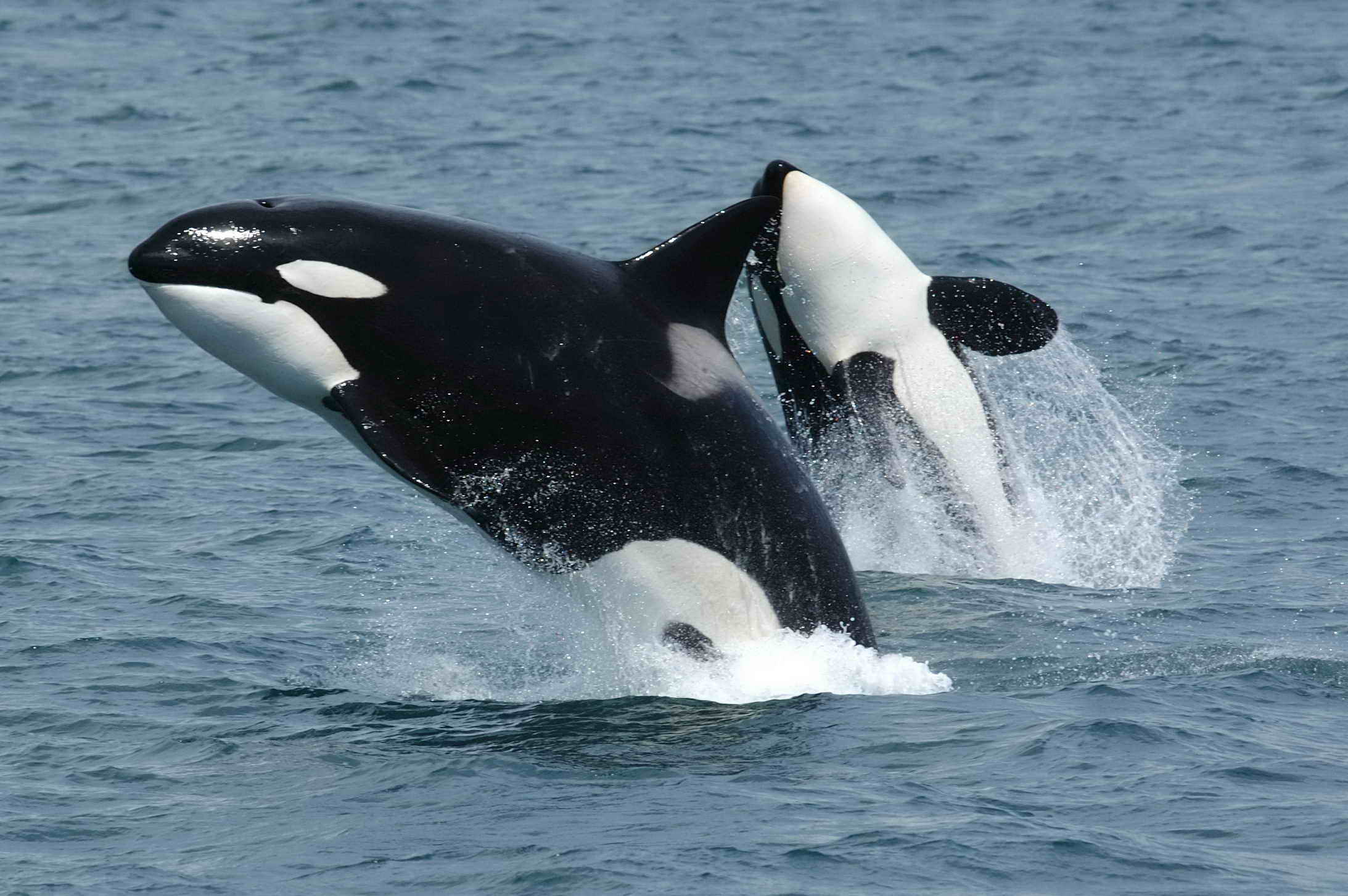
Image: Robert Pittman / Public domain
Orca (Orcinus orca)
A large black and white toothed cetacean. NOAA Fisheries reports lengths up to about 32 feet (roughly 10 m) and weights up to about 11 tons. Distinctive features include the tall dorsal fin (taller and straighter in adul
Wadden Sea (Netherlands · Germany · Denmark)
The Wadden Sea stretches along the southeastern North Sea coast across the Netherlands, Germany (Lower Saxony and Schleswig Holstein National Parks), and Denmark. It was inscribed as a UNESCO World Heritage property in 2
Welfare Assessment: Southern Resident Killer Whale
Read WELFARE.md and ETHICS.md before writing. Center the animal's interests , not its feelings . Every welfare claim is cited and confidence tagged. The Southern Resident killer whale ( Orcinus orca ) population of the S