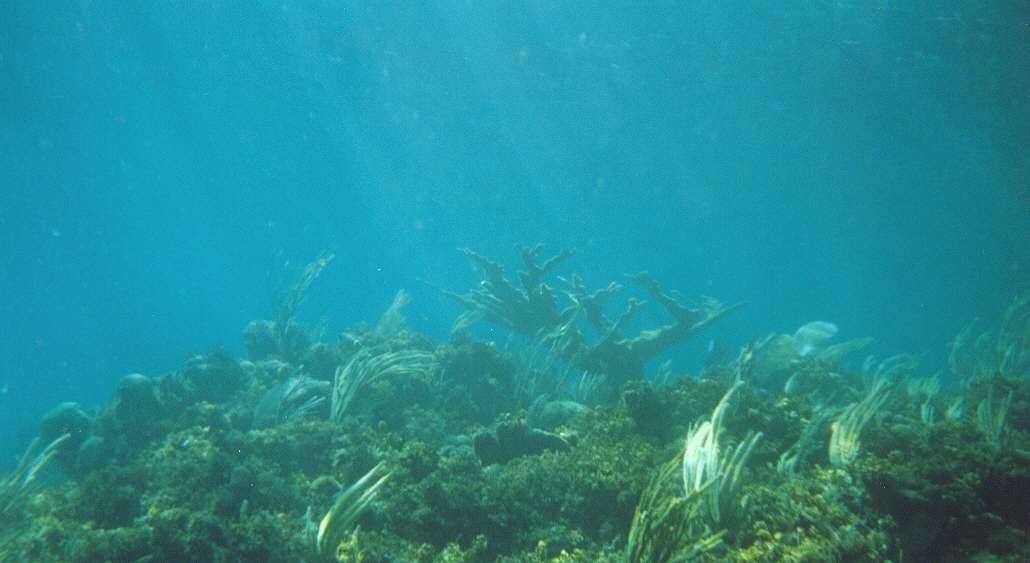
Elkhorn Coral
Acropora palmata
Elkhorn coral (Acropora palmata) on the crest of Gaulin Reef, San Salvador Island, Bahamas. June 24, 1999.
- Status
- CR
- Guild
- reefs
- Reading level
- beginner
- Sources
- 4
Elkhorn Coral (Acropora palmata)
Status: needs expert review. Conservation claims cite IUCN, NOAA Fisheries, and CITES; a science reviewer should confirm the assessment and figures before approval. Elkhorn coral (Acropora palmata) is a fast-growing, branching reef-builder and historically one of the most important shallow-water reef corals in the Caribbean.
At a glance
| Field | Value | Source |
|---|---|---|
| Scientific name | Acropora palmata | WoRMS / authority |
| Guild | reefs (reef-building coral) | — |
| IUCN status | Critically Endangered (assessment 2022) | IUCN Red List |
| Population trend | Decreasing — declines estimated at ~90–95% since 1980 where quantified | IUCN / literature |
| US protection | Threatened under the Endangered Species Act (listed 2006) | NOAA Fisheries |
| International trade | CITES Appendix II (Acropora spp.) | CITES |
| Range | Caribbean, Florida, Gulf of Mexico, western Atlantic | IUCN Red List |
Identification
A branching, flattened coral whose broad antler-like ("elkhorn") branches grow rapidly toward the light, forming dense stands in shallow, high-energy reef zones. Colonies build three-dimensional reef structure on the wave-exposed reef crest.
Ecology and role
Elkhorn coral is a colonial animal living in symbiosis with photosynthetic algae (zooxanthellae); heat stress can break that symbiosis and cause bleaching (NOAA Fisheries). Its rapid growth made it a primary builder of shallow Caribbean reef framework, creating the wave-breaking reef crest and the complex habitat that shelters fish and invertebrates — a habitat-forming, foundation role. Detailed claims should be cited to published research and confirmed in review.
Conservation status and threats
Elkhorn coral is Critically Endangered on the IUCN Red List (IUCN). Catastrophic outbreaks of white-band disease beginning in the late 1970s started multi-decade declines; warming seas, marine heatwaves and bleaching, water pollution, and hurricanes compounded them, with reductions estimated at roughly 90–95% since 1980 in areas where loss has been quantified (IUCN; literature). In the United States it has been listed as Threatened under the Endangered Species Act since 2006 — elkhorn and staghorn corals were the first species protected under the ESA explicitly because of the effects of climate change (NOAA Fisheries). More broadly, the IUCN reported in 2024 that over 40% of reef-building coral species face extinction (IUCN). The dominant ongoing stressor is heat stress: the Coral Reef Watch dataset is the early-warning signal for exactly this threat.
How to observe responsibly
This page does not provide approach guidance. Coral is fragile and easily killed by contact. Never touch, stand on, or kick coral; maintain neutral buoyancy and stay clear of shallow reef crests; never collect coral (and note CITES restrictions). Follow the reviewed observation guide and local marine-park rules. Reef-restoration sites are sensitive — keep to regional granularity (ETHICS.md).
How you can help
- Log reef condition and coral sightings via recognized programs such as Reef Check or iNaturalist.
- Support coral-restoration and disease-response programs run by credible organizations.
- Reduce heat-stress drivers: the deepest help for coral is climate action.
Sources (4)
Every claim traces to one of the citations below. Anything that could not be sourced was left out.
- [1]Tier 1 · Peer-reviewedIUCN Red List — Acropora palmata (Elkhorn Coral)Accessed 2026-06-16
- [2]Tier 2 · InstitutionalNOAA Fisheries — Listing of Elkhorn and Staghorn Corals Under the ESAAccessed 2026-06-16
- [3]Tier 2 · InstitutionalIUCN — Over 40% of coral species face extinction (Red List, Nov 2024)Accessed 2026-06-16
- [4]Tier 2 · InstitutionalCITES Appendices (Acropora spp. listed Appendix II)Accessed 2026-06-16
Related in the commons
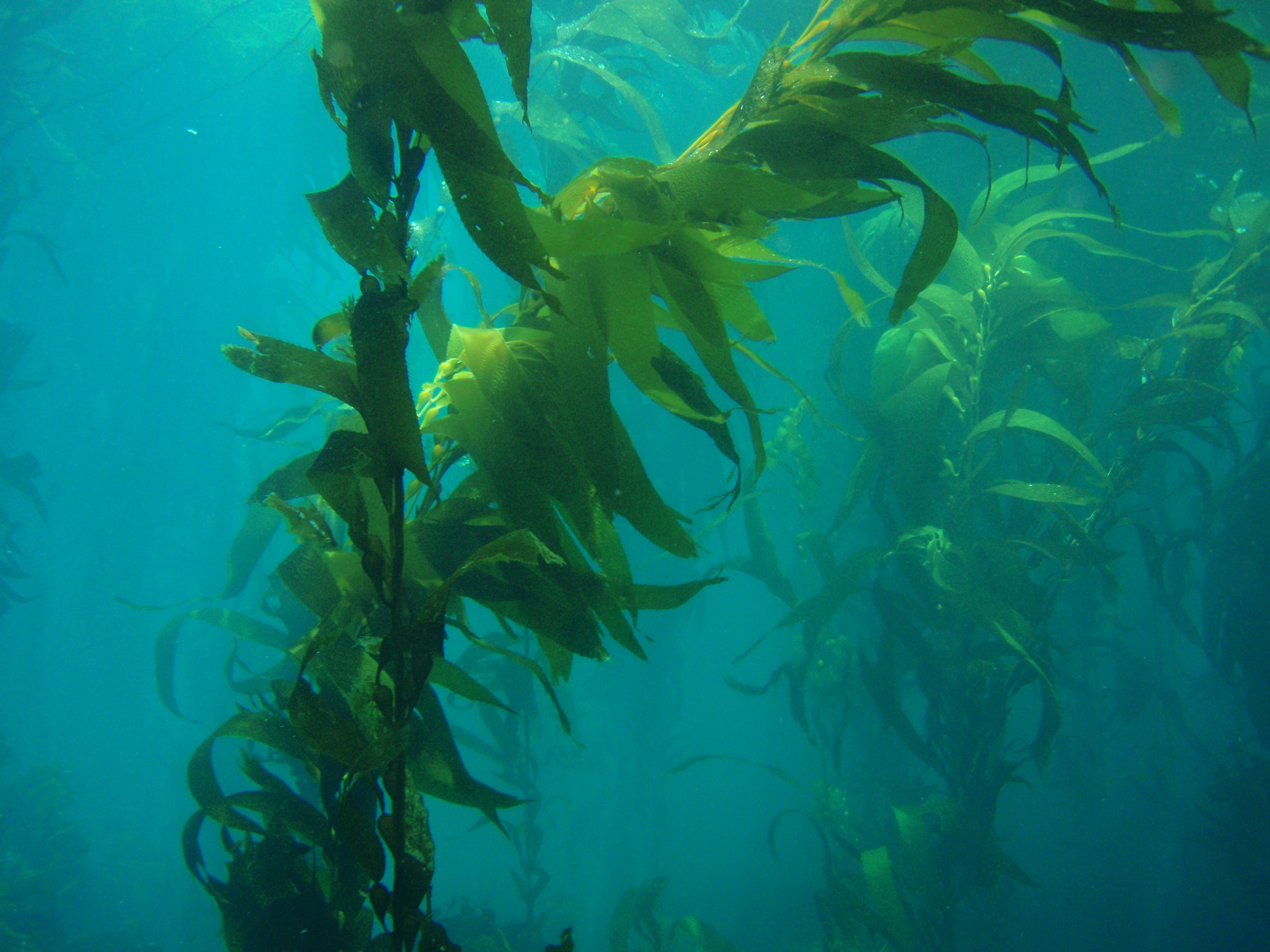
Image: Claire Fackler, CINMS, NOAA. / Public domain
Giant Kelp (Macrocystis pyrifera)
A very large brown alga anchored to rocky substrate by a root like holdfast, with long stipes bearing blades, each kept buoyant by a gas filled float (pneumatocyst) at its base. Fronds reach the surface and form a floati
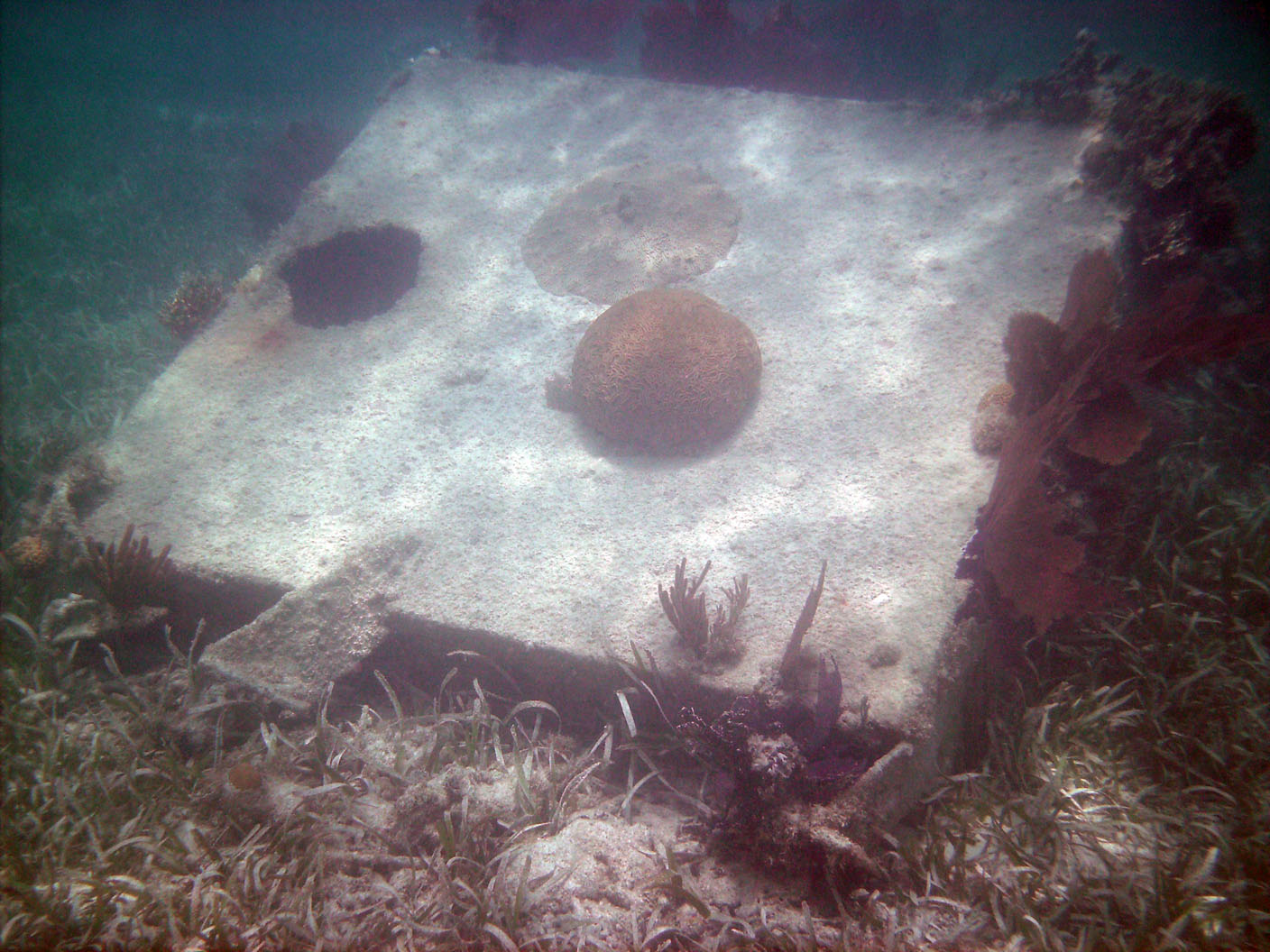
Image: Jstuby / CC0
Grooved Brain Coral (Diploria labyrinthiformis)
A massive, rounded ("boulder" or "brain") coral whose surface is covered in deep, meandering grooves and ridges that resemble the folds of a brain — the feature that gives the genus its name. Unlike branching corals it g
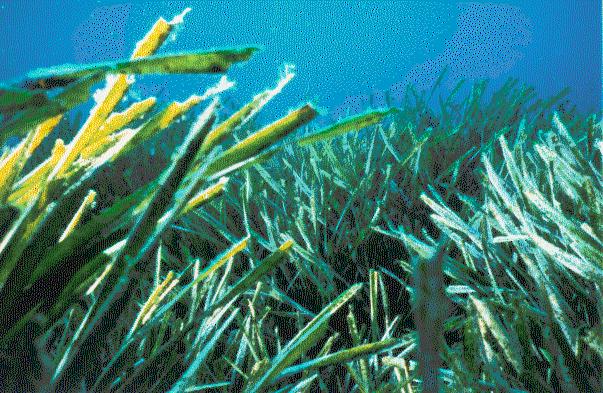
Image: National Oceanic and Atmospheric Administration / Public domain
Neptune Grass (Posidonia oceanica)
A rooted marine flowering plant with long, ribbon like green leaves growing from a network of rhizomes anchored in seafloor sediment. Over centuries it builds raised "matte" terraces of intertwined rhizomes and trapped s
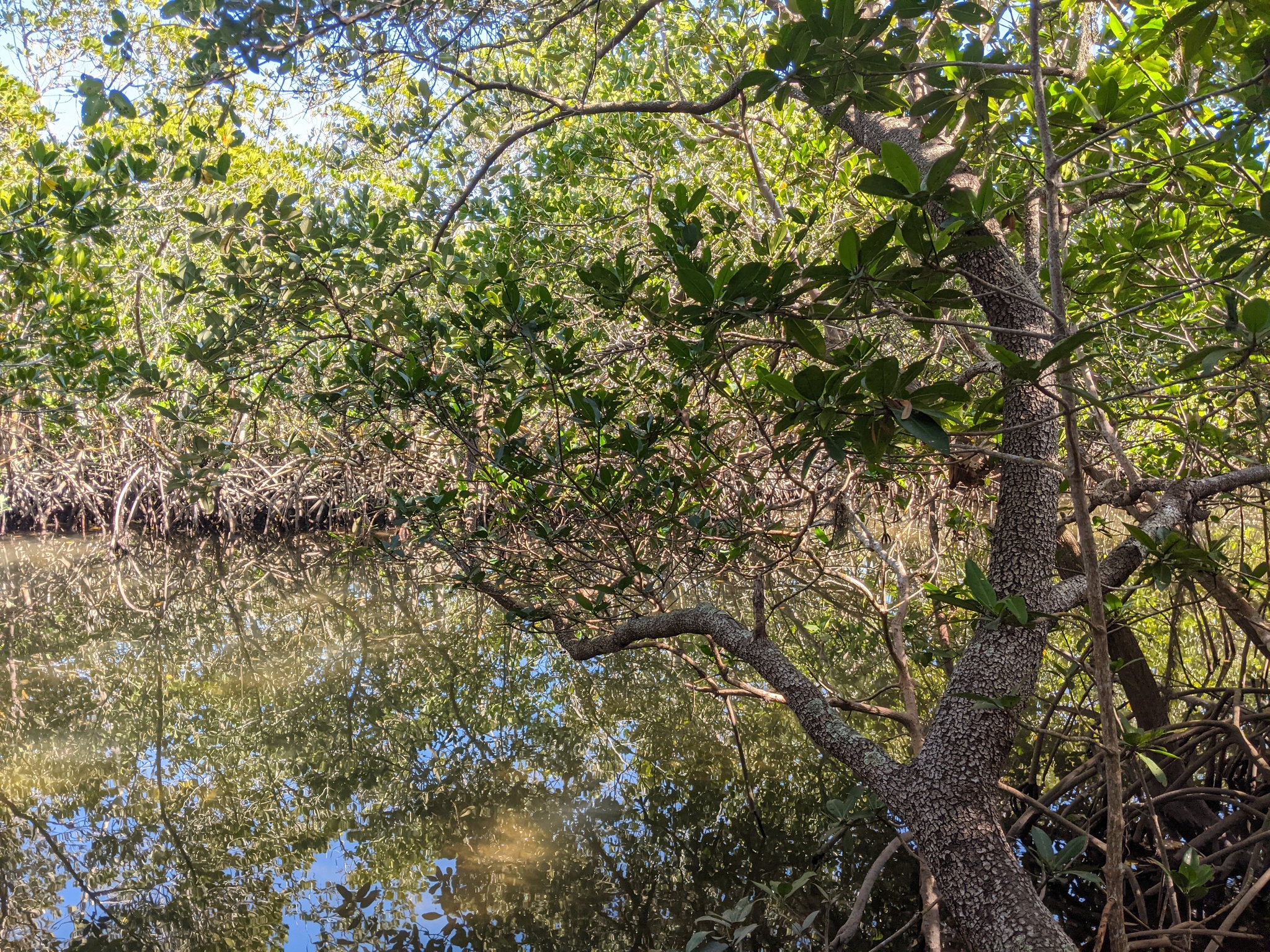
Image: no rights reserved / CC0
Red Mangrove (Rhizophora mangle)
A small to medium evergreen tree of the intertidal coast, recognized by its arching "prop" or stilt roots that drop from the trunk and branches into the water. It is viviparous: seeds germinate while still attached to th