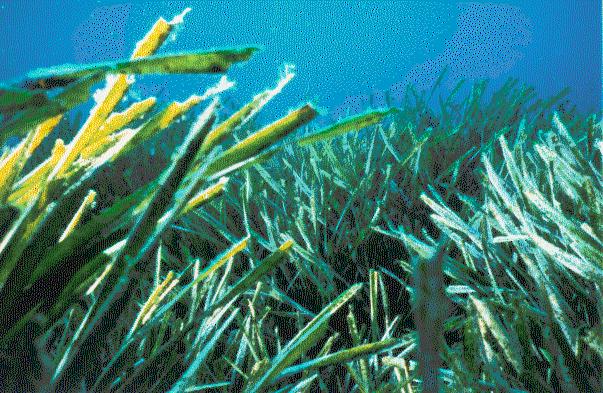
Neptune Grass
Posidonia oceanica
Posidonia oceanica.
- Status
- LC
- Guild
- reefs
- Reading level
- beginner
- Sources
- 3
Neptune Grass (Posidonia oceanica)
Status: needs expert review. Conservation claims cite the IUCN Red List and peer-reviewed literature; a science reviewer should confirm the assessment and figures before approval. Neptune grass (Posidonia oceanica) is a flowering marine plant — a seagrass, not an alga — endemic to the Mediterranean Sea, where it forms the foundation seagrass meadow.
At a glance
| Field | Value | Source |
|---|---|---|
| Scientific name | Posidonia oceanica | WoRMS / authority |
| Kind of organism | Seagrass (a marine flowering plant), a foundation species | Kew |
| Guild | reefs (foundation / habitat-builder) | — |
| IUCN status | Least Concern (assessment 2010) | IUCN Red List |
| Population trend | Decreasing — meadows in long-term basin-wide decline | IUCN / Telesca et al. 2015 |
| Range | Endemic to the Mediterranean Sea | IUCN Red List |
Identification
A rooted marine flowering plant with long, ribbon-like green leaves growing from a network of rhizomes anchored in seafloor sediment. Over centuries it builds raised "matte" terraces of intertwined rhizomes and trapped sediment, and it occasionally produces fruit and washes ashore as fibrous "sea balls."
Ecology and role
Neptune grass is a foundation species: its meadows are among the most important marine habitats of the Mediterranean, forming three-dimensional structure that serves as nursery and living habitat for many species and underpins coastal food webs (Kew; literature). The meadows stabilize sediment, support biodiversity, and store substantial carbon in their long-lived rhizome matte. As a flowering plant rather than an animal, it has no behavior in the zoological sense; its ecological role is structural and productive. Detailed claims should be cited to published research and confirmed in review.
Conservation status and threats
Neptune grass is listed as Least Concern on the IUCN Red List (assessment 2010), reflecting its broad distribution across the Mediterranean. Least Concern is not "secure": the population trend is decreasing, and peer-reviewed work documents widespread, long-term meadow loss — coastal development, anchoring, bottom trawling, and reduced water clarity have driven declines, and because the species grows and recovers extremely slowly, losses persist on human timescales (Telesca et al. 2015). The dominant stressor here is habitat loss and physical disturbance rather than thermal bleaching, though Mediterranean warming is an added pressure a science reviewer should weigh.
How to observe responsibly
This page does not provide approach guidance. Do not anchor on seagrass meadows — anchor scars can take decades to heal; use mooring buoys where provided. Avoid finning or dragging gear across the meadow. Follow the reviewed observation guide and local marine-protected-area rules. Meadow extent is sensitive habitat — keep to regional granularity (ETHICS.md).
How you can help
- Log seagrass condition and sightings via recognized programs and iNaturalist.
- Choose anchorages with installed moorings and support seagrass-restoration and anchoring-management programs run by credible organizations.
- Reduce nutrient and sediment runoff and support coastal water-quality protection.
Sources (3)
Every claim traces to one of the citations below. Anything that could not be sourced was left out.
- [1]Tier 1 · Peer-reviewedIUCN Red List — Posidonia oceanica (Neptune Grass / Mediterranean tapeweed)Accessed 2026-06-16
- [2]Tier 2 · InstitutionalRoyal Botanic Gardens, Kew — Neptune grass (Posidonia oceanica)Accessed 2026-06-16
- [3]Tier 1 · Peer-reviewedTelesca et al. (2015), Scientific Reports — Seagrass meadows (Posidonia oceanica) distribution and trajectories of changeAccessed 2026-06-16
Related in the commons
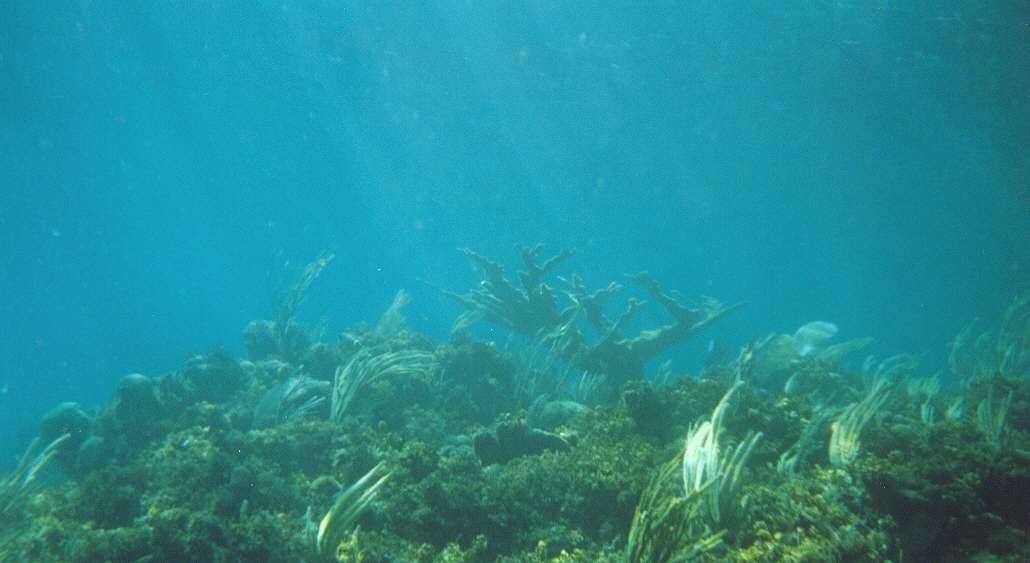
Image: Jstuby at en.wikipedia / CC0
Elkhorn Coral (Acropora palmata)
A branching, flattened coral whose broad antler like ("elkhorn") branches grow rapidly toward the light, forming dense stands in shallow, high energy reef zones. Colonies build three dimensional reef structure on the wav
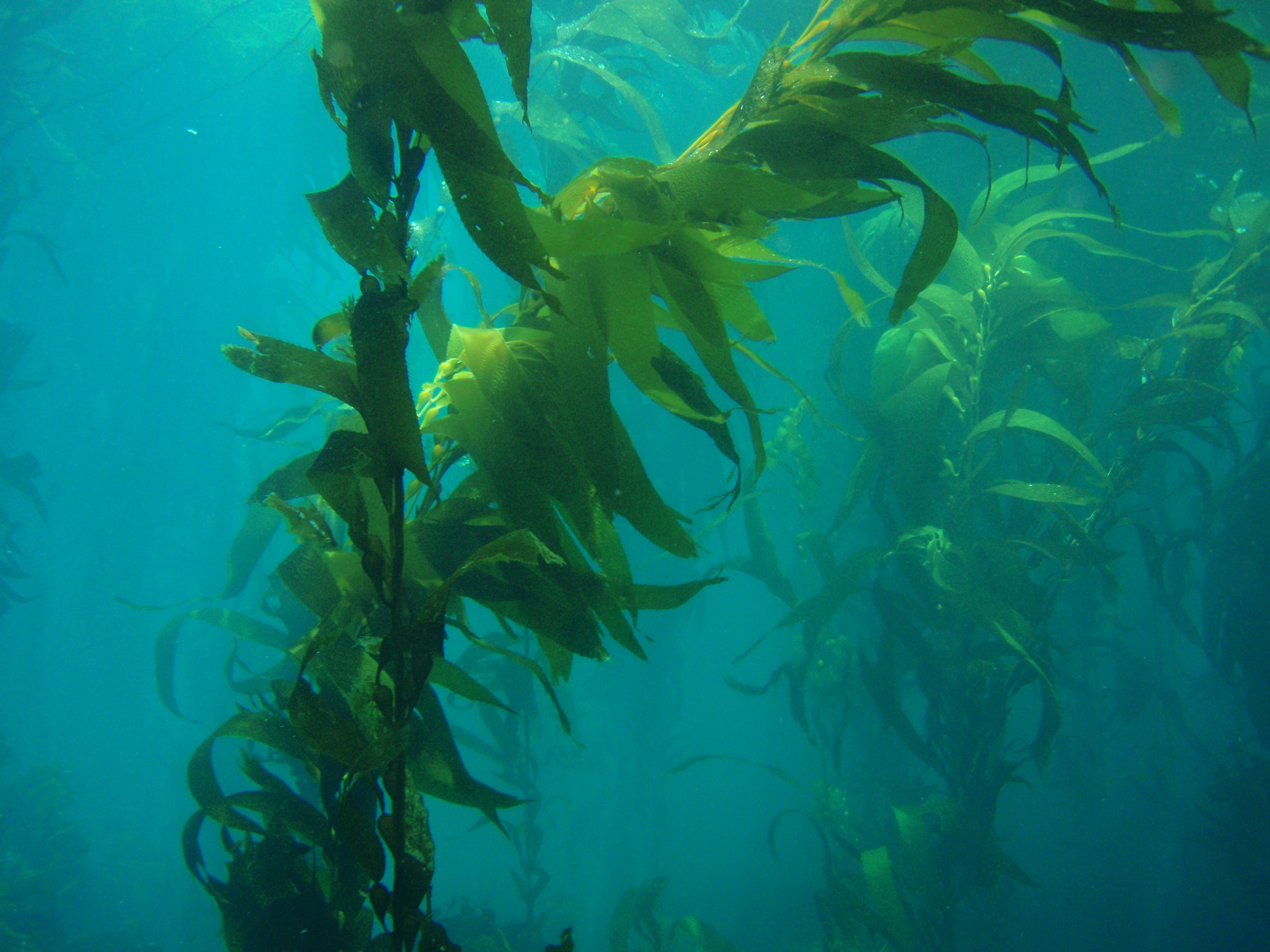
Image: Claire Fackler, CINMS, NOAA. / Public domain
Giant Kelp (Macrocystis pyrifera)
A very large brown alga anchored to rocky substrate by a root like holdfast, with long stipes bearing blades, each kept buoyant by a gas filled float (pneumatocyst) at its base. Fronds reach the surface and form a floati
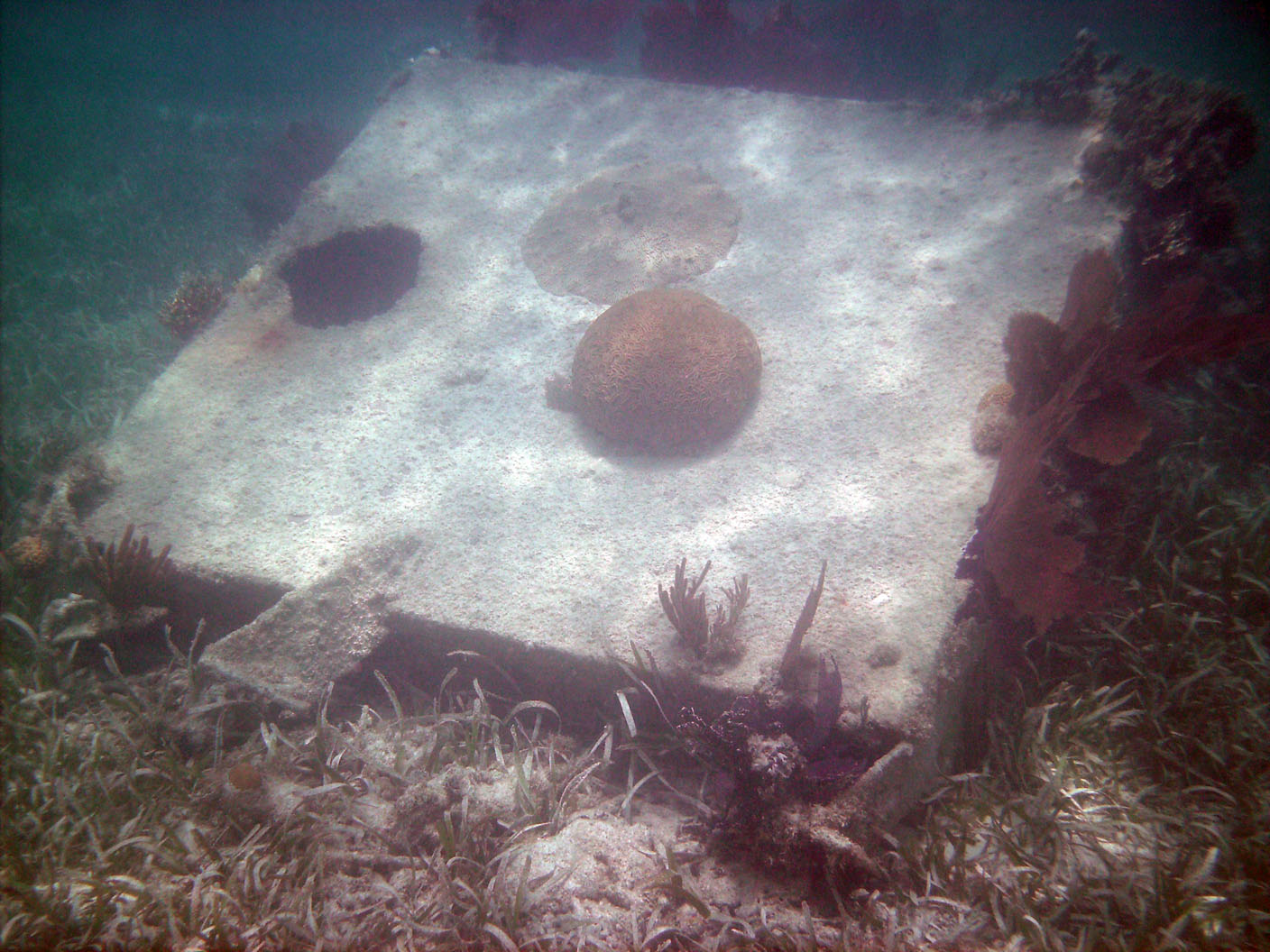
Image: Jstuby / CC0
Grooved Brain Coral (Diploria labyrinthiformis)
A massive, rounded ("boulder" or "brain") coral whose surface is covered in deep, meandering grooves and ridges that resemble the folds of a brain — the feature that gives the genus its name. Unlike branching corals it g
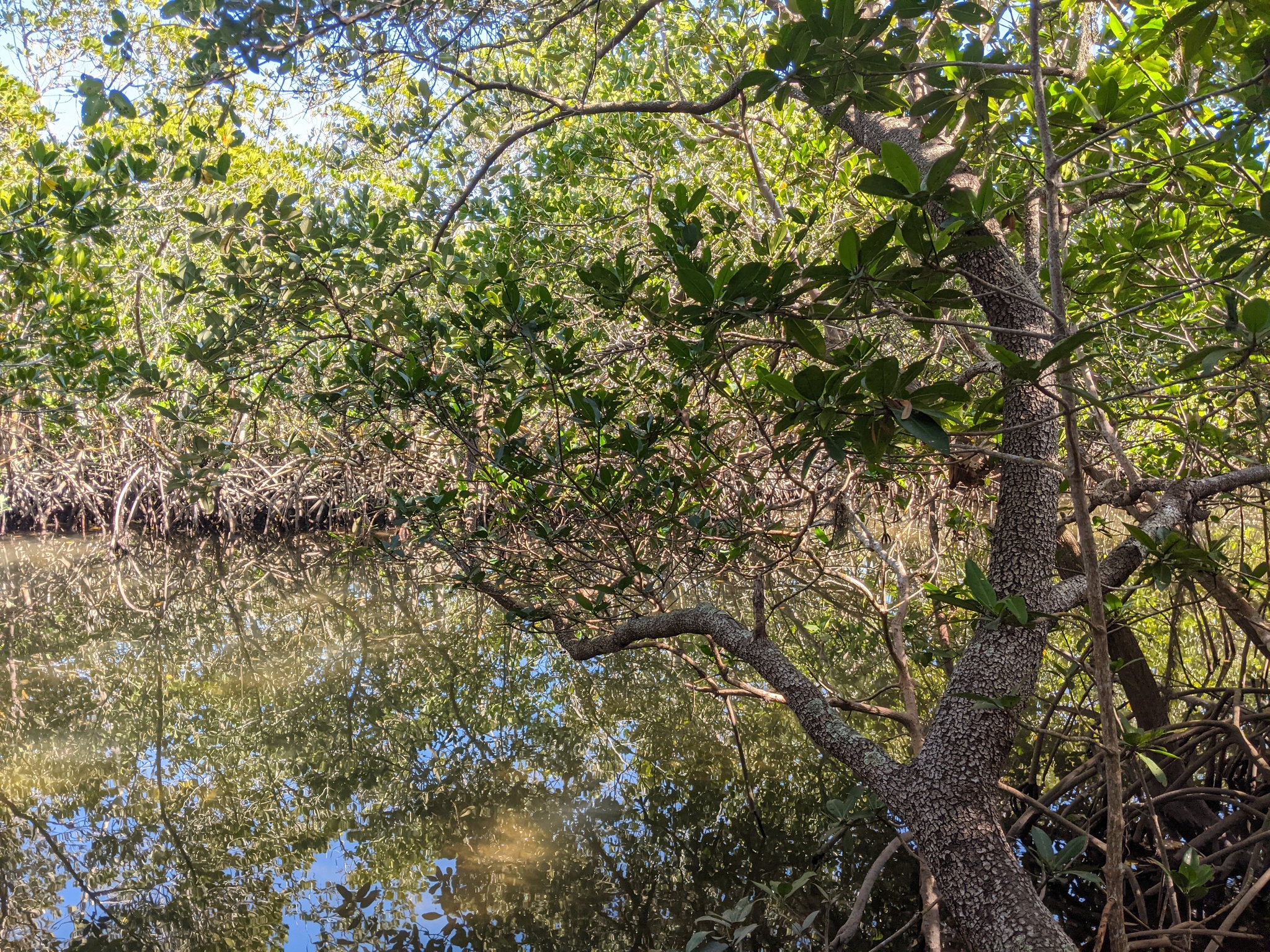
Image: no rights reserved / CC0
Red Mangrove (Rhizophora mangle)
A small to medium evergreen tree of the intertidal coast, recognized by its arching "prop" or stilt roots that drop from the trunk and branches into the water. It is viviparous: seeds germinate while still attached to th