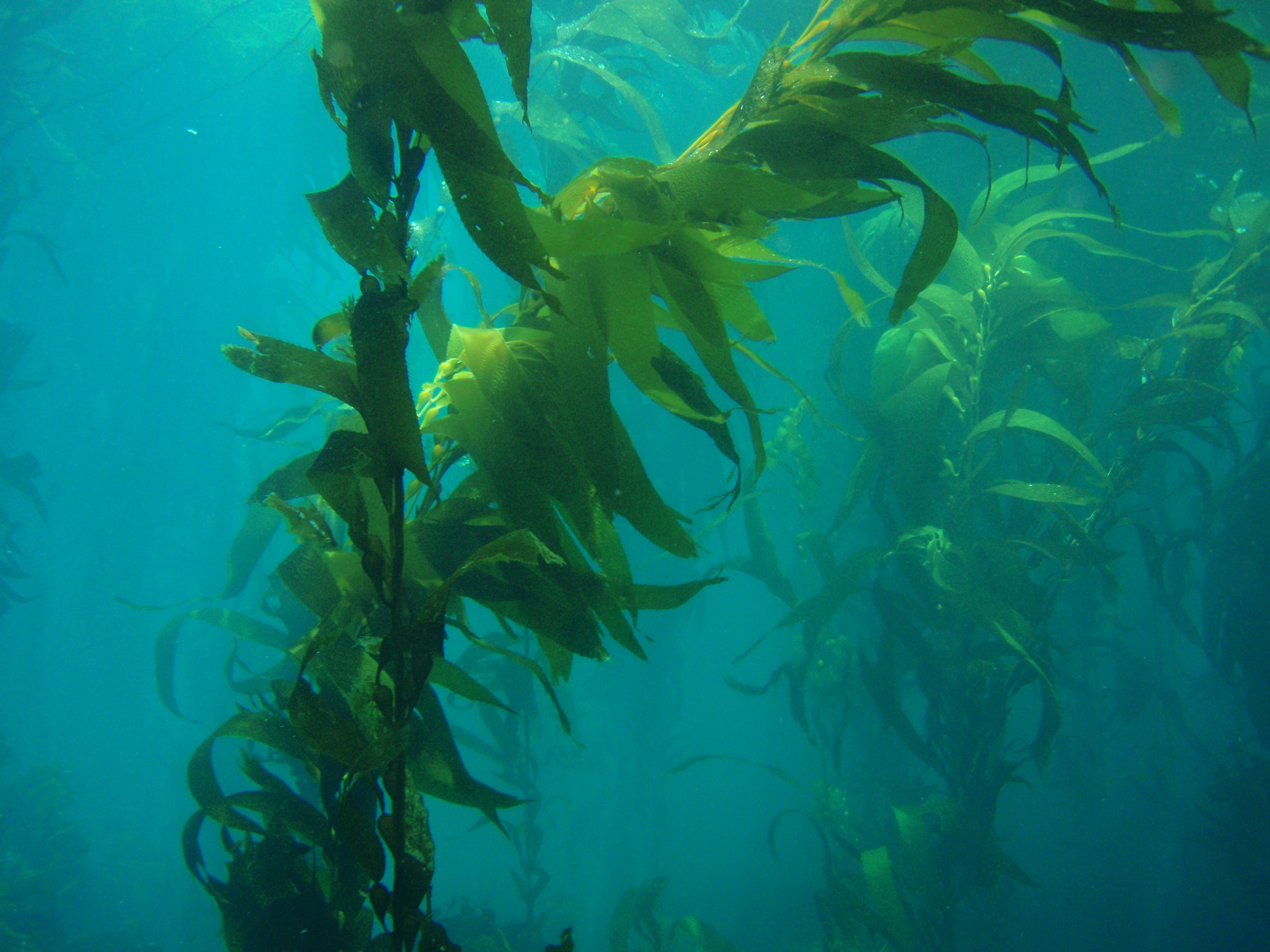
Giant Kelp
Macrocystis pyrifera
Giant kelp (Macrocystis pyrifera). California, Channel Islands NMS.
- Guild
- reefs
- Reading level
- beginner
- Sources
- 2
Giant Kelp (Macrocystis pyrifera)
Status: needs expert review. Habitat and ecology claims cite NOAA Fisheries and a NOAA National Marine Sanctuary; a science reviewer should confirm the figures before approval. Giant kelp (Macrocystis pyrifera) is a large brown alga — not an animal — and the foundation species that builds temperate kelp-forest habitat.
At a glance
| Field | Value | Source |
|---|---|---|
| Scientific name | Macrocystis pyrifera | WoRMS / authority |
| Kind of organism | Brown alga (kelp), a foundation species — not an animal | NOAA |
| Guild | reefs (foundation / habitat-builder) | — |
| IUCN status | Not assessed at species level — no IUCN Red List listing for M. pyrifera | (see Conservation status) |
| Habitat role | Habitat area of particular concern for Pacific groundfish and salmon | NOAA Fisheries |
| Range | Eastern Pacific from Alaska/Canada to Baja California; also Southern Hemisphere temperate/sub-Antarctic coasts | NOAA / literature |
Identification
A very large brown alga anchored to rocky substrate by a root-like holdfast, with long stipes bearing blades, each kept buoyant by a gas-filled float (pneumatocyst) at its base. Fronds reach the surface and form a floating canopy; in ideal conditions giant kelp is among the fastest-growing organisms on Earth (NOAA).
Ecology and role
Giant kelp is a foundation species: it forms the three-dimensional physical structure of the kelp forest — holdfast, stipe, and surface canopy — that creates habitat, nursery grounds, and feeding areas for a diverse community of fish and invertebrates (NOAA Fisheries). NOAA designates kelp-forest habitat as a habitat area of particular concern for Pacific groundfish and salmon (NOAA Fisheries). The forest supports species including abalone and southern sea otters, and sea otters in turn help regulate grazing sea urchins that can otherwise overgraze kelp (NOAA). Detailed claims should be cited to published research and confirmed in review.
Conservation status and threats
Giant kelp does not carry a species-level IUCN Red List assessment, so no IUCN category is stated here; this page therefore relies on NOAA habitat science rather than a Red List status. Kelp forests are nonetheless under pressure. Marine heatwaves and warming surface waters suppress giant-kelp growth and recruitment (NOAA). Where predators such as sea otters are lost, grazing sea urchin populations can expand and convert productive kelp forest into low-diversity "urchin barrens" (NOAA). The dominant climate stressor is heat: warm-water events can collapse kelp canopy over large stretches of coast.
How to observe responsibly
This page does not provide approach guidance. Do not anchor in or cut kelp; avoid entangling the holdfast and canopy, and keep clear of the surface canopy where marine mammals such as sea otters rest. Follow the reviewed observation guide and local marine-sanctuary and marine-protected-area rules. Sea-otter resting areas are sensitive — keep to regional granularity (ETHICS.md).
How you can help
- Log kelp-forest condition and sightings via recognized programs such as Reef Check (which runs kelp-forest monitoring) or iNaturalist.
- Support kelp-restoration and sea-otter recovery programs run by credible organizations.
- Reduce heat-stress drivers: the deepest help for kelp forests is climate action.
Sources (2)
Every claim traces to one of the citations below. Anything that could not be sourced was left out.
Related in the commons
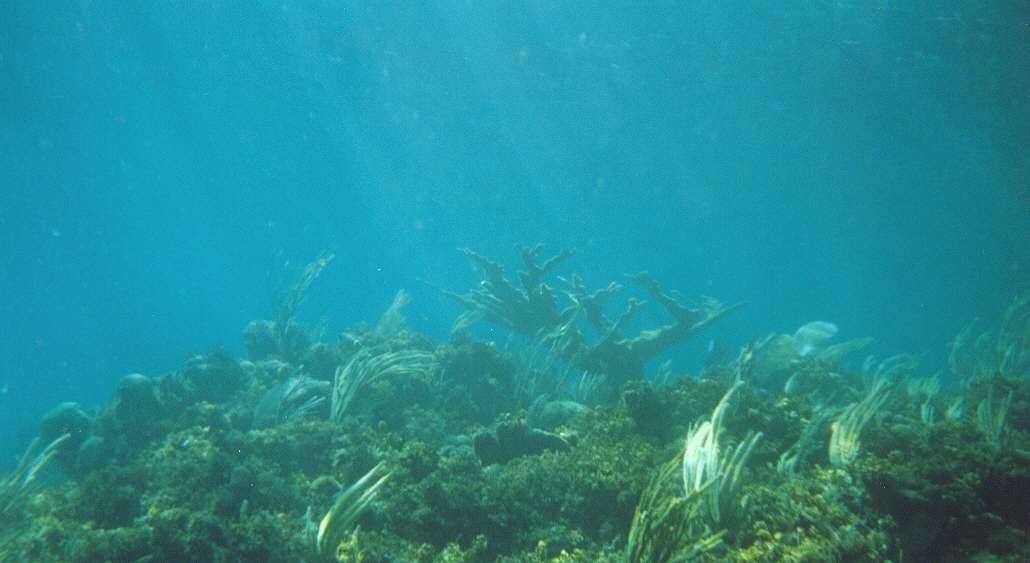
Image: Jstuby at en.wikipedia / CC0
Elkhorn Coral (Acropora palmata)
A branching, flattened coral whose broad antler like ("elkhorn") branches grow rapidly toward the light, forming dense stands in shallow, high energy reef zones. Colonies build three dimensional reef structure on the wav
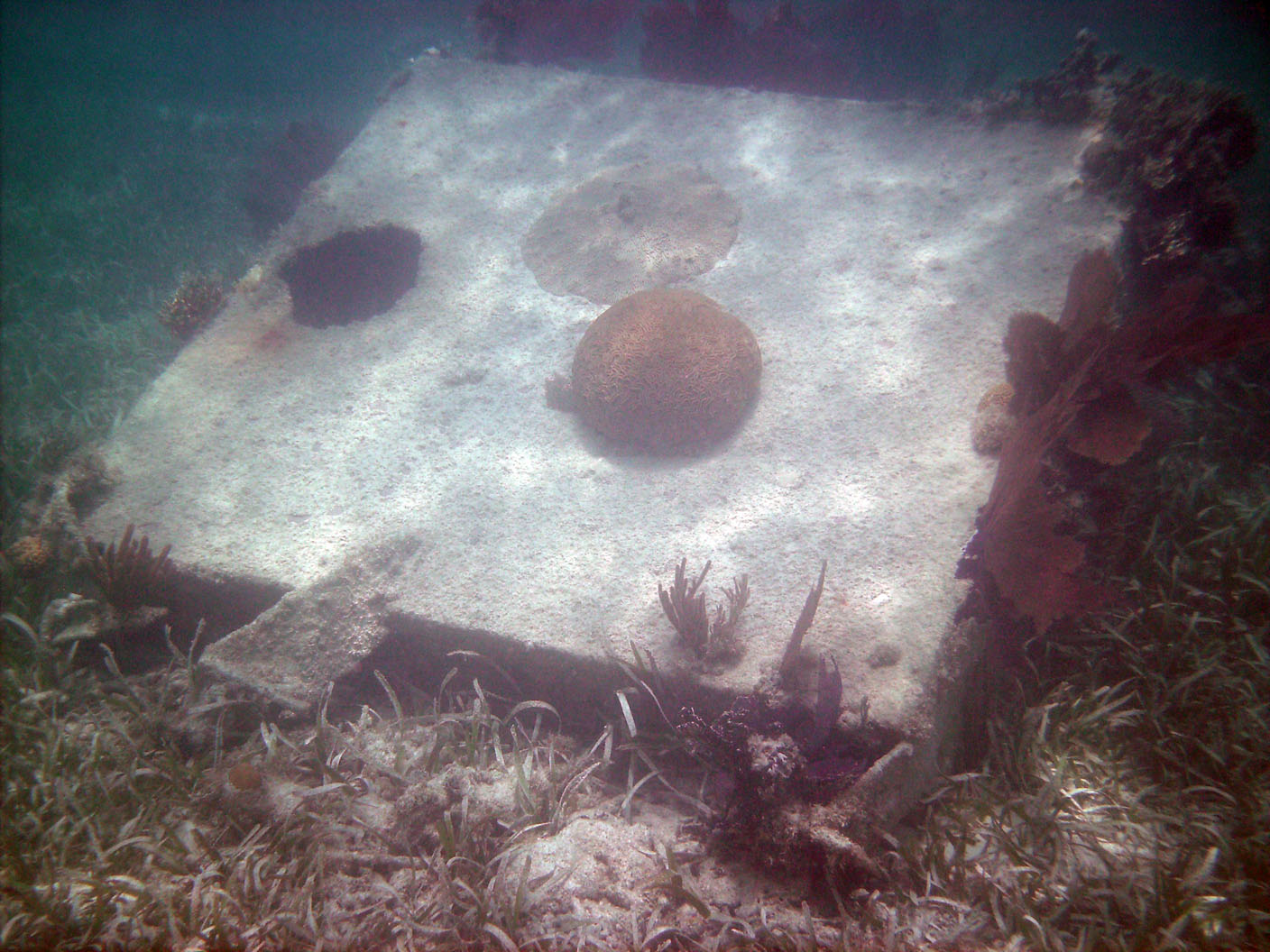
Image: Jstuby / CC0
Grooved Brain Coral (Diploria labyrinthiformis)
A massive, rounded ("boulder" or "brain") coral whose surface is covered in deep, meandering grooves and ridges that resemble the folds of a brain — the feature that gives the genus its name. Unlike branching corals it g
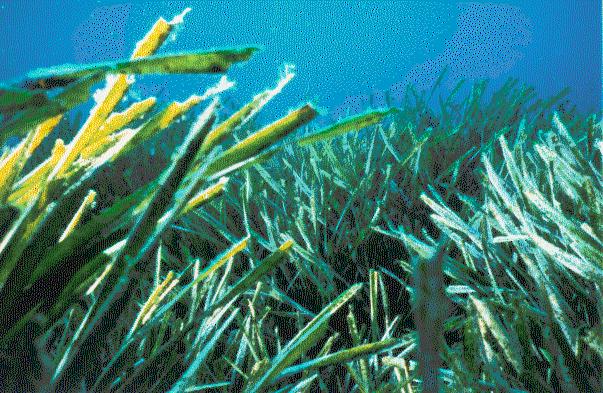
Image: National Oceanic and Atmospheric Administration / Public domain
Neptune Grass (Posidonia oceanica)
A rooted marine flowering plant with long, ribbon like green leaves growing from a network of rhizomes anchored in seafloor sediment. Over centuries it builds raised "matte" terraces of intertwined rhizomes and trapped s
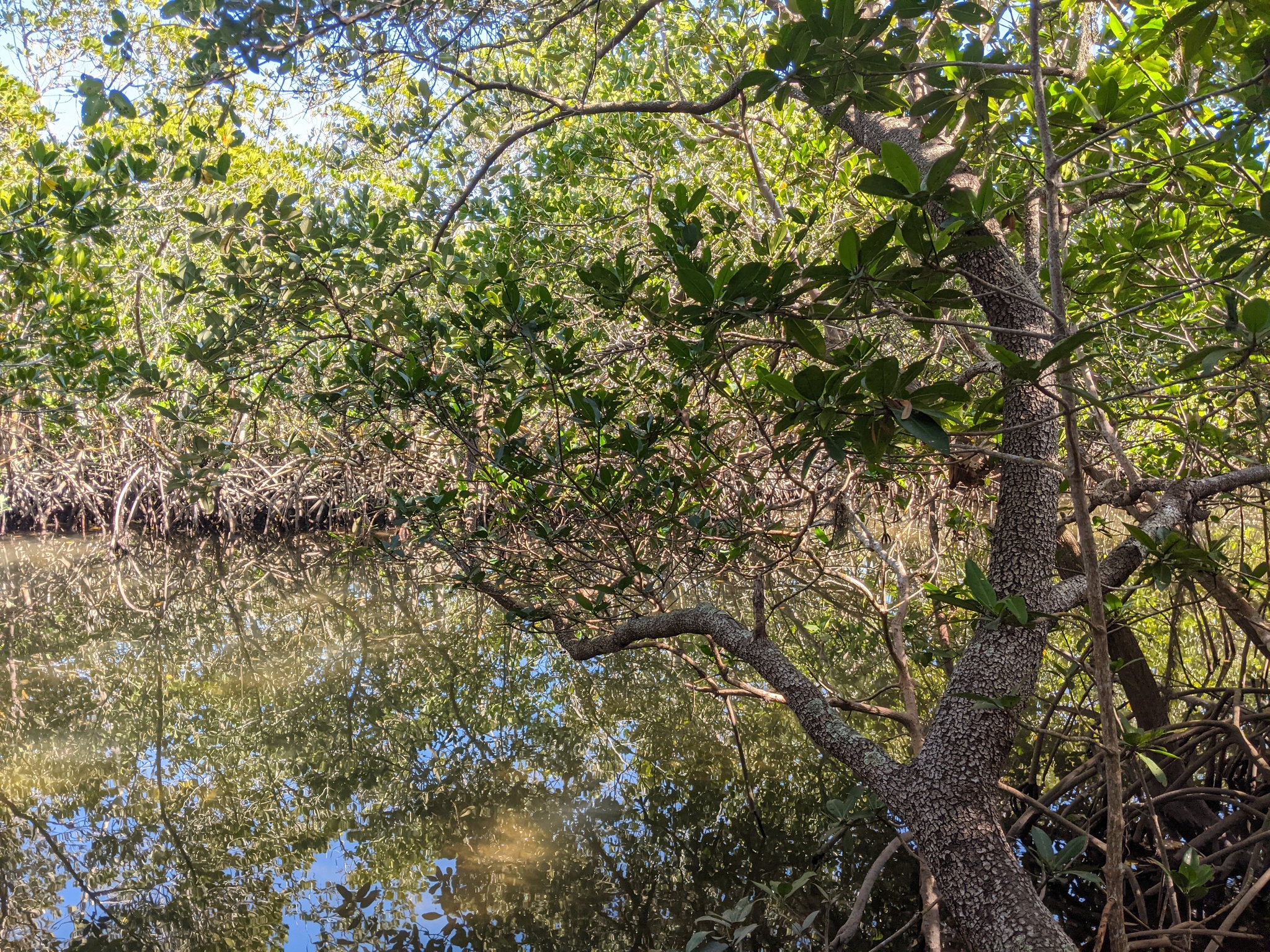
Image: no rights reserved / CC0
Red Mangrove (Rhizophora mangle)
A small to medium evergreen tree of the intertidal coast, recognized by its arching "prop" or stilt roots that drop from the trunk and branches into the water. It is viviparous: seeds germinate while still attached to th