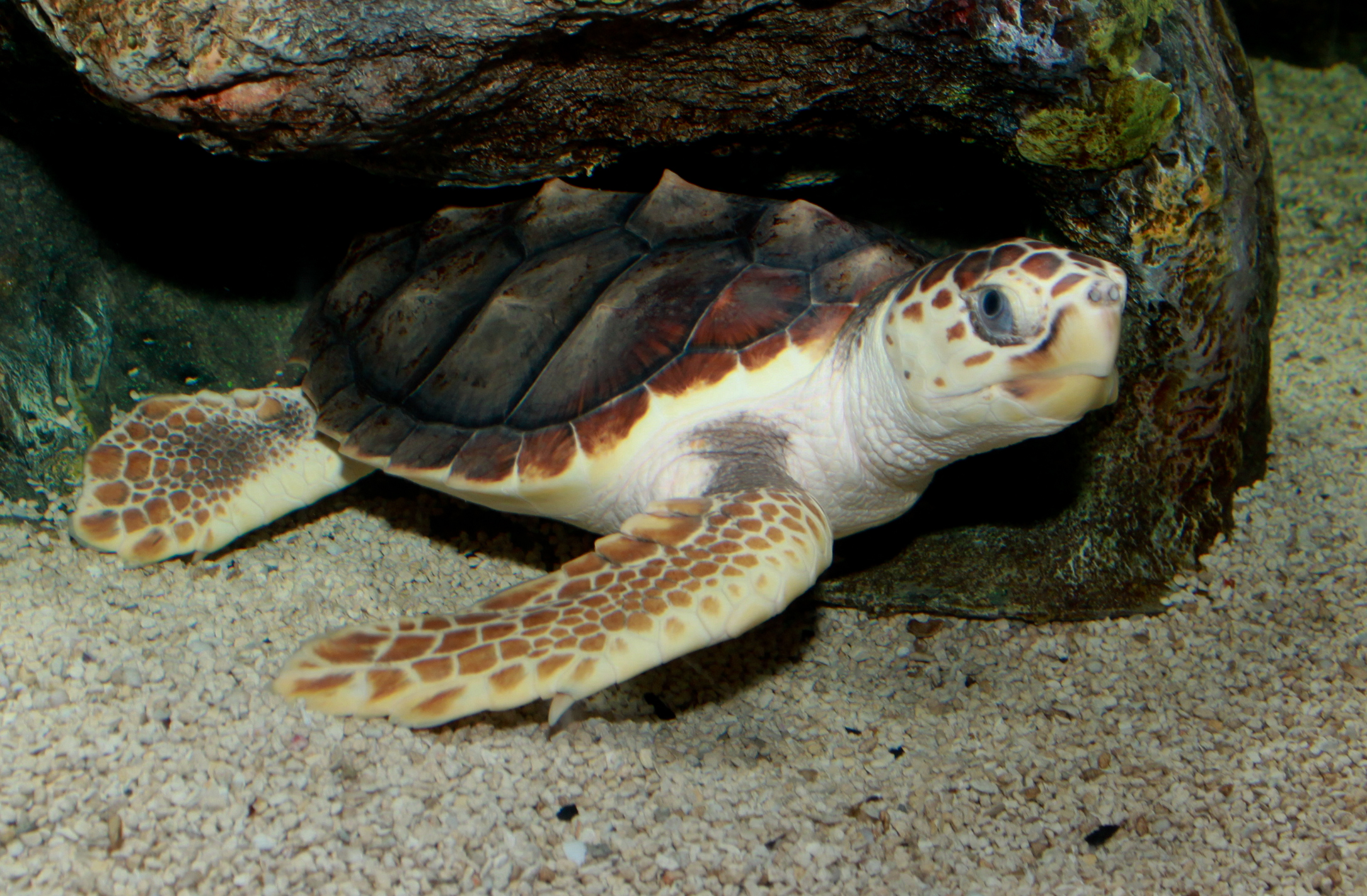
Loggerhead Turtle
Caretta caretta
Loggerhead Sea Turtle (Caretta caretta).
- Status
- VU
- Guild
- turtles
- Reading level
- beginner
- Sources
- 3
Loggerhead Turtle (Caretta caretta)
Status: needs expert review. A science reviewer should confirm the current IUCN global and subpopulation assessments before approval. The loggerhead (Caretta caretta) is a large, hard-shelled sea turtle named for its massive, powerful-jawed head.
At a glance
| Field | Value | Source |
|---|---|---|
| Scientific name | Caretta caretta | NOAA Fisheries |
| Guild | turtle | — |
| IUCN status | Vulnerable (global; 2015 assessment) — ten subpopulations are assessed separately, ranging from Critically Endangered to Least Concern | IUCN Red List |
| US ESA status | Endangered or Threatened depending on distinct population segment | NOAA Fisheries |
| International trade | CITES Appendix I | CITES |
| Population trend | Decreasing (global) | IUCN Red List |
| Range | Subtropical and temperate Atlantic, Pacific, and Indian Oceans plus the Mediterranean | NOAA Fisheries |
Identification
The loggerhead is named for its large head and powerful jaws. Adults are about 2.5–3.5 feet long and weigh roughly 200–350 pounds (NOAA Fisheries). The carapace is reddish-brown in adults and sub-adults, over a pale yellowish plastron (NOAA Fisheries). The strong jaws are adapted to crushing hard-shelled prey.
Ecology and behavior
Loggerheads are carnivorous and feed largely on bottom-dwelling invertebrates — mollusks, crustaceans, and horseshoe crabs among them — in coastal waters (NOAA Fisheries). Young turtles spend roughly 7–15 years in the open ocean before recruiting to coastal foraging areas (NOAA Fisheries). NOAA Fisheries estimates lifespan at 70 years or more, with females maturing around 35 years of age. As with all sea turtles, females return to nest in the region where they hatched; specific behavioral claims should be cited to published research and confirmed in review.
Conservation status and threats
The IUCN Red List assesses the loggerhead globally as Vulnerable (2015 assessment) with a decreasing trend; its ten subpopulations are assessed separately and range from Critically Endangered to Least Concern, so a global label hides important regional differences (IUCN Red List). In the United States the species is divided into distinct population segments listed as Endangered or Threatened under the Endangered Species Act, and it is on CITES Appendix I (NOAA Fisheries; CITES). NOAA Fisheries identifies bycatch in fishing gear as the primary threat, alongside direct harvest of turtles and eggs, loss of nesting habitat to coastal development, vessel strikes, marine pollution and plastic ingestion, and climate-driven change. Report figures as the cited authorities state them; a reviewer should confirm subpopulation specifics.
How to observe responsibly
This page does not provide approach guidance. Follow a reviewed observation guide and local regulations, which set minimum distances and nesting-season protections. Never disturb nesting females, hatchlings, or nests, and never use lights on nesting beaches — artificial light disorients hatchlings (ETHICS.md; NOAA Fisheries). Nesting beaches concentrate reproductive females and are sensitive; this page keeps to regional granularity only. Choose operators that keep their distance and never handle turtles.
How you can help
- Log sightings to a recognized citizen-science platform (see the iNaturalist dataset card).
- Support bycatch-reduction work (e.g. turtle excluder devices and circle hooks) through credible organizations.
- On nesting coasts, support lights-out and beach-protection programs, and reduce plastics that reach the ocean.
Sources (3)
Every claim traces to one of the citations below. Anything that could not be sourced was left out.
Related in the commons
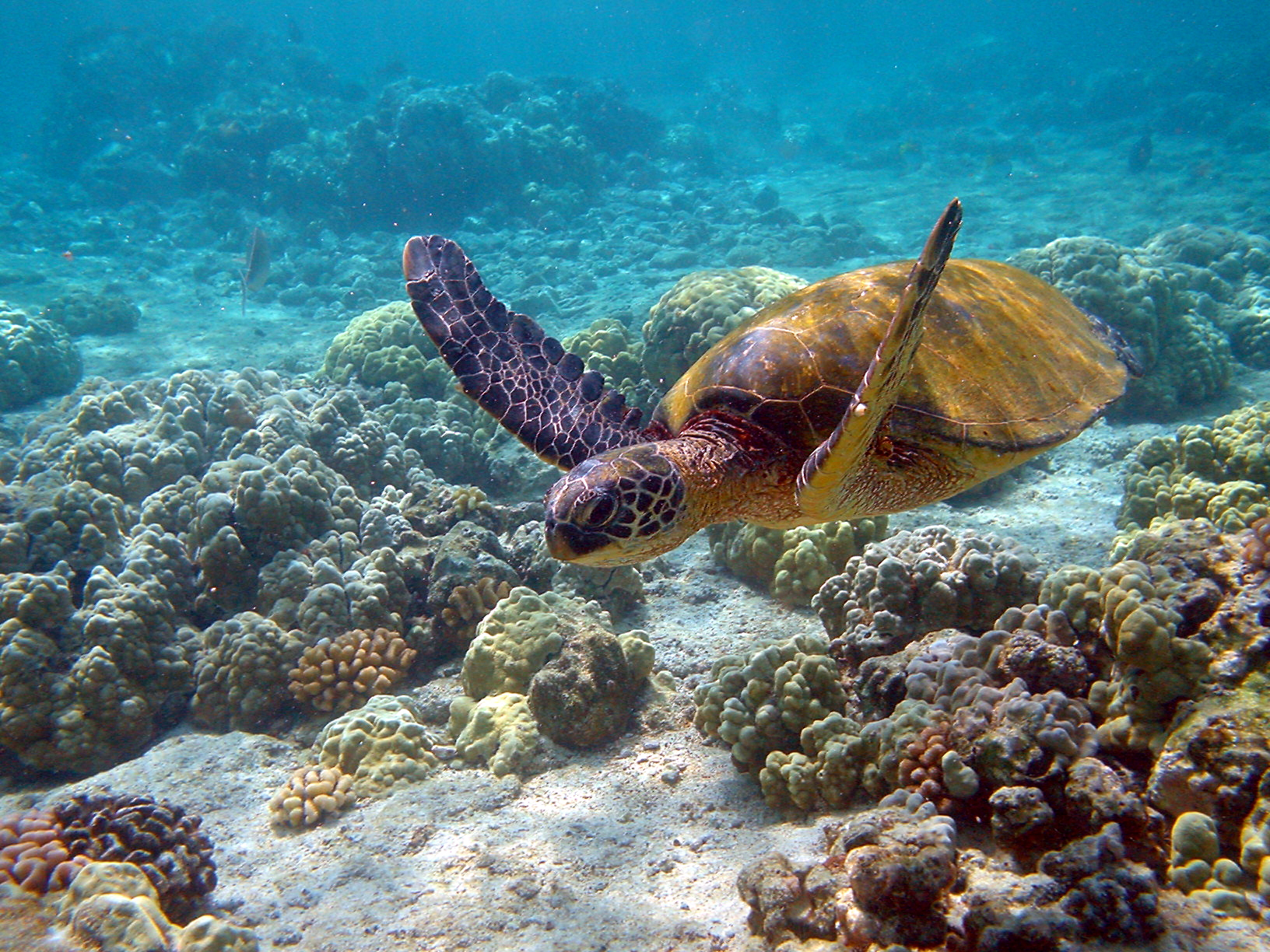
Image: Brocken Inaglory / CC BY-SA 3.0
Green Turtle (Chelonia mydas)
A large sea turtle with a smooth, often mottled carapace, a single pair of prefrontal scales, and a small rounded head. Named for the greenish color of its body fat, not its shell. Adults are largely herbivorous, grazing
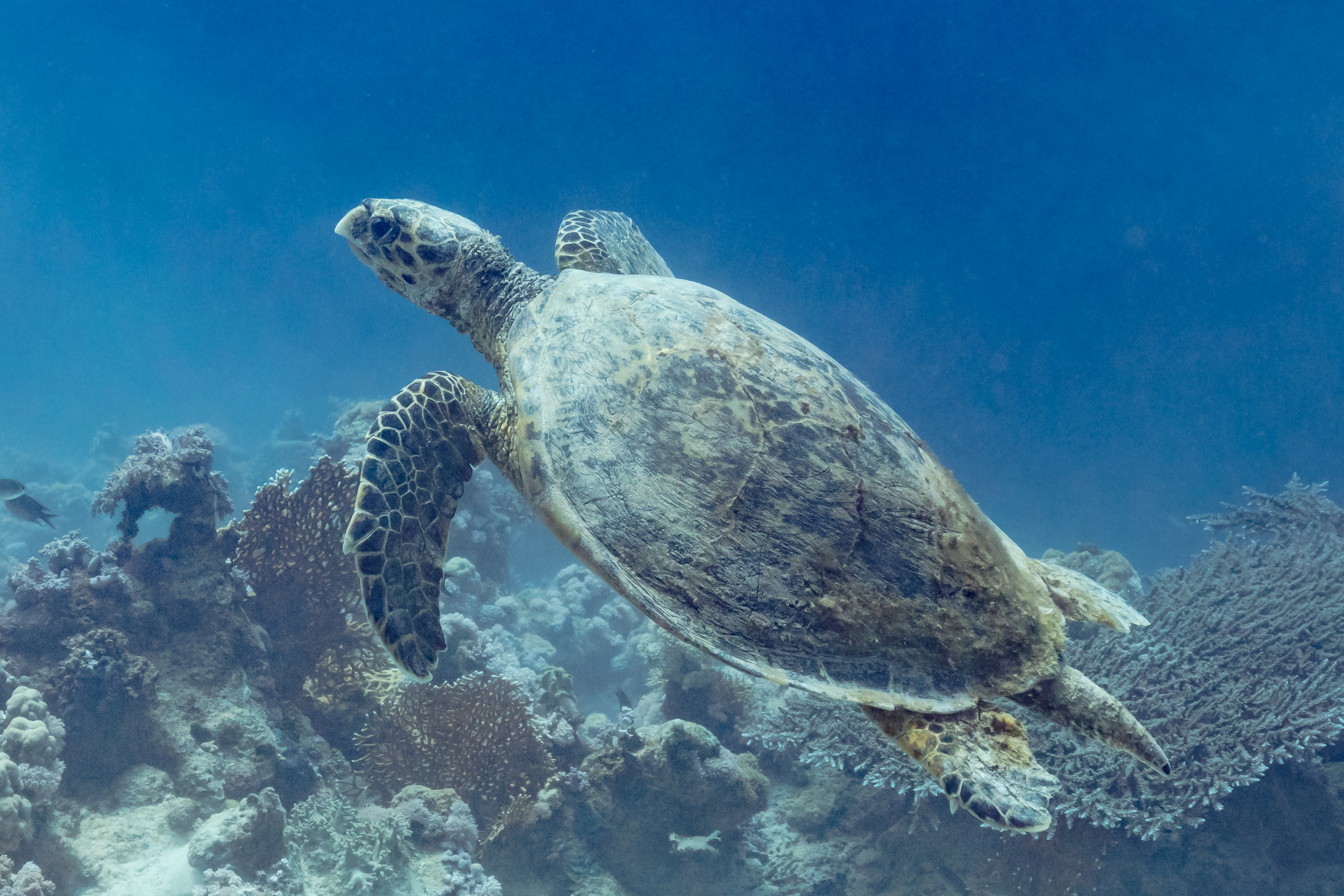
Image: Diego Delso / CC BY-SA 4.0
Hawksbill Turtle (Eretmochelys imbricata)
The hawksbill is named for its narrow, hawk like beak, which it uses to reach prey in reef crevices (NOAA Fisheries). Its carapace is strikingly mottled in amber, orange, red, yellow, black, and brown, with serrated rear
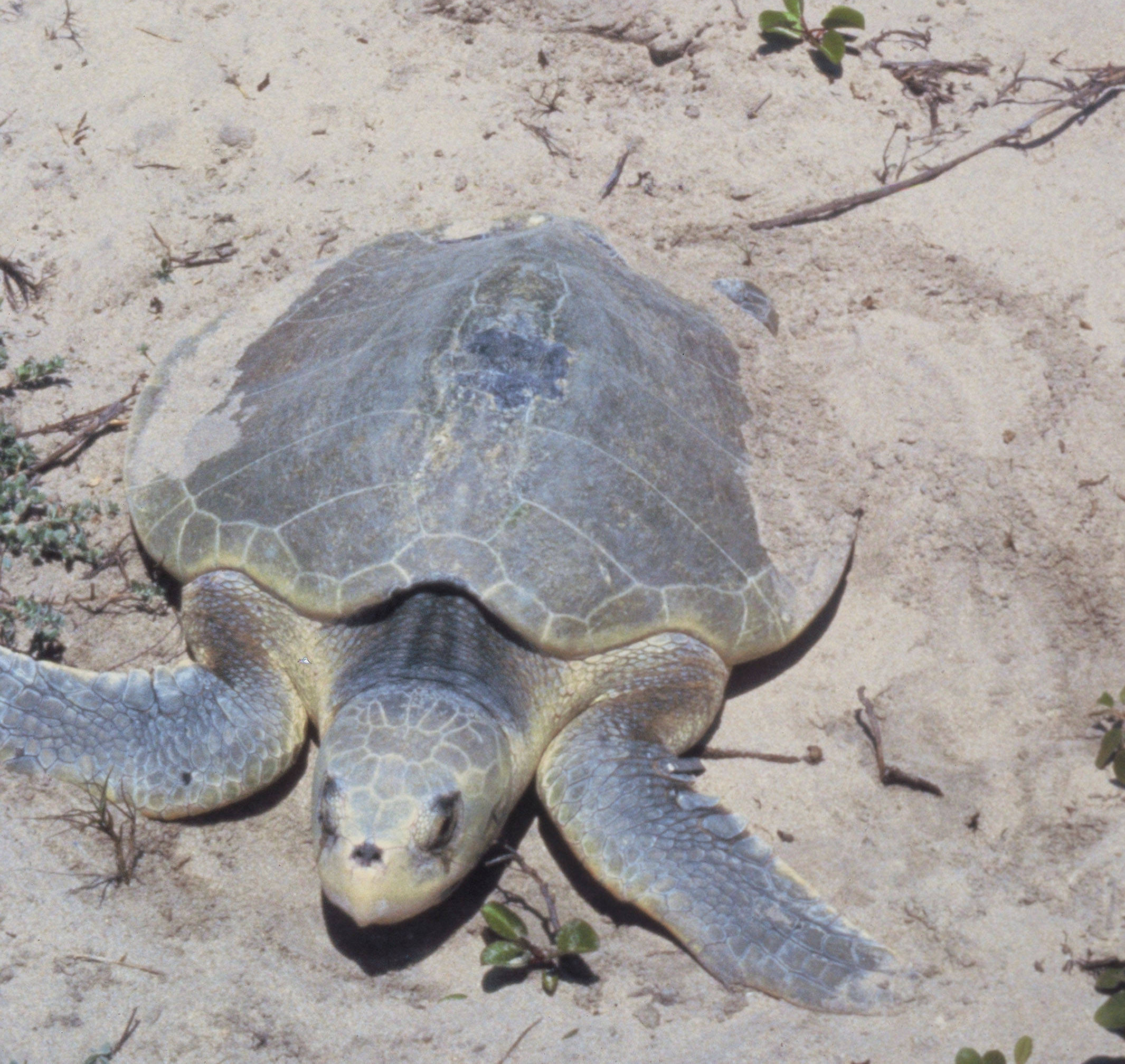
Image: uploaded by Johntex / Public domain
Kemp's Ridley Turtle (Lepidochelys kempii)
Kemp's ridley is the smallest sea turtle: adults weigh about 70–100 pounds and measure roughly 2 feet in length (NOAA Fisheries). The carapace is often as wide as it is long, grayish green above with a pale yellowish und
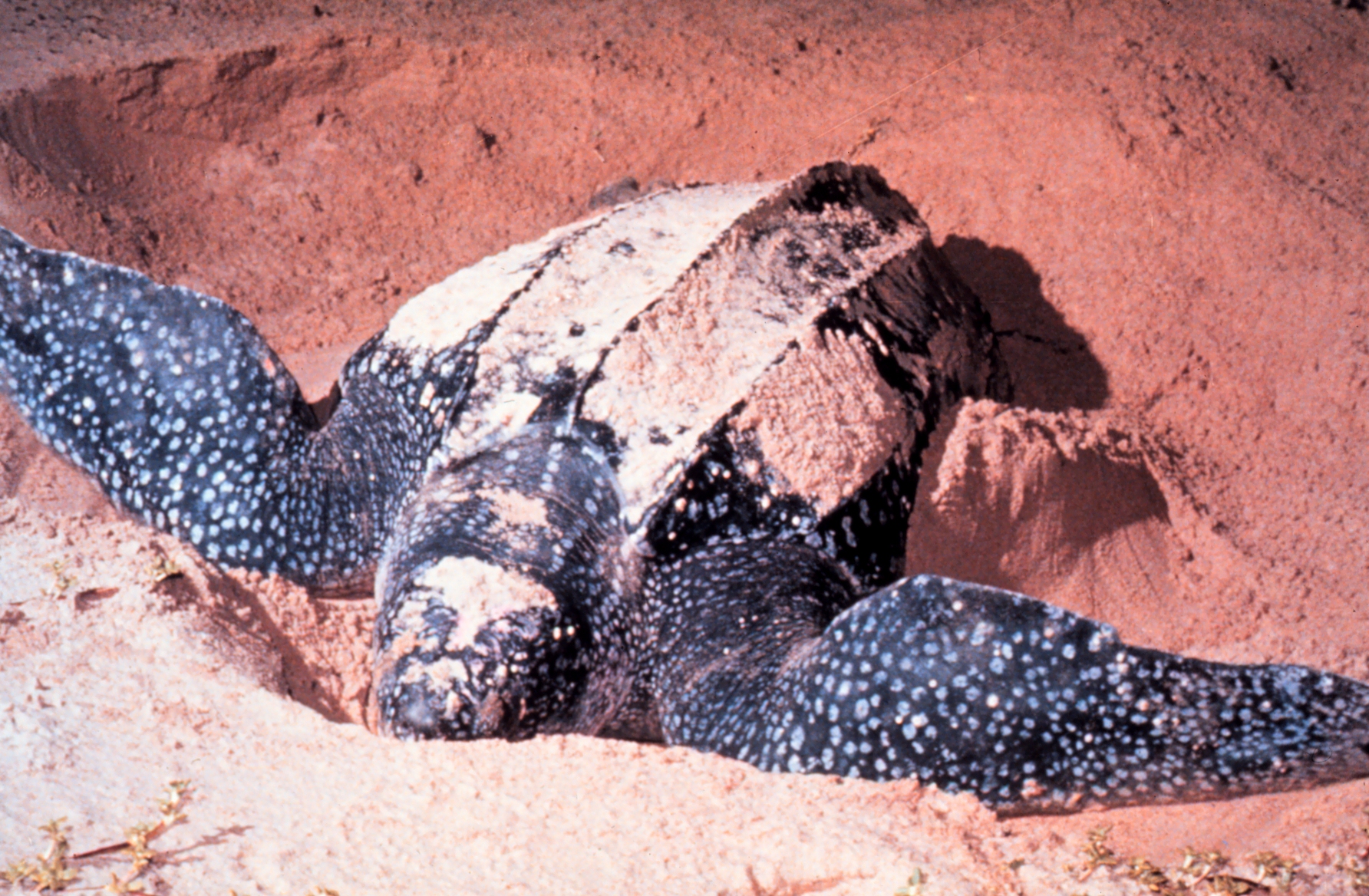
Image: National Oceanic and Atmospheric Administration, NOAA / Public domain
Leatherback Turtle (Dermochelys coriacea)
The leatherback is unmistakable: it is the largest living turtle, with adults reaching about 5–6 feet in length and weighing roughly 750–1,000 pounds (NOAA Fisheries). Unlike all other sea turtles, it lacks scales and a