Galápagos Marine Reserve, Ecuador
Galápagos Marine Reserve, Ecuador
Status: needs expert review. Figures cite UNESCO, the IUCN Red List, a peer-reviewed shark-biomass study, and the Charles Darwin Foundation. A reviewer should note that the original reserve area is reported as either ~133,000 km² or ~138,000 km² depending on source, and should confirm the official Galápagos National Park figure before approval.
Overview
The Galápagos Marine Reserve is one of the largest marine protected areas in the world, surrounding the Galápagos Islands roughly 1,000 km off the coast of Ecuador. The reserve was created by Ecuador in 1998 and covers on the order of 133,000–138,000 km² (the figure varies by source and measurement method). In January 2022 Ecuador added the adjacent Hermandad Marine Reserve, a further 60,000 km² that includes a no-take corridor toward Cocos Island and a longlining ban, bringing the total protected marine area around the archipelago to about 198,000 km² (Charles Darwin Foundation).
The Galápagos Islands were among the very first sites inscribed on the UNESCO World Heritage List, in 1978, and the listing was extended to include the surrounding marine reserve in 2001 (UNESCO World Heritage Centre).
Key species & habitats
The Galápagos sit at the confluence of cold and warm ocean currents, producing an unusually productive and highly endemic marine system.
- Marine iguana (Amblyrhynchus cristatus): endemic to the Galápagos and the world's only sea-going lizard. The IUCN Red List classifies it as Vulnerable (assessed 2019), with El Niño–driven algal die-offs causing periodic mass mortality among the population.
- Galápagos sea lion (Zalophus wollebaeki): endemic to the archipelago, classified by the IUCN Red List as Endangered with a decreasing population trend (assessed 2014), driven largely by El Niño events and disease.
- Sharks: The northern islands of Darwin and Wolf hold the largest reef-shark biomass reported anywhere on Earth — 12.4 tonnes per hectare, with sharks making up roughly 73% of total fish biomass, dominated by scalloped hammerheads (Sphyrna lewini) and Galápagos sharks (Salinas-de-León et al. 2016, PeerJ). Whale sharks also aggregate seasonally near these islands.
Conservation status & threats
- Illegal and boundary fishing: Industrial longline and purse-seine fleets concentrate just outside the reserve boundary, and illegal artisanal longlining occurs inside it; longlines have been banned within the reserve since 2000 (peer-reviewed monitoring; Charles Darwin Foundation).
- Climate and El Niño: El Niño events reduce marine algae and prey, causing documented mass mortality in marine iguanas and population declines in sea lions (IUCN Red List assessments).
- Invasive species, marine pollution, and tourism pressure: These are recurring threats cited in the IUCN assessments and by Galápagos conservation organisations; a reviewer should attach a dedicated source before any specific pollution or visitor figure is published.
Protected-area status & rules
The reserve is managed by the Galápagos National Park Directorate (Parque Nacional Galápagos) under Ecuadorian law, within a UNESCO World Heritage property. Visitor conduct is governed by the Galápagos National Park rules. Per the Charles Darwin Foundation's published summary of those rules:
- Observe wildlife from at least 2 metres (about 6 feet) away.
- Explore only with a naturalist guide authorised by the Galápagos National Park.
- Do not touch or feed wildlife.
- Stay on marked trails.
Per ETHICS.md, this briefing describes the official rules rather than promoting any close-interaction activity. For the most authoritative wording, a reviewer should confirm against the Galápagos National Park Directorate's own published regulations.
How to visit responsibly
- Book only with operators using park-authorised naturalist guides; independent off-trail access is not permitted.
- Hold the 2-metre minimum distance from all wildlife, including sea lions and marine iguanas that may rest near trails — proximity tolerance by an animal is not consent.
- Carry out all waste; do not introduce organic material or seeds that could establish as invasive species.
- Report illegal fishing or wildlife disturbance to park authorities rather than intervening.
How you can help
- Support the conservation organisations and the park directorate working on illegal-fishing enforcement and invasive-species control.
- Reduce plastic use that contributes to the marine debris reaching the archipelago.
- Contribute marine sightings to recognised citizen-science platforms without publishing precise aggregation locations of sharks or other exploited species.
Sources (6)
Every claim traces to one of the citations below. Anything that could not be sourced was left out.
- [1]Tier 1 · Peer-reviewedGalápagos Islands — UNESCO World Heritage CentreAccessed 2026-06-16
- [2]Tier 1 · Peer-reviewedAmblyrhynchus cristatus (Marine Iguana) — IUCN Red ListAccessed 2026-06-16
- [3]Tier 1 · Peer-reviewedZalophus wollebaeki (Galápagos Sea Lion) — IUCN Red ListAccessed 2026-06-16
- [4]Tier 1 · Peer-reviewedLargest global shark biomass found in the northern Galápagos Islands of Darwin and Wolf — Salinas-de-León et al., PeerJAccessed 2026-06-16
- [5]Tier 2 · InstitutionalNew Galápagos Marine Reserve, Hermandad, was established — Charles Darwin FoundationAccessed 2026-06-16
- [6]Tier 2 · InstitutionalGalápagos National Park Rules — Charles Darwin FoundationAccessed 2026-06-16
Related in the commons
Monterey Bay Marine Briefing
Monterey Bay is one of the most ecologically diverse marine regions in the world. Dominated by the massive underwater Monterey Canyon, which rivals the Grand Canyon in depth and scale, the bay brings cold, nutrient rich
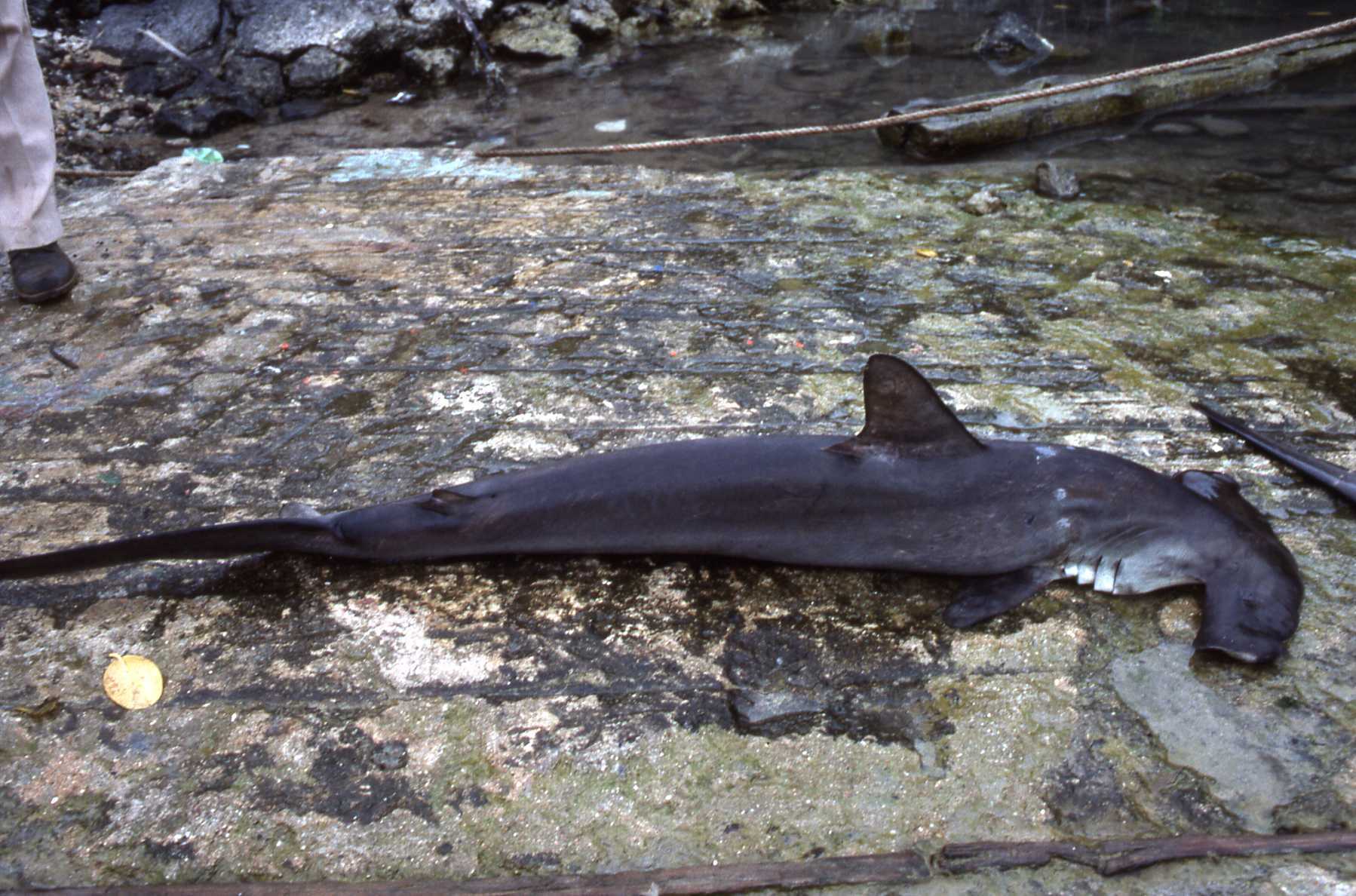
Image: iNaturalist.org (Simon Tonge) (Simon%20Tonge) / CC0
Scalloped Hammerhead (Sphyrna lewini)
The scalloped hammerhead is named for the broad, flattened "hammer" (cephalic) head, the front edge of which is curved with a central indentation and lateral scallops — a feature that separates it from the great and smoo
Ningaloo Coast, Western Australia
The Ningaloo Coast, on the remote western coast of Australia near Exmouth, was inscribed on the UNESCO World Heritage List in 2011 as a 604,500 hectare marine and terrestrial property. It includes Ningaloo Marine Park (e
Salish Sea, Washington & British Columbia
The Salish Sea is a transboundary inland sea shared by the United States and Canada. The SeaDoc Society defines it as the connected marine waters that include Puget Sound, the San Juan Islands, and the waters off Vancouv