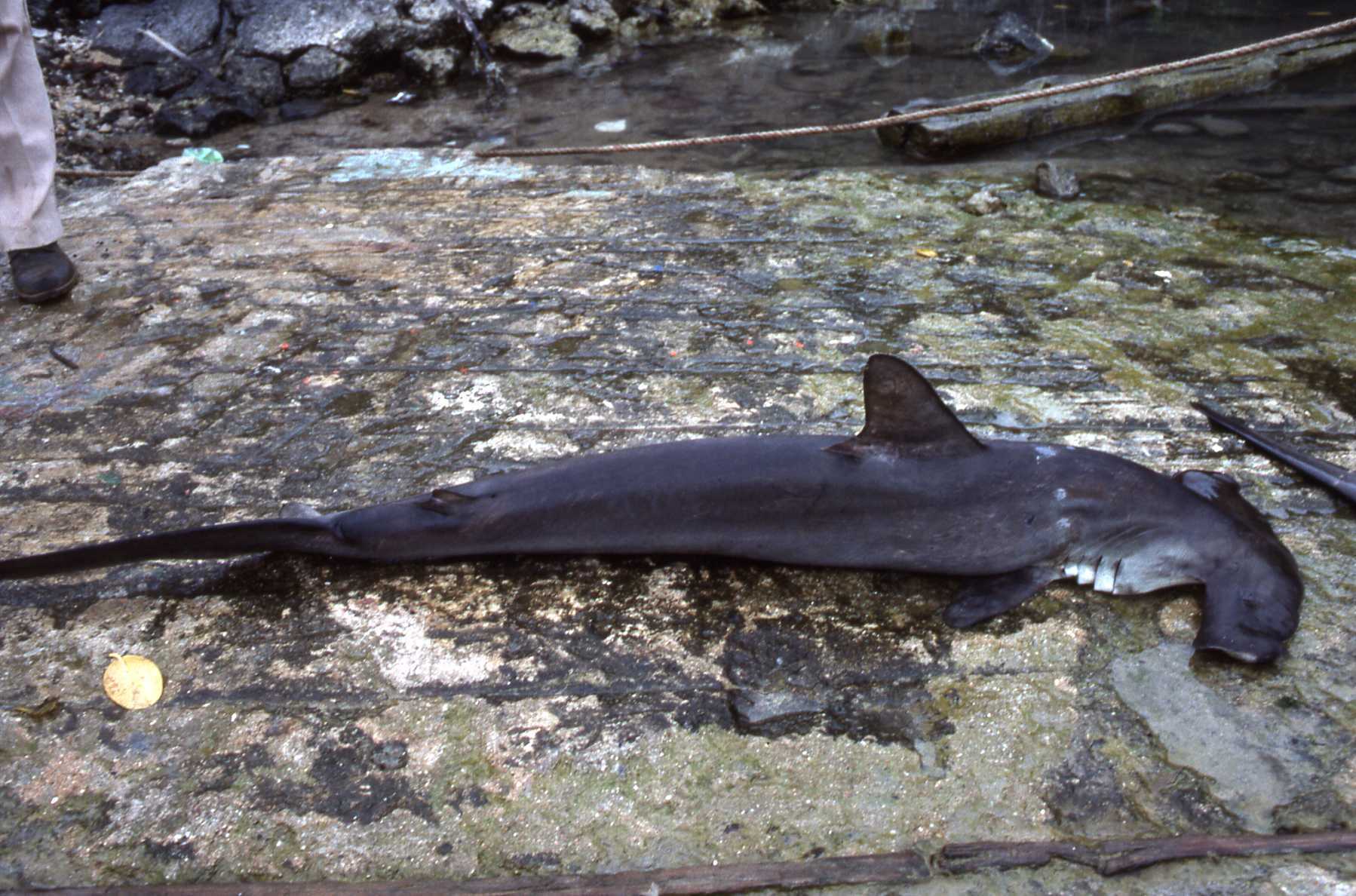
Scalloped Hammerhead
Sphyrna lewini
Sphyrna lewini (Griffith & Smith, 1834) 2422815227.
- Status
- CR
- Guild
- sharks rays
- Sources
- 2
Scalloped Hammerhead (Sphyrna lewini)
Status: needs expert review. This species is Critically Endangered; a science reviewer should confirm the current IUCN category, assessment date, decline estimate, and the U.S. ESA distinct-population-segment listings before approval. The scalloped hammerhead (Sphyrna lewini) is a coastal and semi-oceanic hammerhead shark of warm seas worldwide.
At a glance
| Field | Value | Source |
|---|---|---|
| Scientific name | Sphyrna lewini | IUCN Red List |
| Guild | shark-ray | — |
| IUCN status | Critically Endangered (A2bd; assessed 2018, version 2019-1) | IUCN Red List |
| Population trend | Decreasing (estimated global decline >80% over three generations) | IUCN Red List |
| U.S. ESA status | Eastern Pacific & Eastern Atlantic DPS Endangered; Central/SW Atlantic & Indo-West Pacific DPS Threatened | NOAA Fisheries |
| International trade | CITES Appendix II | NOAA Fisheries |
| Typical size | Up to ~11 ft (3.4 m) | NOAA Fisheries |
Identification
The scalloped hammerhead is named for the broad, flattened "hammer" (cephalic) head, the front edge of which is curved with a central indentation and lateral scallops — a feature that separates it from the great and smooth hammerheads. It inhabits coastal warm-temperate and tropical seas globally, ranging in the western Atlantic from New Jersey to Brazil including the Gulf of Mexico and Caribbean (NOAA Fisheries).
Ecology and behavior
Scalloped hammerheads use coastal and semi-oceanic habitat, with inshore areas serving as nursery grounds for young. The species is reported to form schools and to reach about 30 years of age (NOAA Fisheries). Behavioral specifics, including aggregation and migration patterns, should be cited to published research and confirmed in review.
Conservation status and threats
The IUCN Red List assesses the scalloped hammerhead globally as Critically Endangered (criteria A2bd; assessed 2018, published in version 2019-1), based on an estimated global population decline exceeding 80% over three generation lengths, with a decreasing trend. The decline is driven by overfishing to supply the global shark-fin trade and by the species' high sensitivity to mortality when captured on fishing gear (IUCN Red List).
Documented threats include:
- Targeted fishing and bycatch, especially for the shark-fin trade (NOAA Fisheries)
- High at-vessel and post-release mortality relative to many other sharks
- Pressure on coastal nursery habitat
Under the U.S. Endangered Species Act, NOAA Fisheries lists the Eastern Pacific and Eastern Atlantic distinct population segments as Endangered and the Central & Southwest Atlantic and Indo-West Pacific segments as Threatened; the species is also listed on CITES Appendix II (NOAA Fisheries). Report figures as the cited authorities state them.
How to observe responsibly
This page does not provide approach guidance. Because this species is Critically Endangered and fin-trade targeted, no precise schooling, aggregation, or nursery locations are published here (ETHICS.md). Any encounter must follow a reviewed observation guide and local regulations — distance first, no feeding, baiting, chasing, or surrounding. Choose operators that keep their distance and never handle sharks.
How you can help
- Log sightings to a recognized citizen-science platform (see the iNaturalist dataset card).
- Support CITES enforcement and shark-finning bans through credible organizations.
- Avoid products derived from shark fins and unverified shark-derived goods.
Sources (2)
Every claim traces to one of the citations below. Anything that could not be sourced was left out.
Related in the commons
Galápagos Marine Reserve, Ecuador
The Galápagos Marine Reserve is one of the largest marine protected areas in the world, surrounding the Galápagos Islands roughly 1,000 km off the coast of Ecuador. The reserve was created by Ecuador in 1998 and covers o
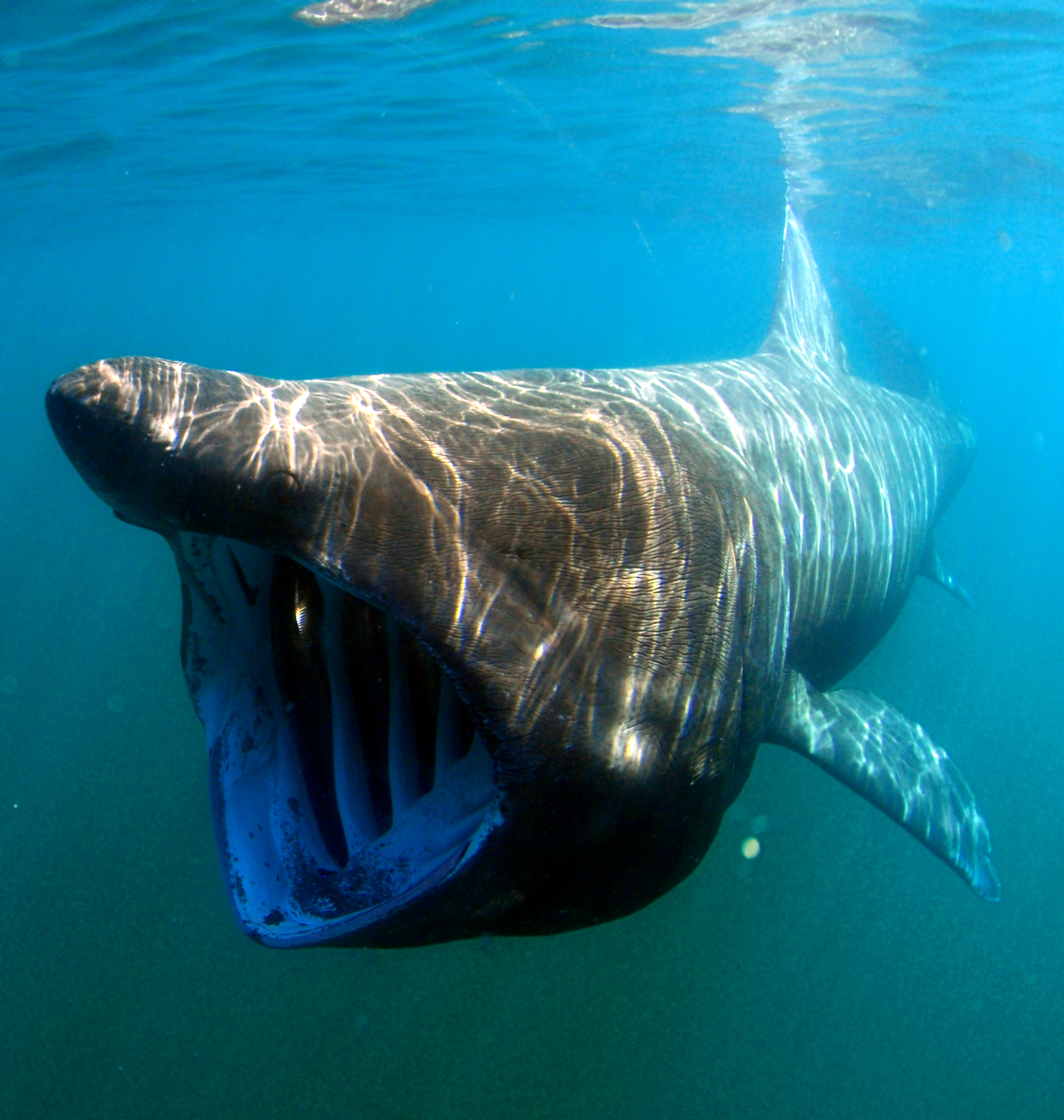
Image: Greg Skomal / NOAA Fisheries Service / Public domain
Basking Shark (Cetorhinus maximus)
The basking shark is one of the most recognizable sharks: an enormous body, a bulbous conical snout, and very large gill slits that nearly encircle the head. The mouth is large and subterminal, with many small hooked tee
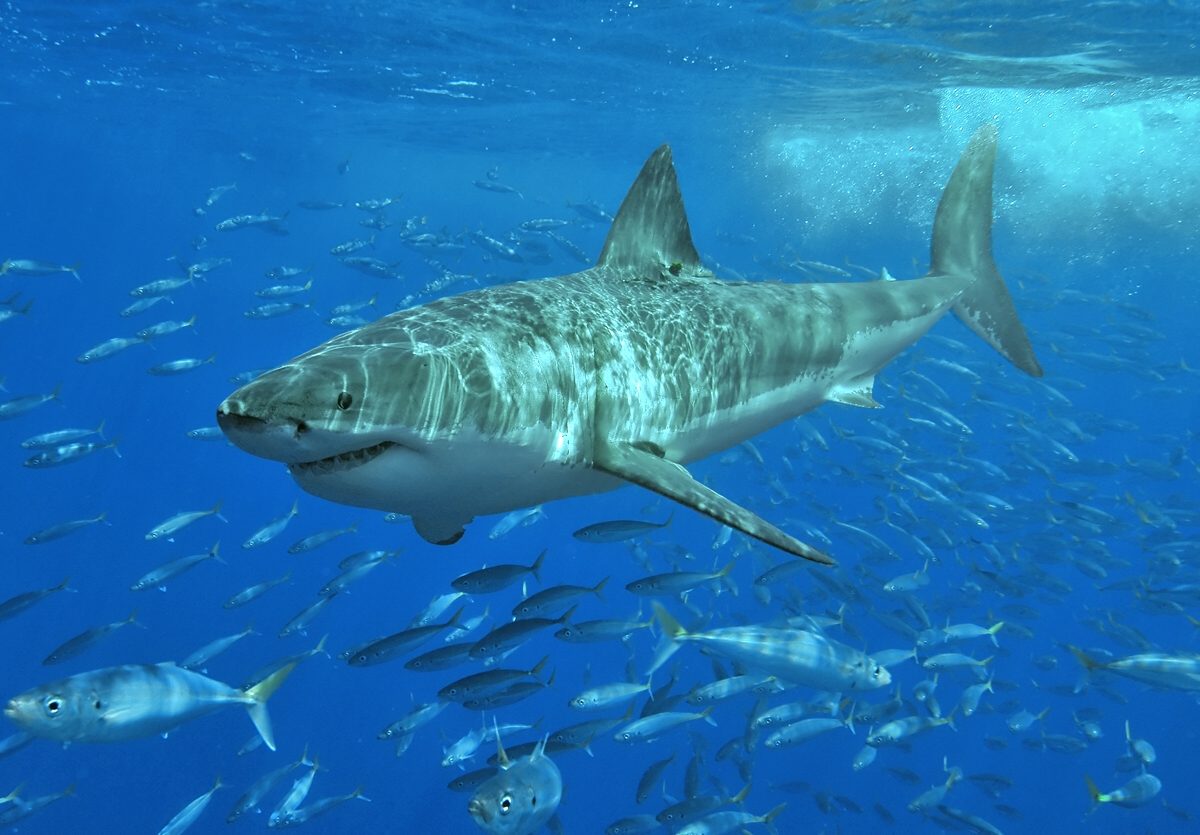
Image: Pterantula (Terry Goss) at en.wikipedia / CC BY 2.5
Great White Shark
The great white shark, also known as the white shark, is a species of large lamniform shark found in the coastal surface waters of all major oceans. It is notable for its size, predatory capabilities, and role as an apex
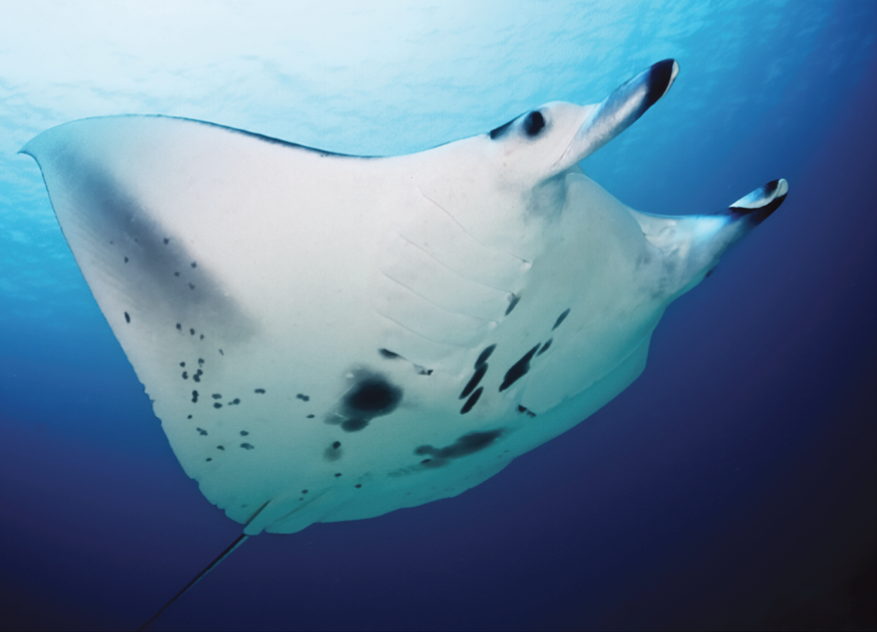
Image: Jaine FRA, Couturier LIE, Weeks SJ, Townsend KA, Bennett MB, et al. (2012) / CC BY 2.5
Reef Manta Ray (Mobula alfredi)
The reef manta ray is a very large ray with a kite shaped disc, broad wing like pectoral fins, and a pair of long, flexible cephalic ("head") lobes flanking a wide, terminal mouth. Individuals carry unique natural spot p