Ophthalmosaurus icenicus
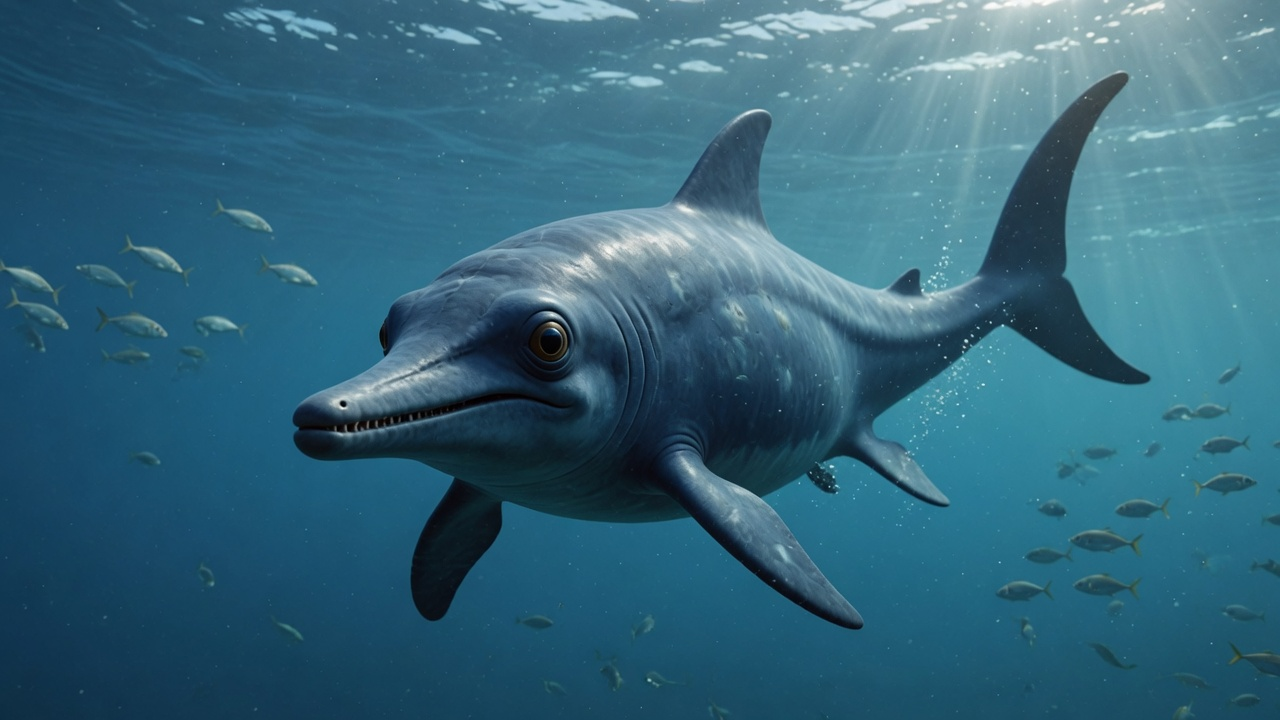
Photoreal concept reconstruction of Ophthalmosaurus icenicus, a dolphin-shaped ichthyosaur with large eyes and a crescent tail fluke, swimming through Jurassic blue water.
Generated educational art — not fossil evidence, identification media, or proof of soft-tissue color or behavior.
- Period
- Middle–Late Jurassic
- Clade
- Ichthyosauria
- Length
- ~4–6 m (typical)
- Diet
- Fish & cephalopods
- Locomotion
- Thunniform / crescent tail
- Habitat
- Open Jurassic seas
How to use this page
Read deep time with living-ocean tools
Correct the myth
“Ocean dinosaur” is pop culture. These animals are marine reptiles (and related deep-time ocean vertebrates), not Dinosauria.
Compare body plans
Mosasaurs ≈ marine lizards with tails; plesiosaurs ≈ four flippers; ichthyosaurs ≈ dolphin-like. Use the living bridges for ecological analogy only.
Trust the labels
Hero media is concept reconstruction. Claims stay sourced; review gates stay visible until experts approve.
Compare mode
Side-by-side in the commons
Ecological analogy only — not kinship. Use body plan, size chips, and sources on each page before drawing conclusions.
This entry
Ophthalmosaurus icenicus
- Period
- Middle–Late Jurassic
- Clade
- Ichthyosauria
- Length
- ~4–6 m (typical)
- Diet
- Fish & cephalopods
- Locomotion
- Thunniform / crescent tail
- Habitat
- Open Jurassic seas
Convergent streamlining vs true whales
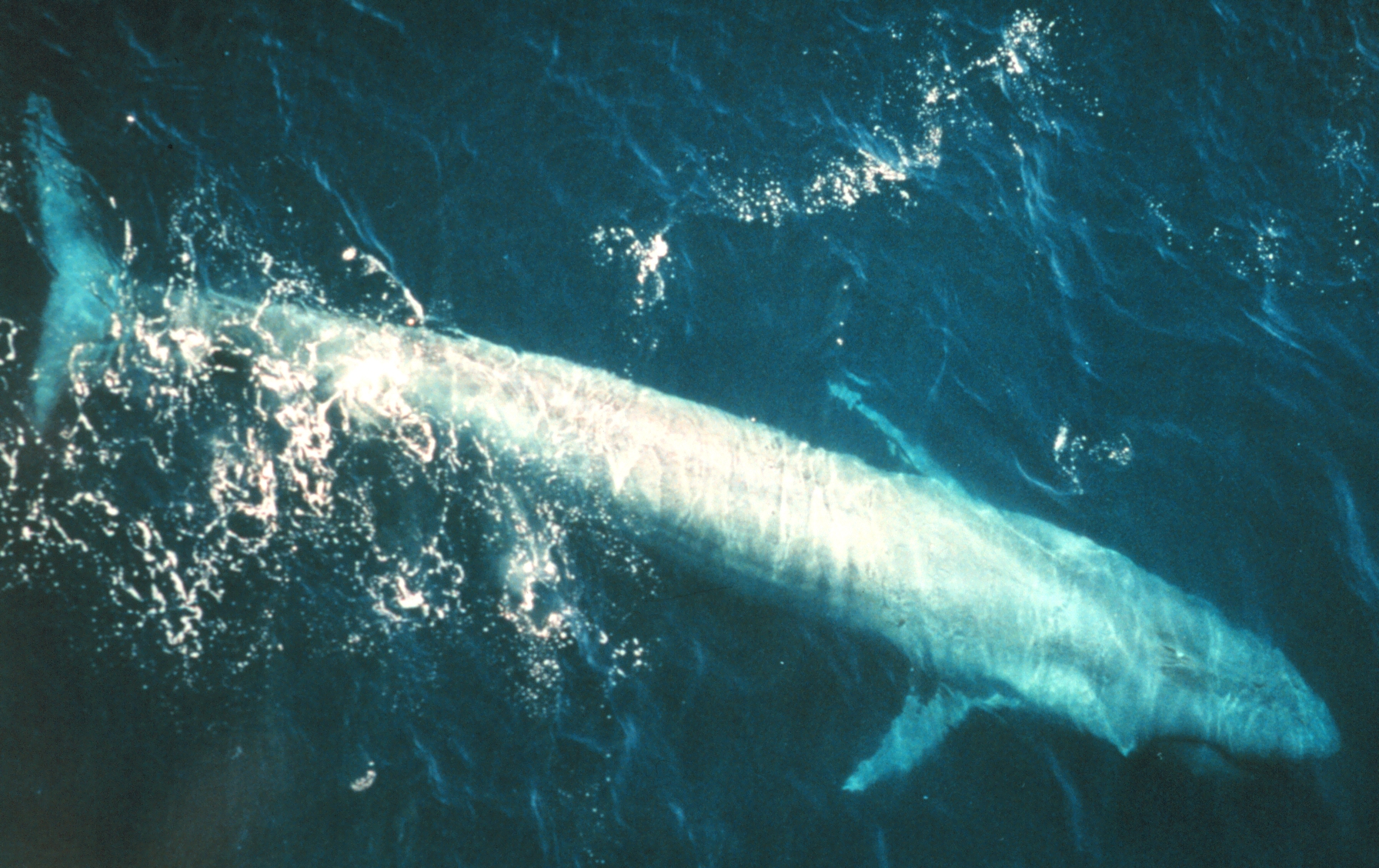
Blue Whale (Balaenoptera musculus)
- Period
- Living
- Clade
- Balaenopteridae
- Length
- Up to ~90–110 ft (~27–33 m)
- Mass
- Largest known animal
- Diet
- Filter feeder (krill)
- Locomotion
- Fluke-powered swimming
- Habitat
- All major ocean basins
- lifespan
- ~80–90 years (NOAA)
Living marine reptile
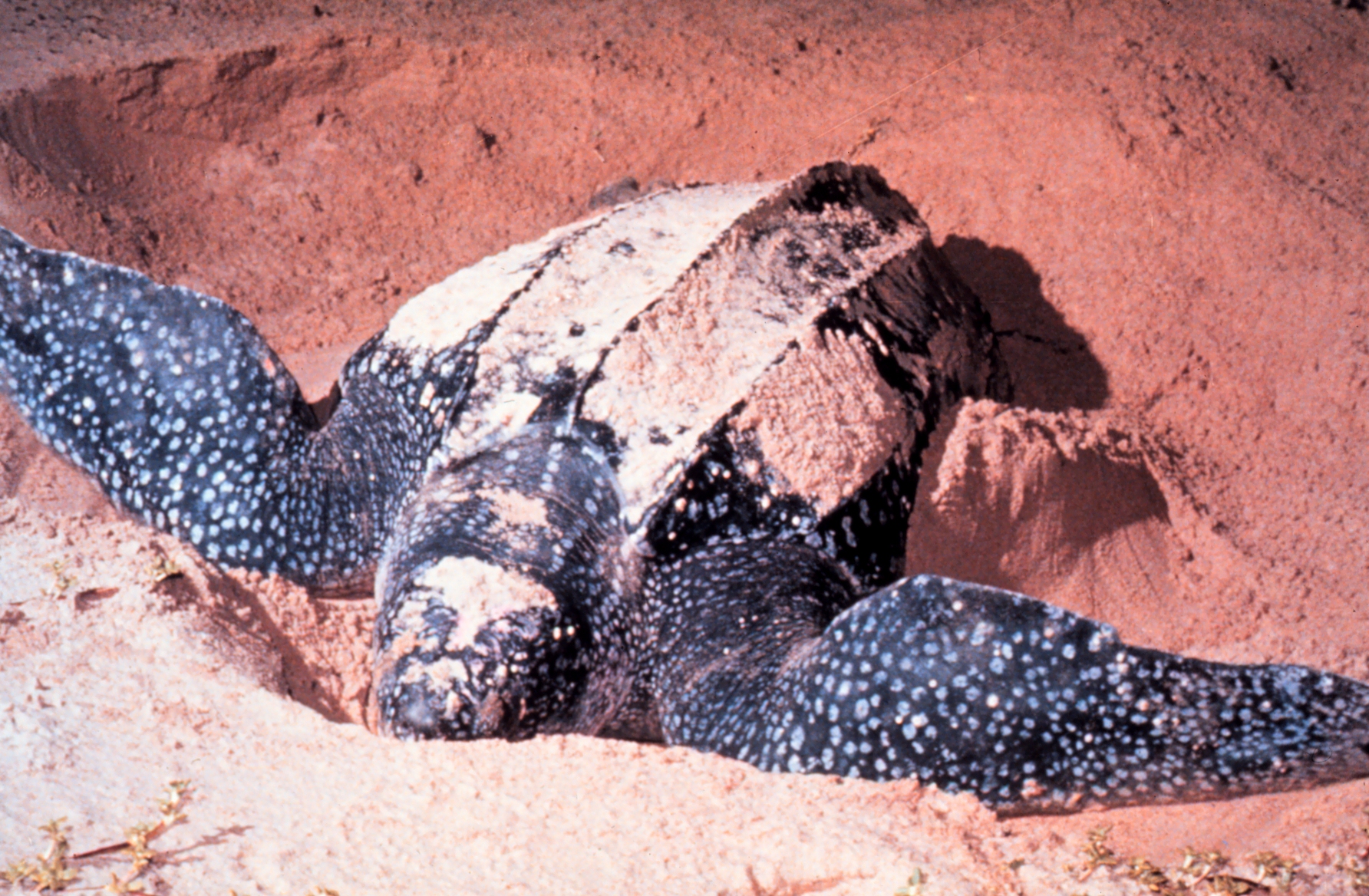
Leatherback Turtle (Dermochelys coriacea)
- Period
- Living
- Clade
- Dermochelyidae
- Length
- Largest living sea turtle
- Diet
- Mostly gelatinous prey (jellyfish)
- Locomotion
- Flipper-powered swimming
- Habitat
- Tropical to temperate oceans; nesting beaches
Ophthalmosaurus icenicus
Not a dinosaur. Ophthalmosaurus is an ichthyosaur — a fully marine reptile with a dolphin-like body plan and famously large eyes. Convergence with living cetaceans is ecological analogy, not kinship.
At a glance
| Field | Value | Source |
|---|---|---|
| Scientific name | Ophthalmosaurus icenicus | Paleobiology Database / literature |
| Guild | Marine reptiles (Ichthyosauria) | — |
| “Ocean dinosaur?” | No | Britannica / UCMP |
| IUCN | Extinct | Deep-time convention |
| Age | Middle–Late Jurassic (typical ranges) | Paleobiology literature |
| Body plan | Streamlined, large eyes, crescent tail fluke | UCMP / Britannica |
Identification
Ichthyosaurs evolved a fish-like silhouette: elongated snout, large orbit, dorsal fin in many reconstructions, and a vertical tail fluke. Ophthalmosaurus is named for its enormous eyes — among the largest relative proportions in vertebrate history in popular and scientific discussion of the genus.
Ecology and behavior
Open-water pursuit predator of fish and cephalopods is the standard ecological framing. Large eyes are widely interpreted in the context of low-light or deep-water visual hunting, though absolute depth ecology remains model-dependent.
Conservation status and threats
Extinct long before the end-Cretaceous (ichthyosaurs declined earlier than mosasaurs). No living members of Ichthyosauria.
How to observe responsibly
Museum mounts and peer-reviewed skeletal diagrams. Compare thoughtfully to living dolphins to teach convergent evolution, not “underwater dinosaurs.”
How you can help
Support museum collections, open fossil databases, and ocean literacy that connects deep time to living seas.
Media note
Generated hero media is concept reconstruction only.
Sources (3)
Every claim traces to one of the citations below. Anything that could not be sourced was left out.
Related in the commons
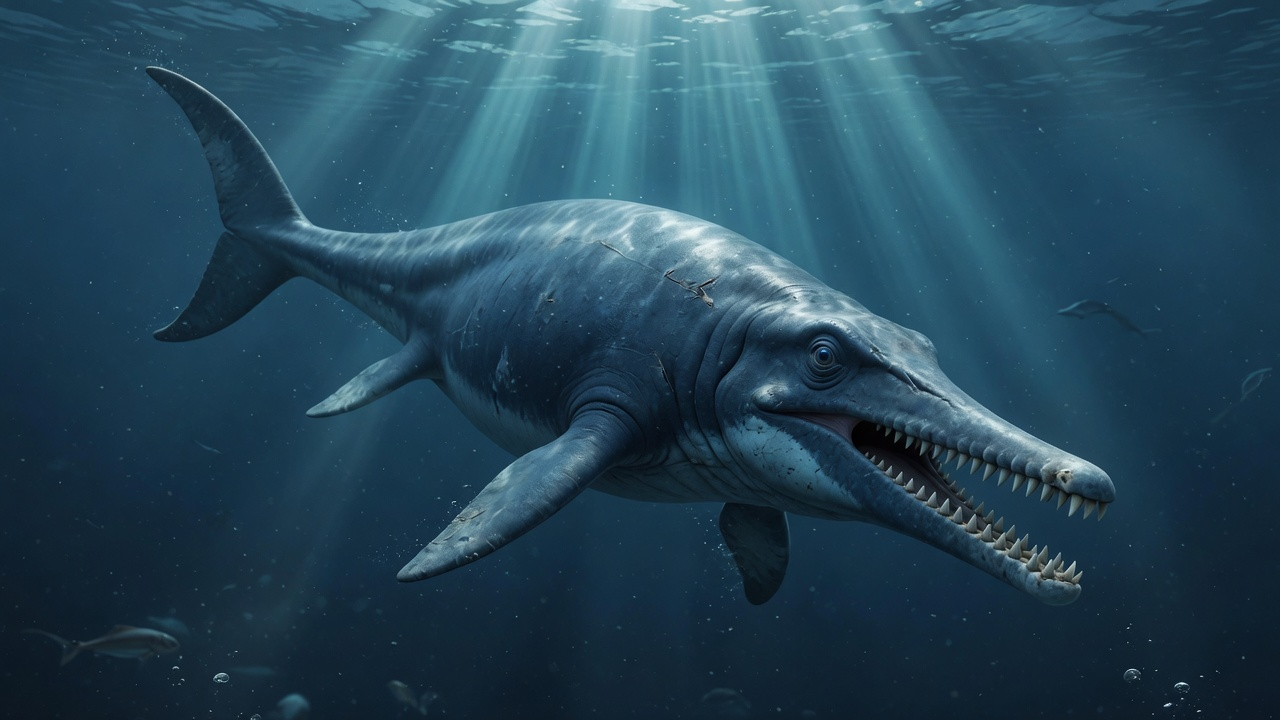
Image: Blue Life Commons / Grok Imagine concept reconstruction / CC-BY-4.0
Dakosaurus maximus
Not a dinosaur. Marine crocodylomorph — not a dinosaur, not a mosasaur; short snout, ziphodont teeth. Hero media is AI concept reconstruction — not fossil evidence. Marine crocodylomorph — not a dinosaur, not a mosasaur;
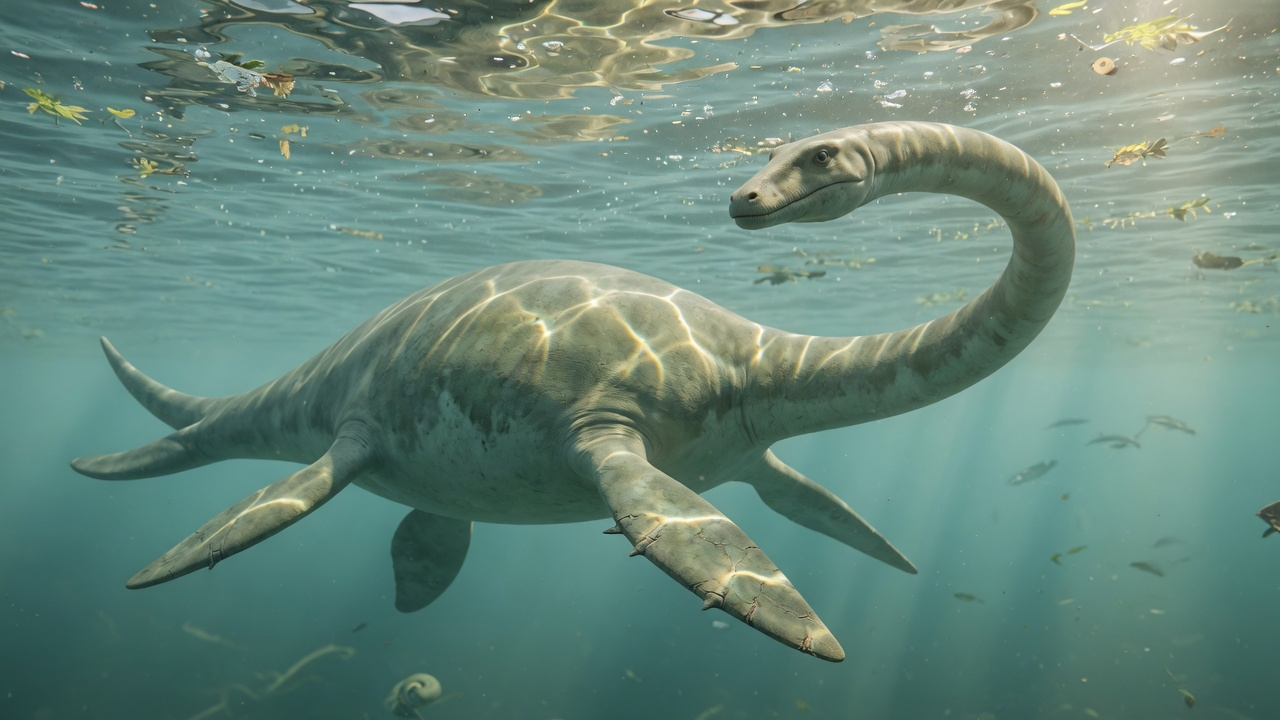
Image: Blue Life Commons / Grok Imagine concept reconstruction / CC-BY-4.0
Elasmosaurus platyurus
Not a dinosaur. Elasmosaurus is a long necked plesiosaur — a marine reptile with four flippers. Hero media is AI concept reconstruction . Elasmosaurids are famous for necks that can exceed body length in relative terms.
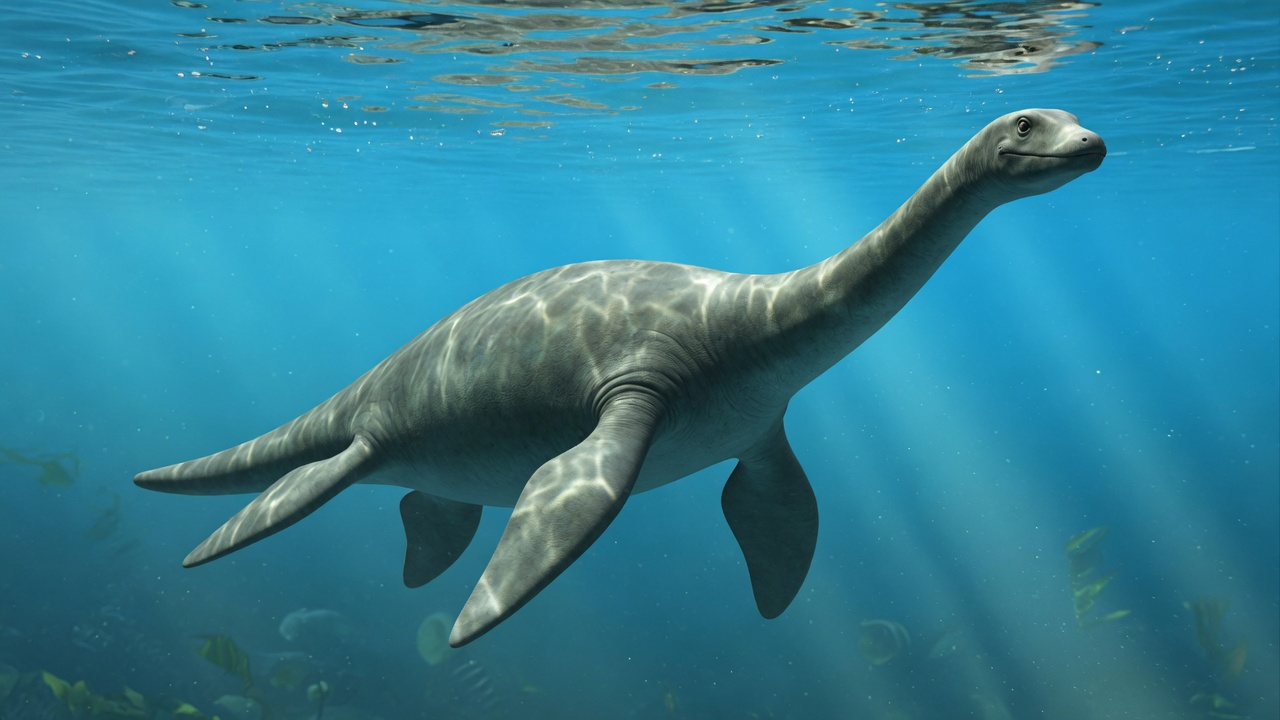
Image: Blue Life Commons / Grok Imagine concept reconstruction / CC-BY-4.0
Ichthyosaurus communis
Not a dinosaur. Classic ichthyosaur type genus — streamlined, long snout, crescent tail. Hero media is AI concept reconstruction — not fossil evidence. Classic ichthyosaur type genus — streamlined, long snout, crescent t
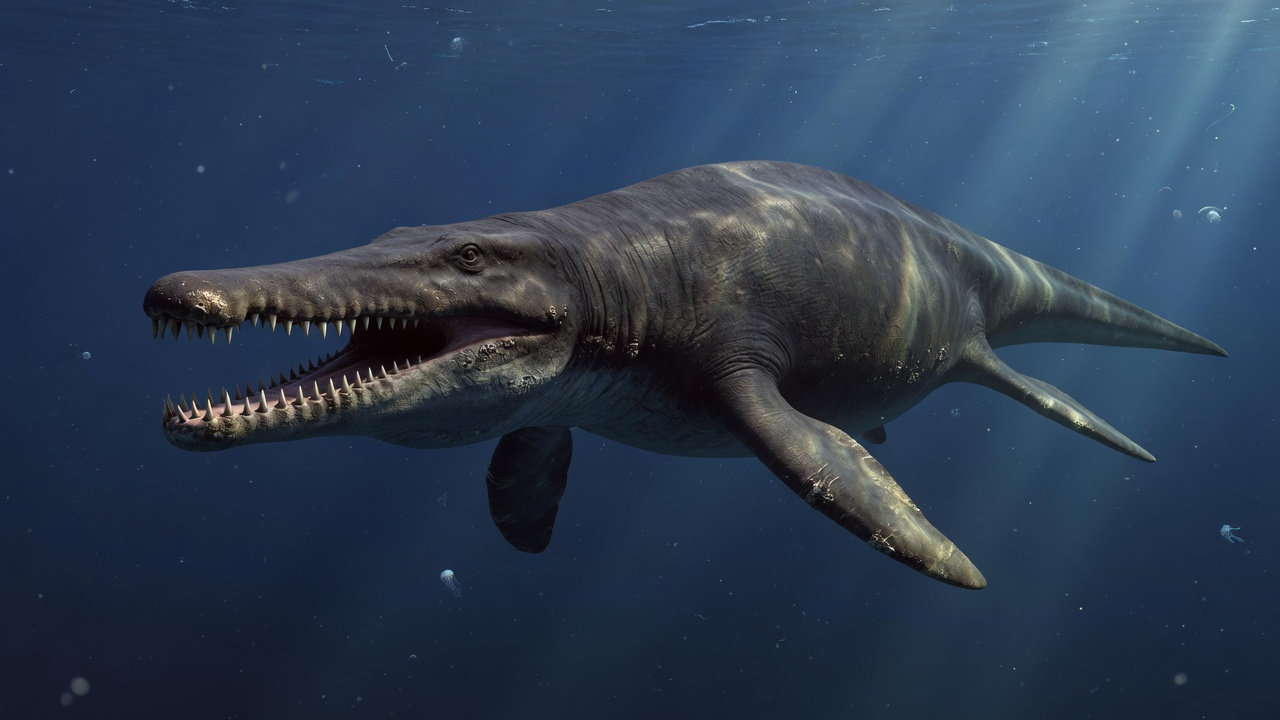
Image: Blue Life Commons / Grok Imagine concept reconstruction / CC-BY-4.0
Kronosaurus queenslandicus
Not a dinosaur. Kronosaurus is a short necked pliosaur (within Plesiosauria): big head, robust jaws, four flippers. Some size claims in popular media are inflated — treat extreme lengths as contested. Pliosaurs are the “