Great White Shark
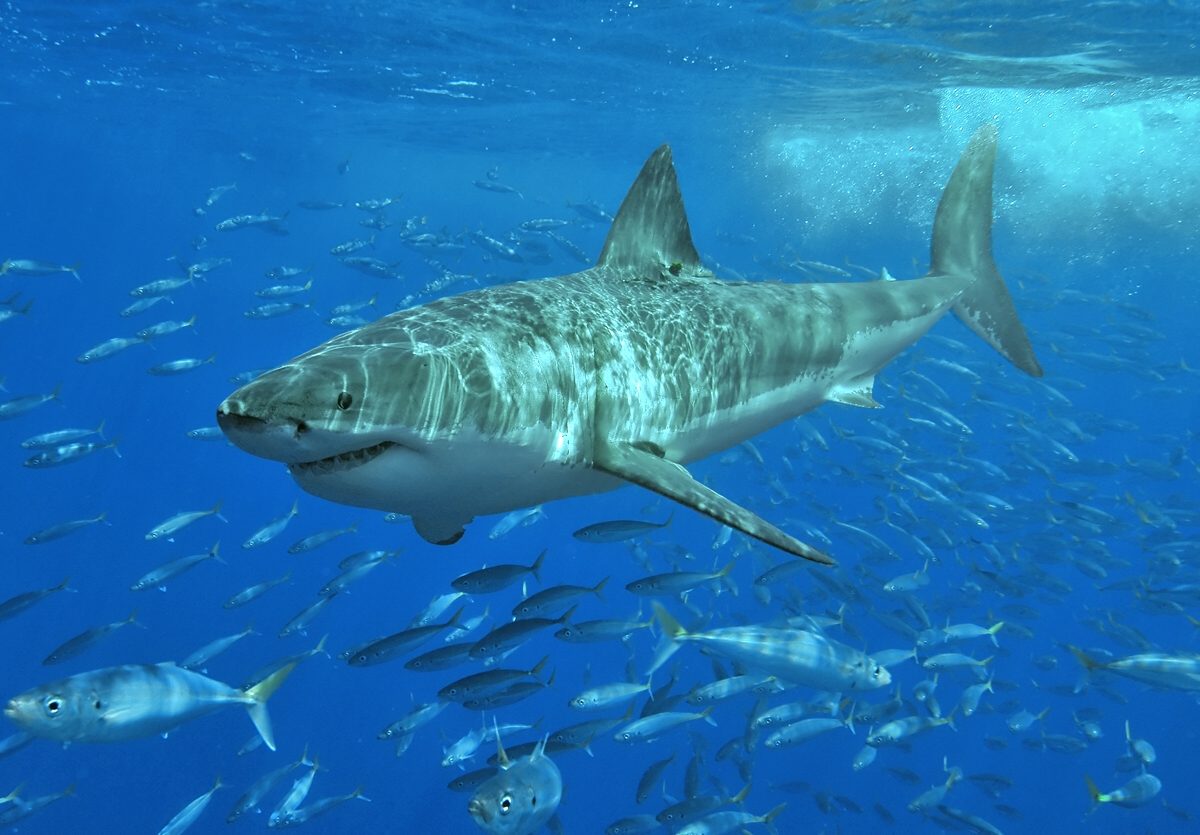
Great white shark at Isla Guadalupe, Mexico, August 2006. Shot with Nikon D70s in Ikelite housing, in natural light. Animal estimated at 11-12 feet (3.3 to 3.6 m) in length, age unknown.
- Period
- Living
- Clade
- Lamnidae
- Length
- ~3.5–6+ m (adults)
- Diet
- Marine vertebrates (fish, marine mammals)
- Locomotion
- Sustained swimming predator
- Habitat
- Global temperate oceans
- Range
- Temperate coastal & offshore waters
Great White Shark (Carcharodon carcharias)
The great white shark, also known as the white shark, is a species of large lamniform shark found in the coastal surface waters of all major oceans. It is notable for its size, predatory capabilities, and role as an apex marine predator.
Taxonomy and description
Great white sharks belong to the family Lamnidae (mackerel sharks). They display countershading, with a white underside and a grey, black, or blue dorsal side. They have robust, torpedo-shaped bodies and rows of triangular, serrated teeth designed for grasping and tearing prey. Adults typically measure between 4 and 5.2 meters (13 to 17 feet) in length and weigh up to 1,100 kilograms (2,400 pounds), with females generally being larger than males.
Habitat and migration
White sharks are highly migratory, swimming vast distances between coastal aggregation sites and offshore pelagic zones. They are thermoregulators, possessing a specialized circulatory heat exchange system (rete mirabile) that allows them to maintain a body temperature higher than the surrounding water, enhancing their hunting efficiency in cooler seas.
Conservation status
The IUCN Red List classifies the great white shark globally as Vulnerable due to historical overfishing, slow reproductive rates, and ongoing threat pressures.
Threats include:
- Commercial and recreational targeted fisheries (often for jaws, teeth, and fins)
- Accidental bycatch in gillnets, longlines, and beach protection nets
- Bioaccumulation of chemical pollutants affecting reproductive health
- Degradation of coastal habitats and decline of key prey populations
Sources (2)
Every claim traces to one of the citations below. Anything that could not be sourced was left out.
Related in the commons
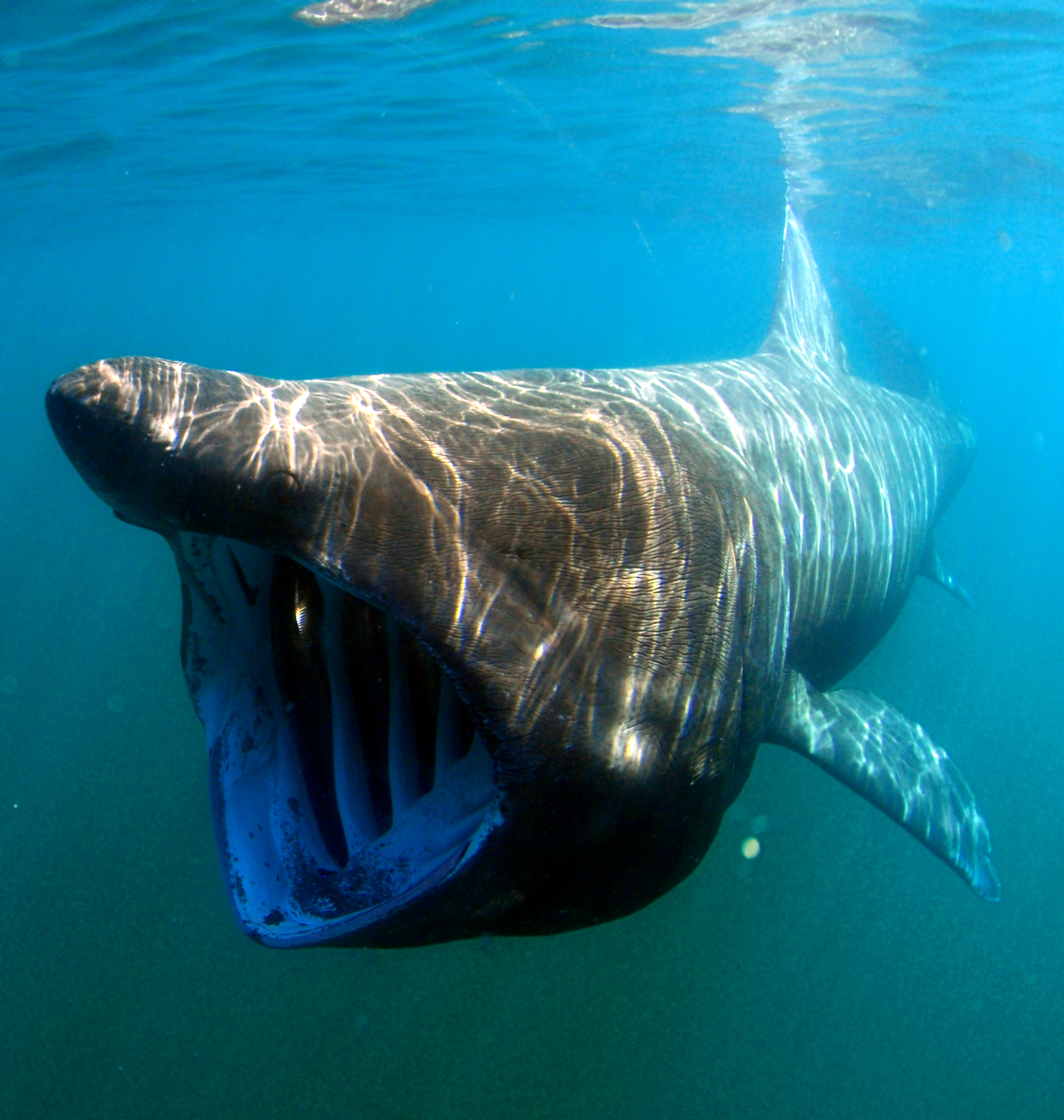
Image: Greg Skomal / NOAA Fisheries Service / Public domain
Basking Shark (Cetorhinus maximus)
The basking shark is one of the most recognizable sharks: an enormous body, a bulbous conical snout, and very large gill slits that nearly encircle the head. The mouth is large and subterminal, with many small hooked tee
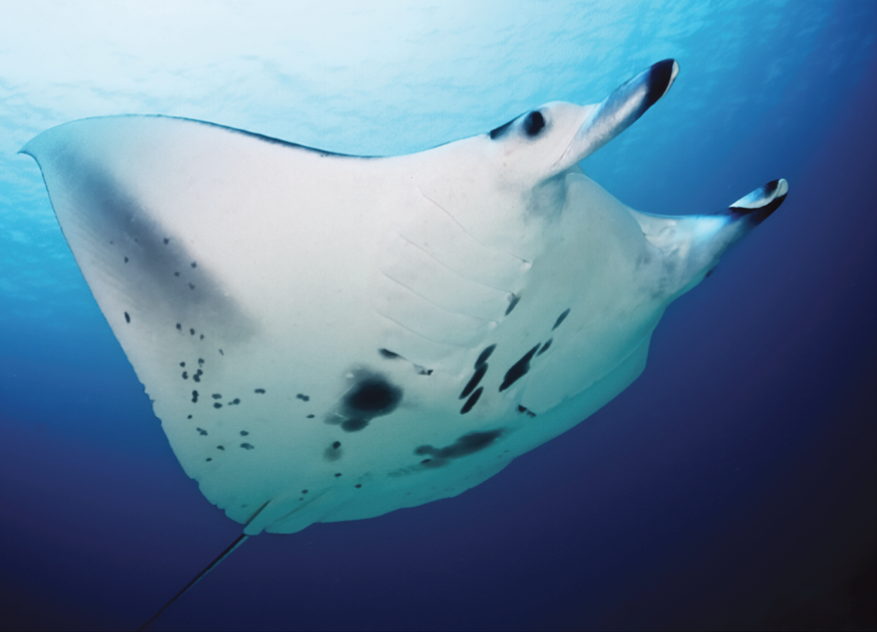
Image: Jaine FRA, Couturier LIE, Weeks SJ, Townsend KA, Bennett MB, et al. (2012) / CC BY 2.5
Reef Manta Ray (Mobula alfredi)
The reef manta ray is a very large ray with a kite shaped disc, broad wing like pectoral fins, and a pair of long, flexible cephalic ("head") lobes flanking a wide, terminal mouth. Individuals carry unique natural spot p
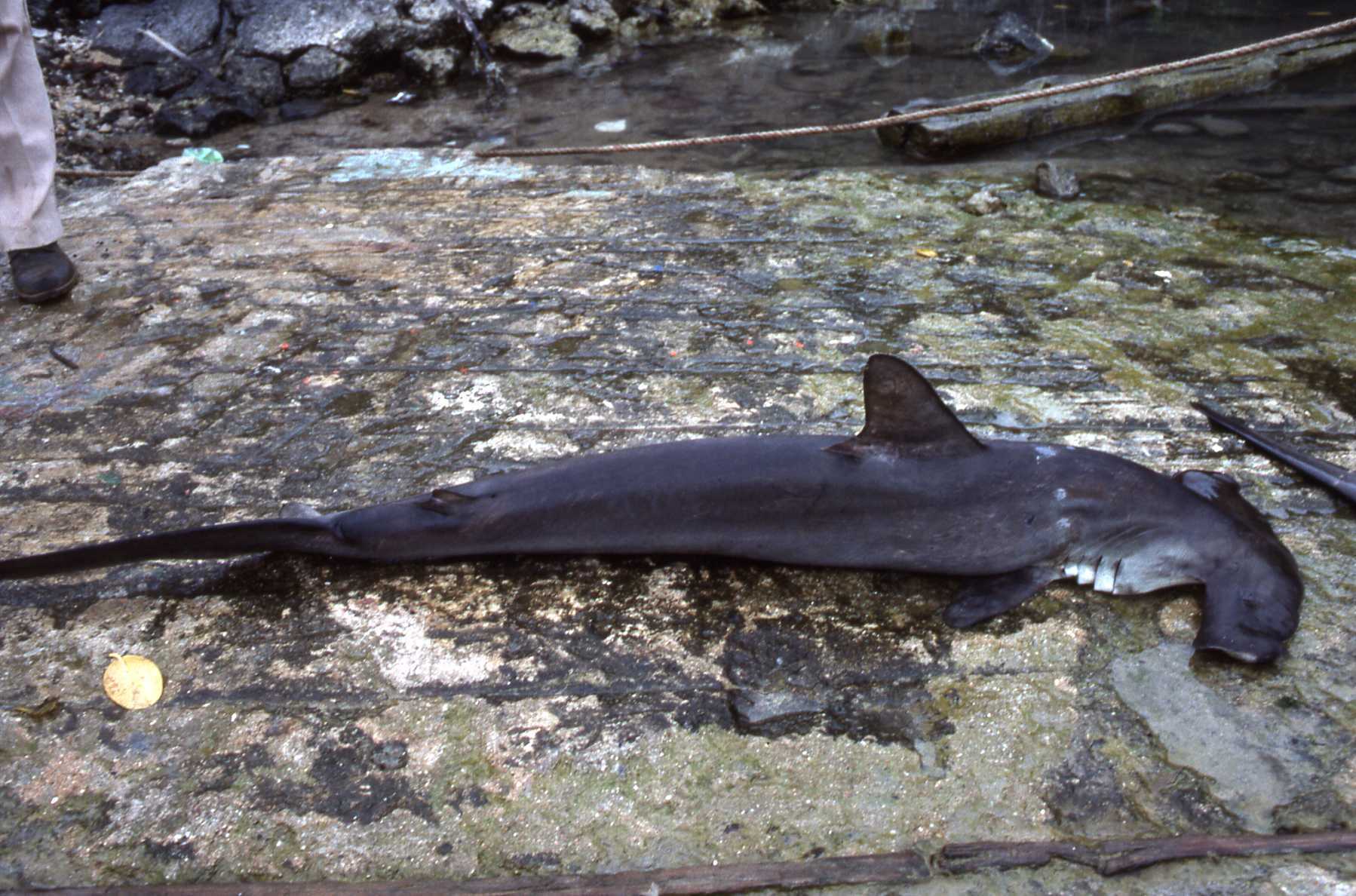
Image: iNaturalist.org (Simon Tonge) (Simon%20Tonge) / CC0
Scalloped Hammerhead (Sphyrna lewini)
The scalloped hammerhead is named for the broad, flattened "hammer" (cephalic) head, the front edge of which is curved with a central indentation and lateral scallops — a feature that separates it from the great and smoo
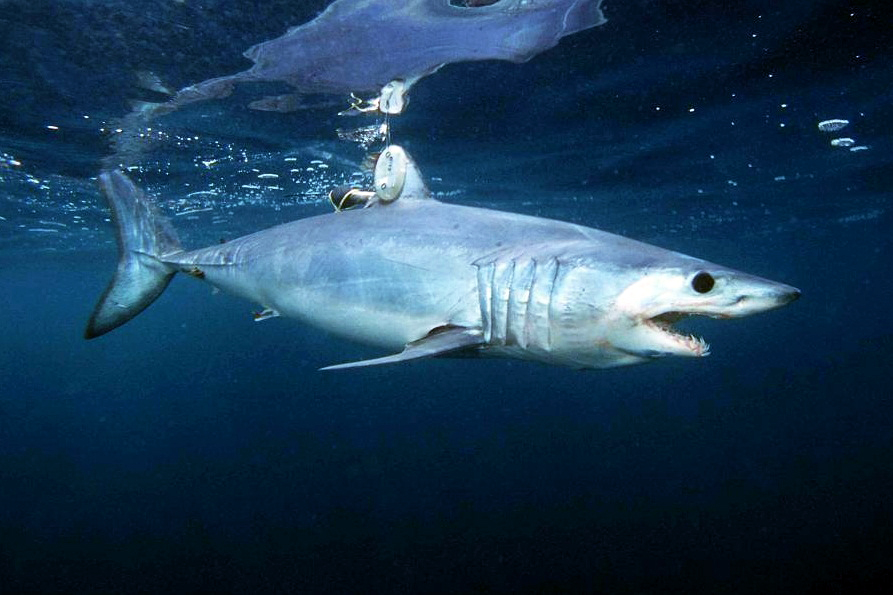
Image: Mark Conlin, SWFSC Large Pelagics Program / Public domain
Shortfin Mako (Isurus oxyrinchus)
The shortfin mako is a large, highly migratory shark with a pointed (conical) snout, light metallic blue sides, and a white underside. It has relatively small eyes and pectoral fins compared with the closely related long