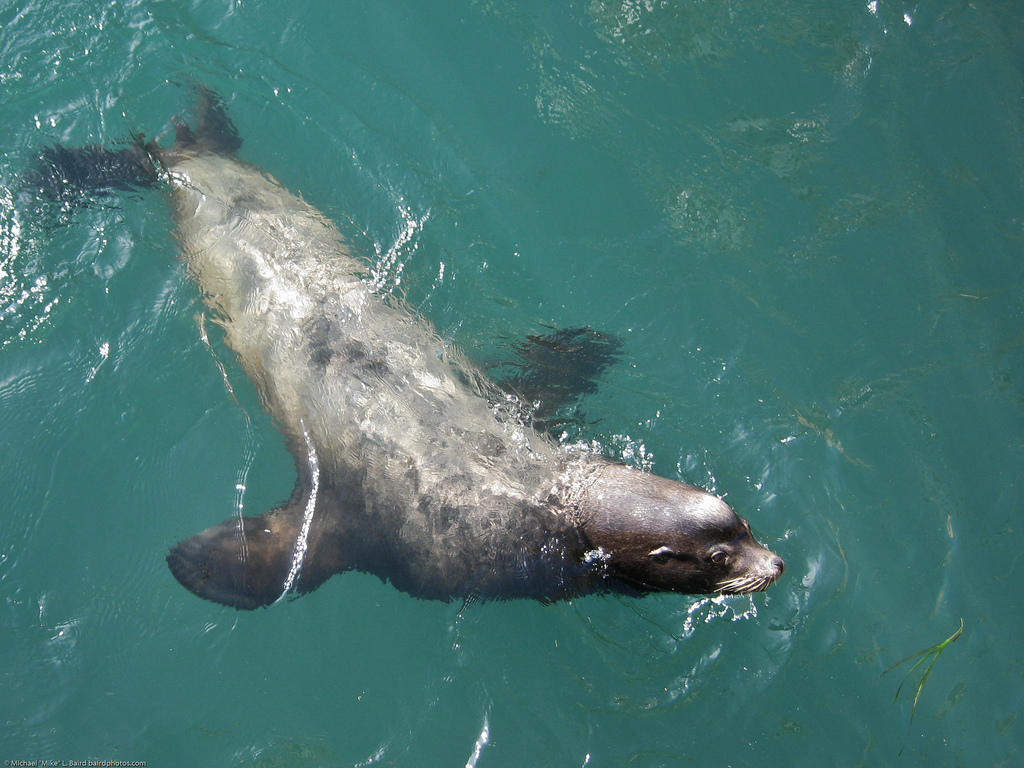
California Sea Lion
Zalophus californianus
California Sea Lion in Morro Bay.
- Status
- LC
- Guild
- pinnipeds
- Reading level
- beginner
- Sources
- 2
California Sea Lion (Zalophus californianus)
Status: needs expert review. Conservation and threat claims cite the IUCN Red List and NOAA Fisheries; a reviewer should confirm currency and stock detail before approval. The California sea lion (Zalophus californianus) is an agile, eared seal (otariid) of the eastern North Pacific, familiar from harbors, buoys, and coastal rookeries.
At a glance
| Field | Value | Source |
|---|---|---|
| Scientific name | Zalophus californianus | WoRMS / authority |
| Guild | pinniped (otariid / eared seal) | — |
| IUCN status | Least Concern (global) | IUCN Red List |
| Population trend | Increasing (U.S. stock grew at up to ~7%/yr, 1975–2014) | NOAA Fisheries |
| Range | Channel Islands (southern California) to central Mexico; extends to southeast Alaska | NOAA Fisheries |
| Protection | MMPA-protected throughout its range; not ESA-listed | NOAA Fisheries |
Identification
A medium-large eared seal: males are much larger than females and develop a raised forehead crest (sagittal crest) with age, often appearing lighter on the crown. Unlike true seals, otariids have visible external ear flaps and can rotate their hind flippers forward to "walk" on land, and they propel themselves in water mainly with their long fore-flippers. California sea lions are vocal, with the barking commonly heard around docks and rookeries.
Ecology and behavior
California sea lions breed on islands from the Channel Islands south into Mexico; males migrate seasonally in winter while females and pups remain near the breeding colonies (NOAA Fisheries). They forage on fish and squid and haul out on rocks, beaches, jetties, and human structures. Behavioral specifics should be cited to published research and confirmed in review.
Conservation status and threats
The California sea lion is assessed Least Concern by the IUCN, and NOAA reports that the U.S. stock has increased since at least 1975 following protection under the Marine Mammal Protection Act, with a maximum growth rate near 7% per year between 1975 and 2014 (NOAA Fisheries). A recovered population still faces named pressures: NOAA lists entanglement in fishing gear, biotoxins from harmful algal blooms (notably domoic acid), disease, and human-caused harm including illegal feeding, vessel strikes, harassment, and shooting (NOAA Fisheries). Report figures as the cited authorities state them; a reviewer should confirm stock-level specifics.
How to observe responsibly
NOAA advises keeping at least 50 yards (about 45 m) from sea lions and limiting viewing to 30 minutes or less (NOAA Fisheries). Do not feed, approach, or crowd hauled-out animals — illegal feeding habituates sea lions and increases conflict and injury, and harassment is unlawful under the MMPA. Keep clear of rookeries and pupping areas, and follow the strictest local rule where guidelines differ (ETHICS.md).
How you can help
- Log sightings to a recognized citizen-science platform without approaching haul-outs (see the iNaturalist dataset card).
- Report stranded, entangled, or apparently ill sea lions (algal-bloom toxicosis events can strand many animals) to the local marine-mammal stranding network rather than intervening yourself.
- Never feed wild sea lions, and support harmful-algal-bloom monitoring and fishing-gear-entanglement reduction programs.
Sources (2)
Every claim traces to one of the citations below. Anything that could not be sourced was left out.
Related in the commons
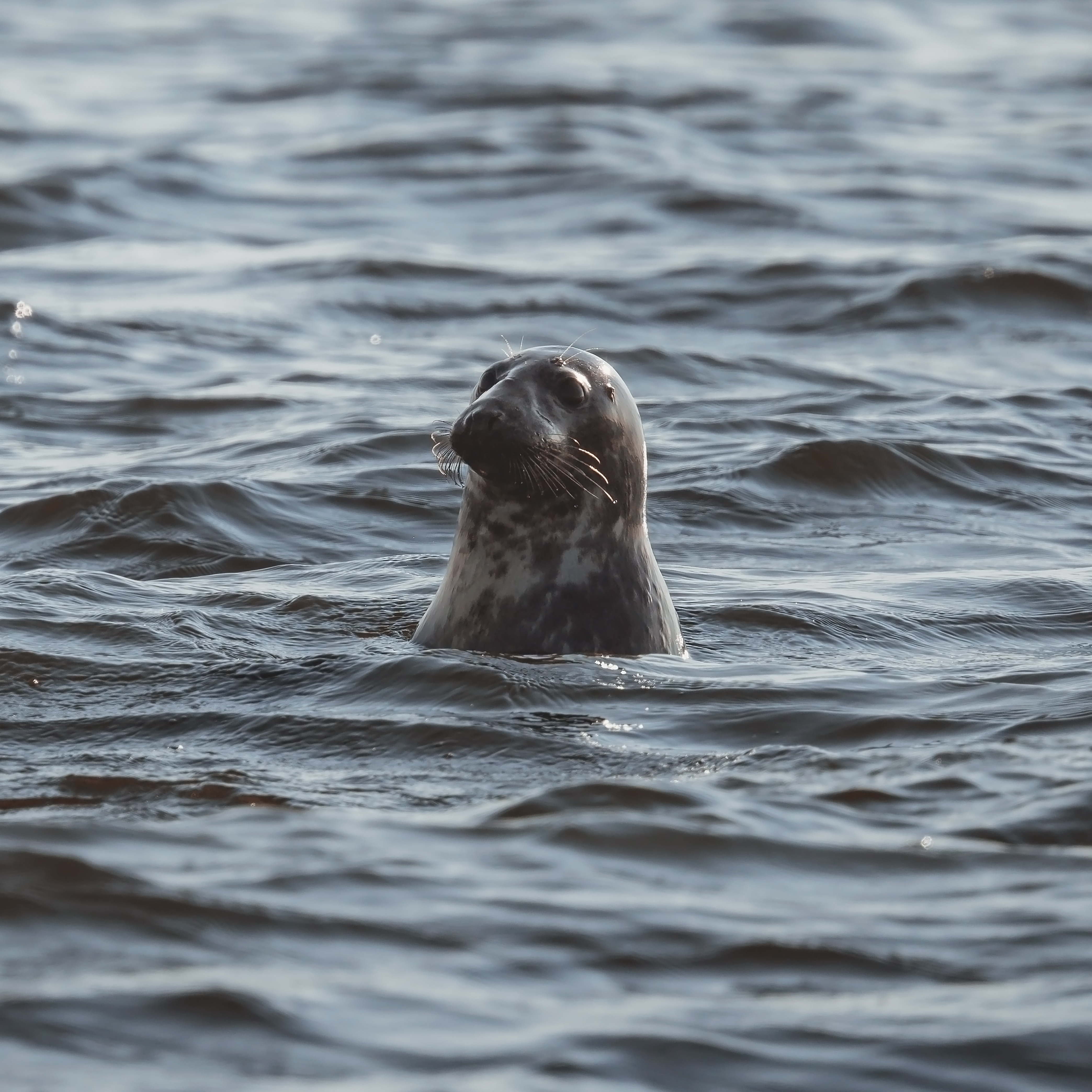
Image: Aneta p / CC BY 4.0
Grey Seal (Halichoerus grypus)
A large phocid with a long, broad muzzle and a relatively flat profile — the genus name Halichoerus ("hook nosed sea pig") points to the distinctive snout. Adult males are darker and noticeably larger than females, with
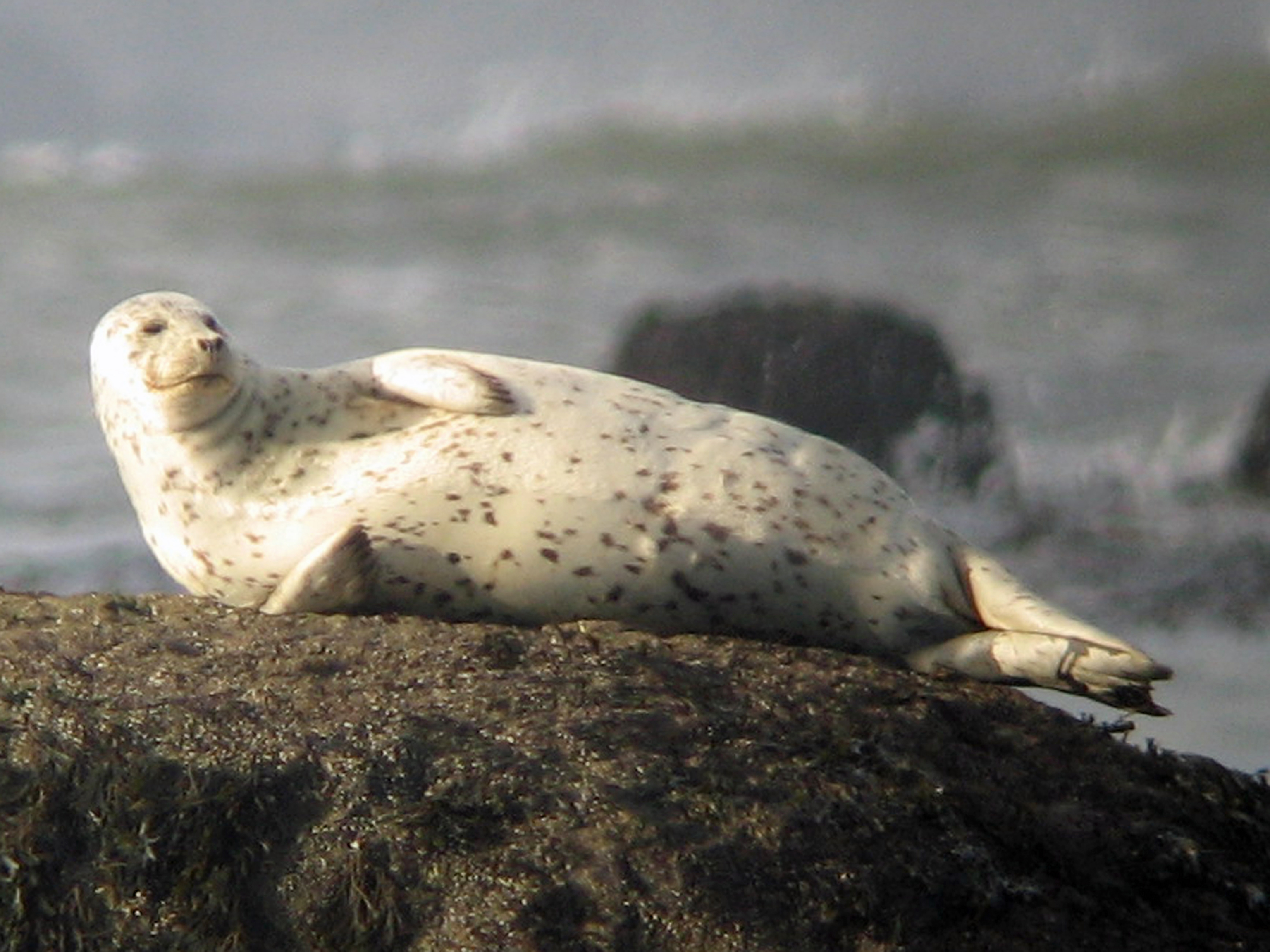
Image: Greg Schechter from San Francisco, USA / CC BY 2.0
Harbor Seal (Phoca vitulina)
A small to medium seal with a rounded head, V shaped nostrils, and a coat of spots and rings on a grey to brown background; no external ear flaps (a "true" / phocid seal). On land it moves by caterpillar like undulation;
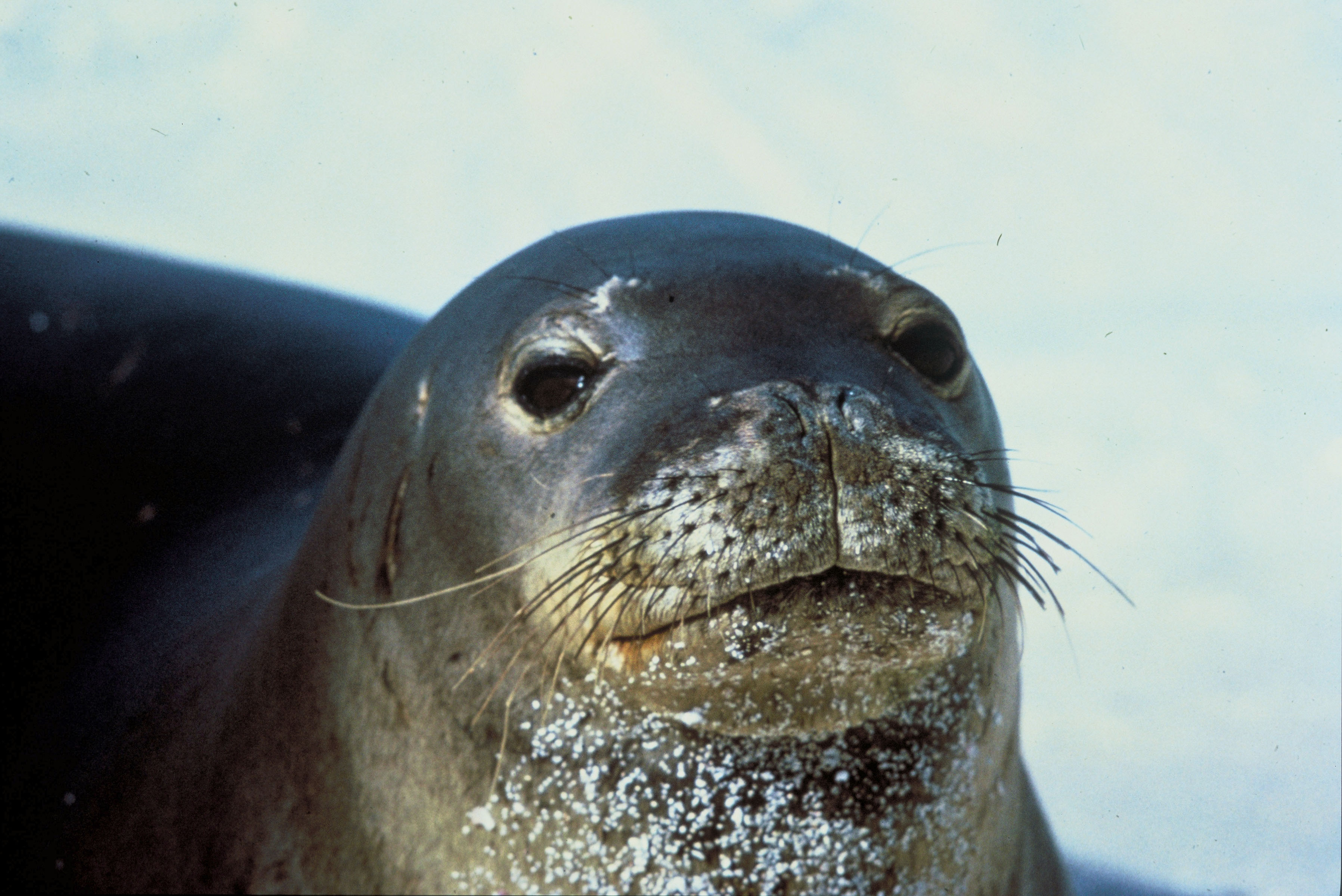
Image: U.S. Fish and Wildlife Service / Public domain
Hawaiian Monk Seal (Neomonachus schauinslandi)
A robust true seal with a relatively slender body, a broad, rounded head, and short snout. Coloration is silvery grey to brown above and lighter below, often with green tinged algal films or scarring on adults; pups are
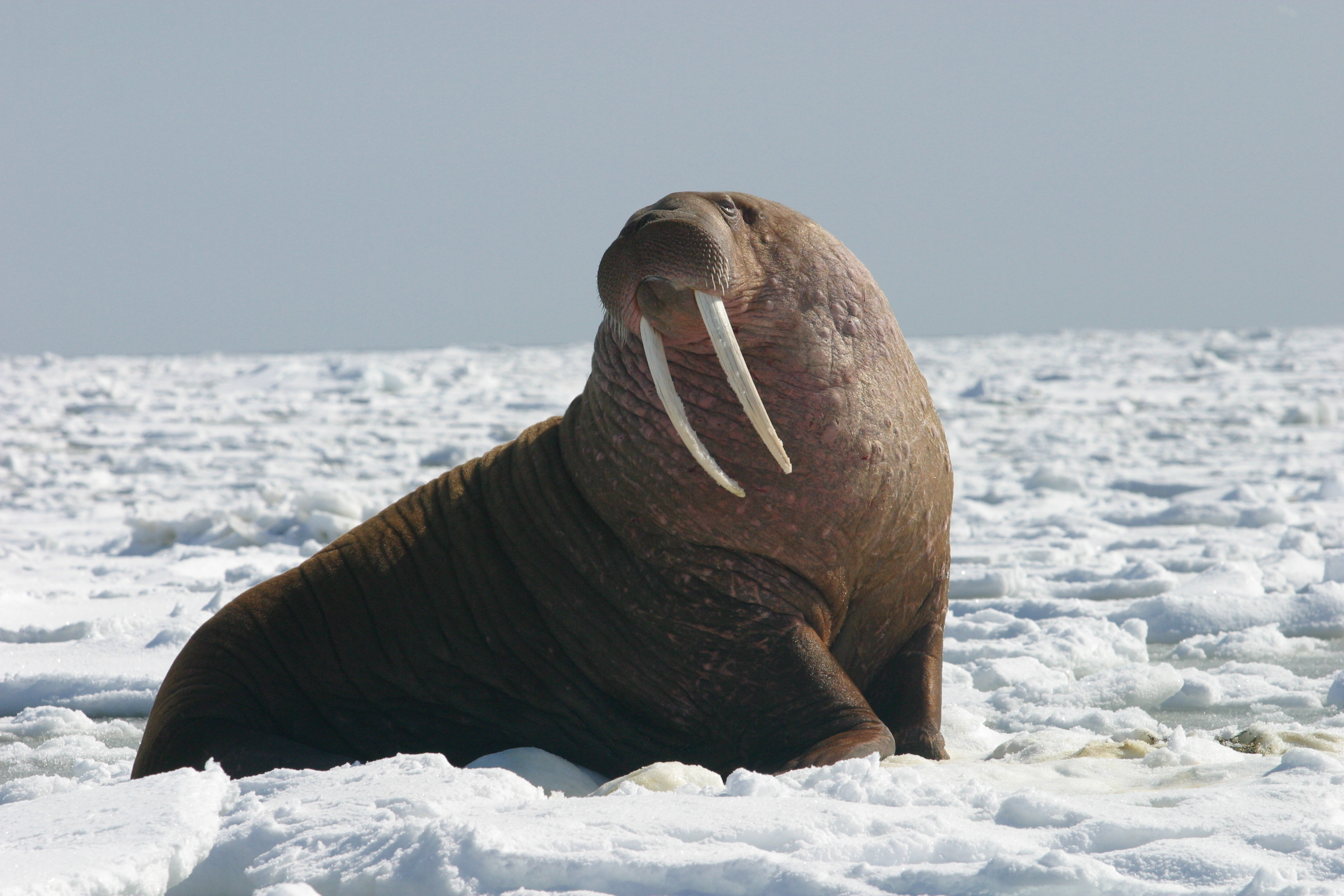
Image: Joel Garlich-Miller, U.S. Fish and Wildlife Service / Public domain
Walrus (Odobenus rosmarus)
Unmistakable among pinnipeds: a very large body, a broad muzzle dense with stiff whiskers (vibrissae), and long tusks (elongated canine teeth) present in both sexes, longer in males. Skin is thick and wrinkled, often app