Walrus
Odobenus rosmarus
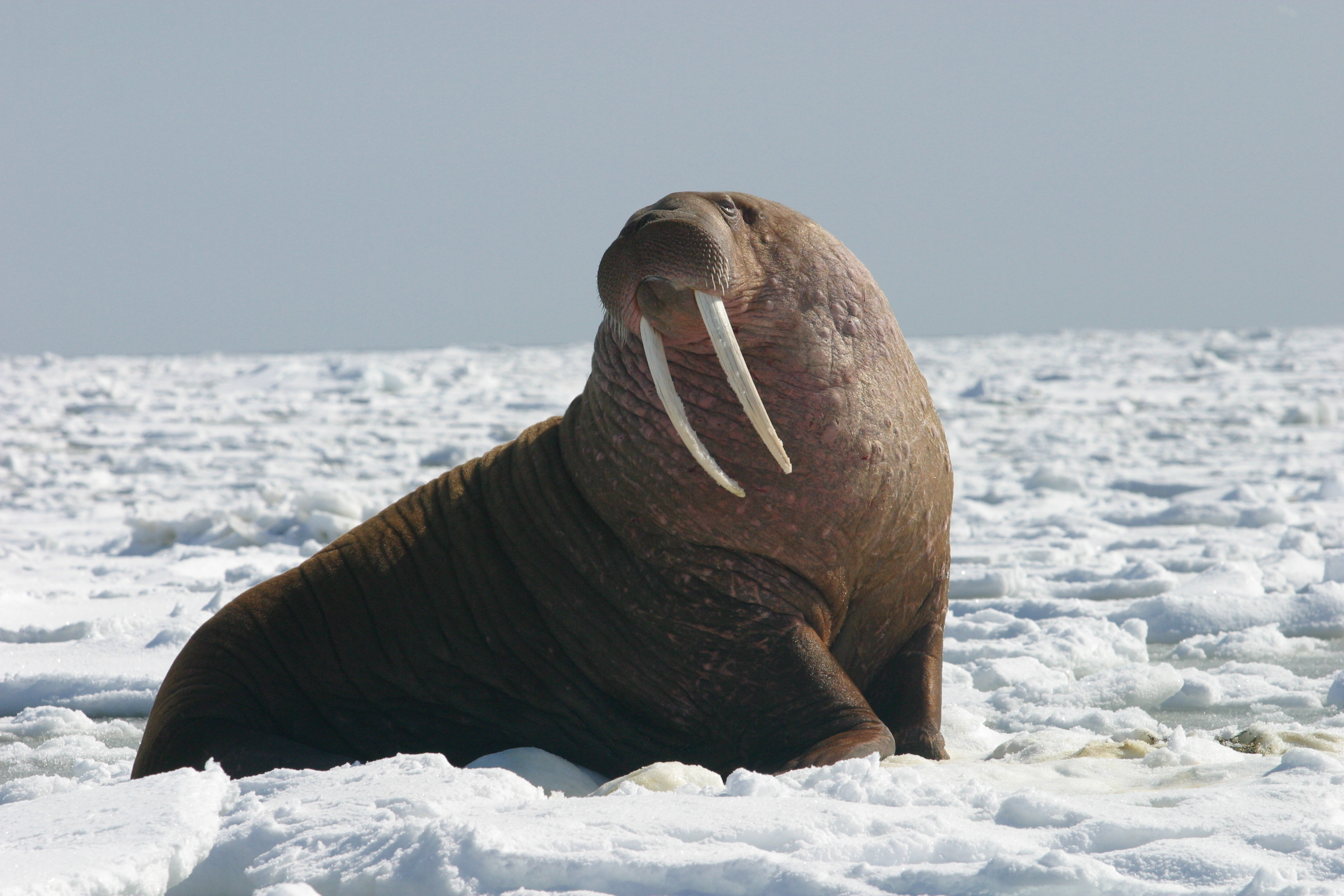
A large Pacific Walrus bull watches the camera. The adult bulls can weigh up to 3,700 pounds.
- Status
- VU
- Guild
- pinnipeds
- Reading level
- beginner
- Sources
- 3
Walrus (Odobenus rosmarus)
Status: needs expert review. The global IUCN category for this species is contested across sources and across its subspecies (see Conservation status). Claims cite the IUCN Red List and U.S. wildlife agencies; a reviewer should confirm the current category and subspecies detail before approval. The walrus (Odobenus rosmarus) is a large Arctic eared-seal relative, unmistakable for its tusks and whiskered muzzle.
At a glance
| Field | Value | Source |
|---|---|---|
| Scientific name | Odobenus rosmarus | WoRMS / authority |
| Guild | pinniped (odobenid — its own family) | — |
| IUCN status | Vulnerable at the species level (assessed 2016); subspecies assessments differ — see below | IUCN Red List |
| Subspecies | Atlantic walrus (O. r. rosmarus) and Pacific walrus (O. r. divergens) | USFWS |
| U.S. jurisdiction | Managed by the U.S. Fish & Wildlife Service, not NOAA Fisheries | NOAA Fisheries |
| Range | Circumpolar Arctic and subarctic seas | USFWS |
Identification
Unmistakable among pinnipeds: a very large body, a broad muzzle dense with stiff whiskers (vibrissae), and long tusks (elongated canine teeth) present in both sexes, longer in males. Skin is thick and wrinkled, often appearing cinnamon-brown or pale pink when warm. Like eared seals, walruses can rotate their hind flippers forward to move on land, but they belong to their own family, Odobenidae. They gather in dense herds at haul-outs.
Ecology and behavior
Walruses are benthic foragers, using their sensitive whiskers to find clams, snails, mussels, and other seafloor invertebrates (NOAA Fisheries). They rest between foraging bouts on sea ice or, when ice is unavailable, on land, often in very large aggregations. Pacific walruses are harvested as a subsistence food resource by many Alaska Native communities (NOAA Fisheries). Behavioral specifics should be cited to published research and confirmed in review.
Conservation status and threats
The walrus's global status is genuinely contested and depends on the unit assessed. The IUCN Red List carries a 2016 species-level assessment of Odobenus rosmarus; the species-level category is recorded as Vulnerable in some compilations, while data limitations and differing subspecies assessments make the global picture uncertain — the population trend at the species level is not firmly established (IUCN Red List). At the subspecies level, assessments and national lists diverge (for example, differing treatments of the Atlantic and Pacific subspecies across IUCN and national authorities). This page therefore marks the core status claim contested and does not assert a single global number.
What is not contested is the direction of pressure: the dominant concern is loss of Arctic sea ice, which removes resting platforms over foraging grounds, can force large land haul-outs prone to stampede mortality, and is accompanied by increasing shipping disturbance and changes to benthic prey (NOAA Fisheries). A reviewer with Arctic-marine-mammal expertise should confirm the current IUCN category and subspecies specifics, citing the live assessment.
How to observe responsibly
Walrus haul-outs are easily and catastrophically disturbed: a sudden stampede toward the water can crush calves and weaker animals. Do not approach haul-outs by land, vessel, or aircraft; keep noise low and stay well back, following the strictest applicable regional guidance and Indigenous and agency protocols (ETHICS.md). U.S. walrus viewing falls under USFWS authority, not NOAA (NOAA Fisheries); follow that agency's guidance and any local community rules. This page keeps haul-out locations to regional granularity.
How you can help
- Never approach or overfly a walrus haul-out; report disturbance, strandings, or entanglements to the responsible agency (USFWS in Alaska) rather than intervening.
- Support Arctic sea-ice and climate action, the science behind it, and co-management with Indigenous communities who hold long-term knowledge of walrus.
- Log opportunistic sightings to a recognized citizen-science platform without approaching herds (see the iNaturalist dataset card).
Sources (3)
Every claim traces to one of the citations below. Anything that could not be sourced was left out.
- [1]Tier 1 · Peer-reviewedIUCN Red List — Odobenus rosmarus (Walrus)Accessed 2026-06-16
- [2]Tier 2 · InstitutionalPacific Walrus (Odobenus rosmarus divergens) — U.S. Fish & Wildlife ServiceAccessed 2026-06-16
- [3]Tier 2 · InstitutionalWalrus, Sea Otters and Polar Bears — NOAA Fisheries (jurisdiction note)Accessed 2026-06-16
Related in the commons
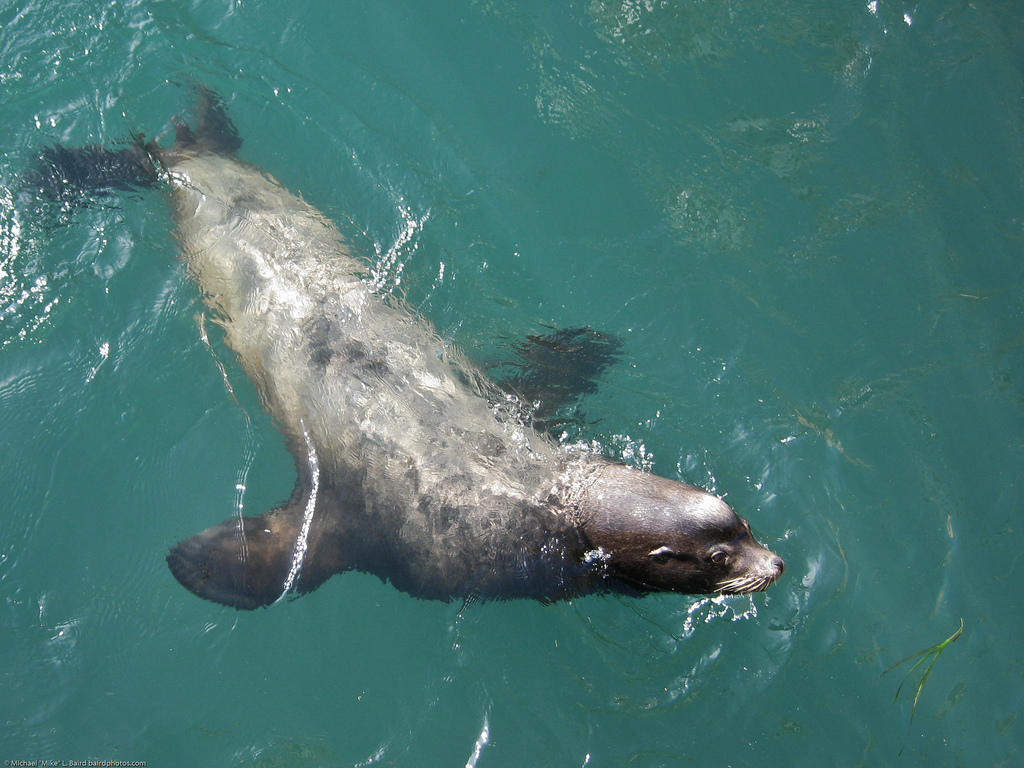
Image: https://www.flickr.com/photos/mikebaird/ Mike Baird / CC BY 2.0
California Sea Lion (Zalophus californianus)
A medium large eared seal: males are much larger than females and develop a raised forehead crest (sagittal crest) with age, often appearing lighter on the crown. Unlike true seals, otariids have visible external ear fla
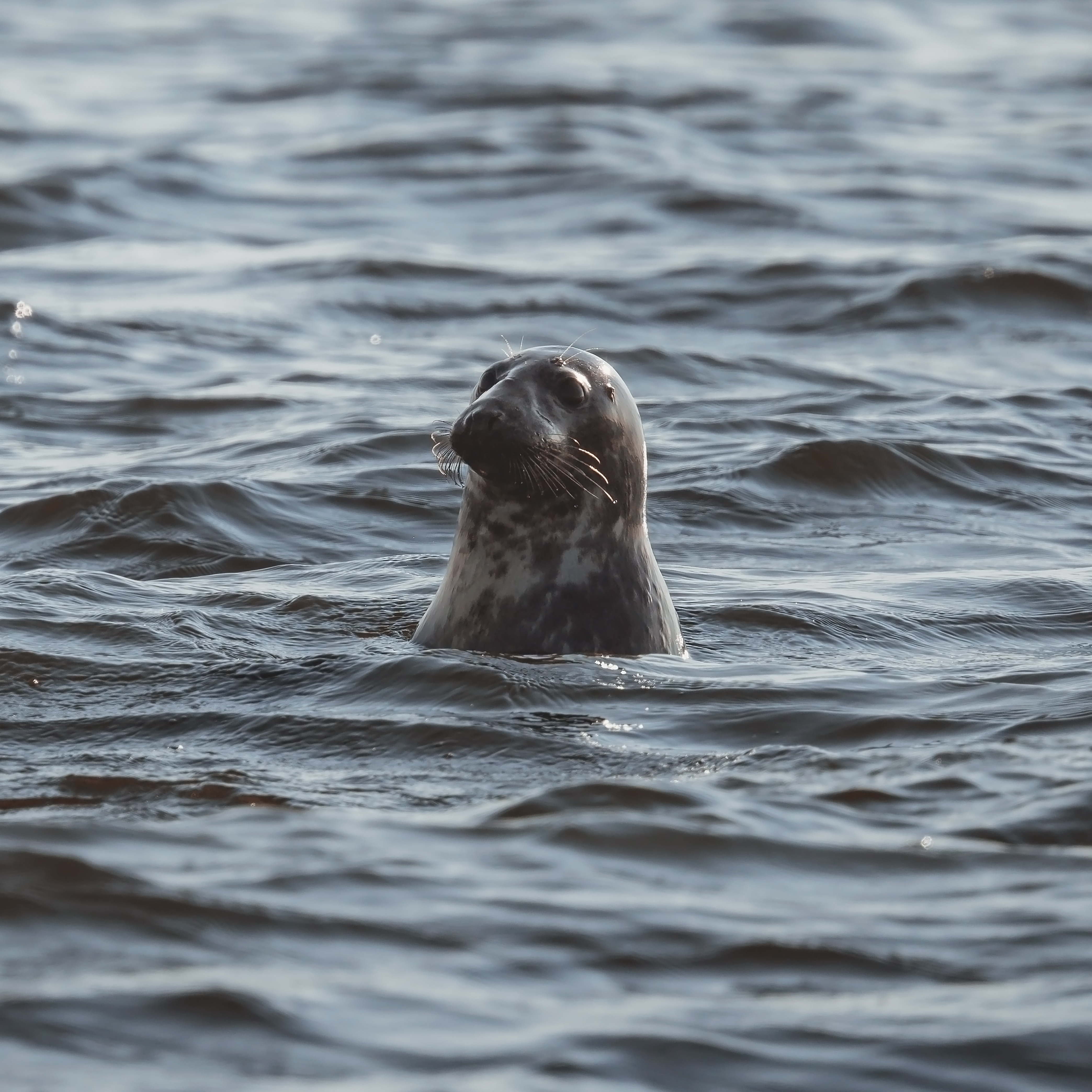
Image: Aneta p / CC BY 4.0
Grey Seal (Halichoerus grypus)
A large phocid with a long, broad muzzle and a relatively flat profile — the genus name Halichoerus ("hook nosed sea pig") points to the distinctive snout. Adult males are darker and noticeably larger than females, with
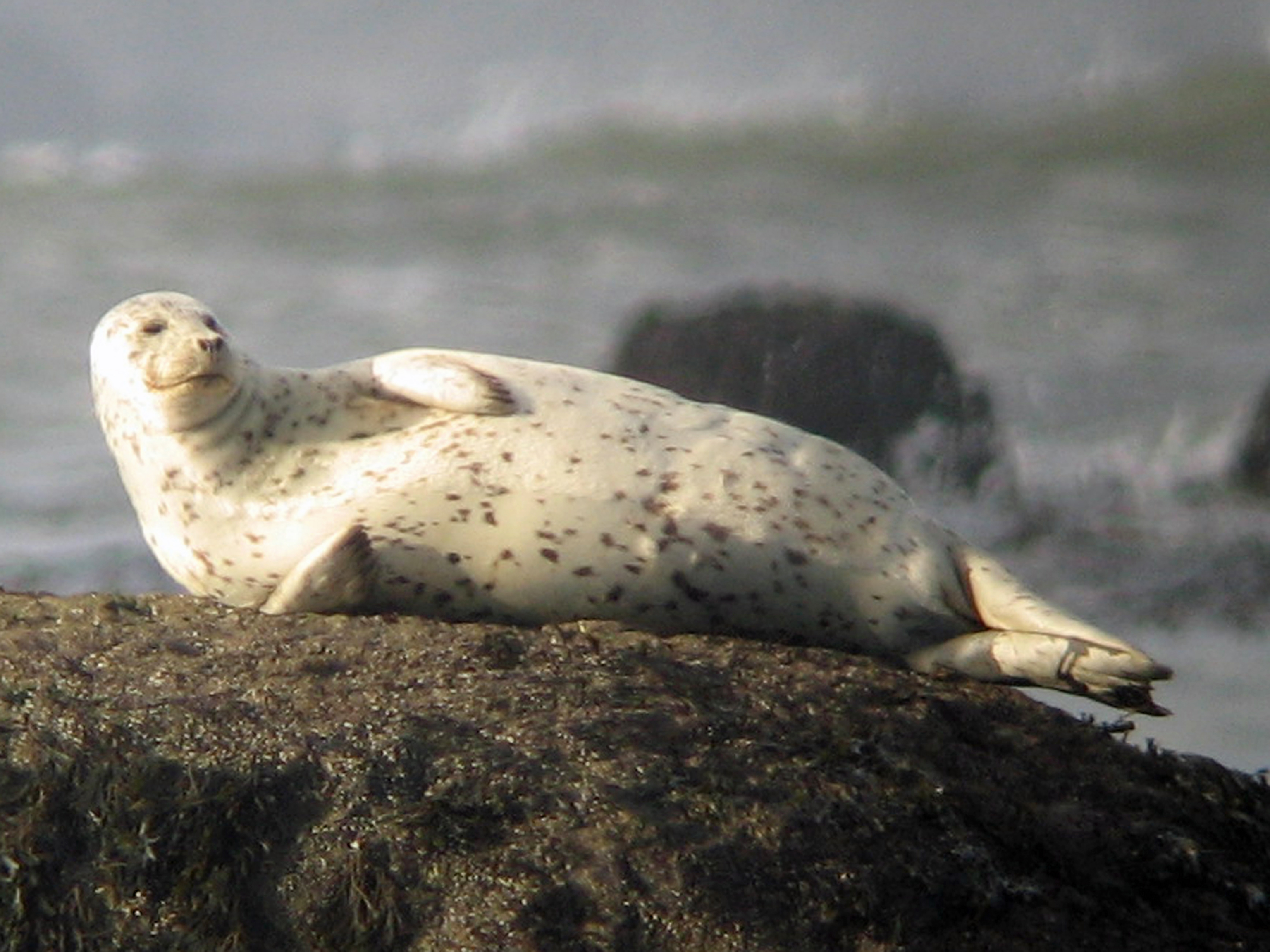
Image: Greg Schechter from San Francisco, USA / CC BY 2.0
Harbor Seal (Phoca vitulina)
A small to medium seal with a rounded head, V shaped nostrils, and a coat of spots and rings on a grey to brown background; no external ear flaps (a "true" / phocid seal). On land it moves by caterpillar like undulation;
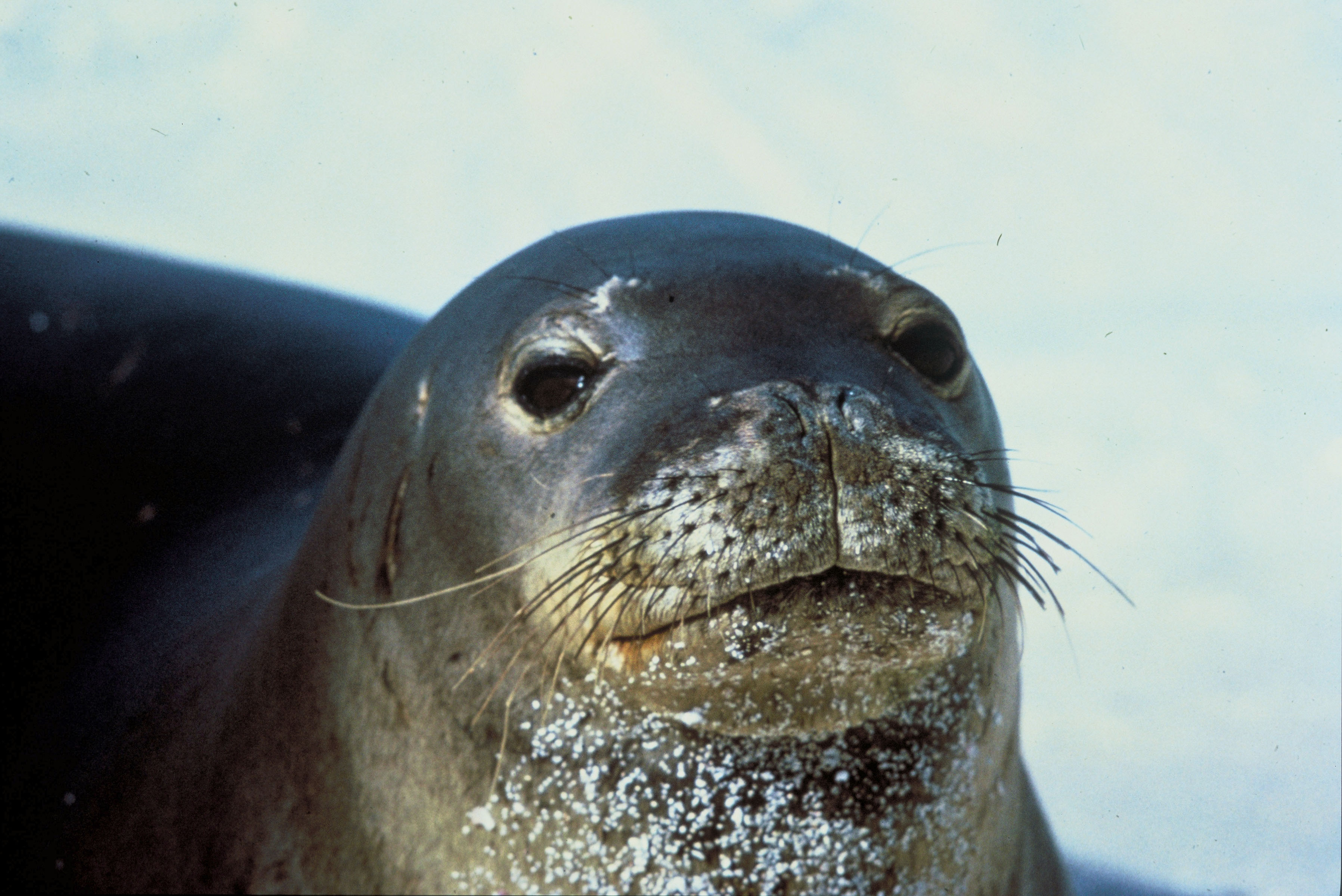
Image: U.S. Fish and Wildlife Service / Public domain
Hawaiian Monk Seal (Neomonachus schauinslandi)
A robust true seal with a relatively slender body, a broad, rounded head, and short snout. Coloration is silvery grey to brown above and lighter below, often with green tinged algal films or scarring on adults; pups are