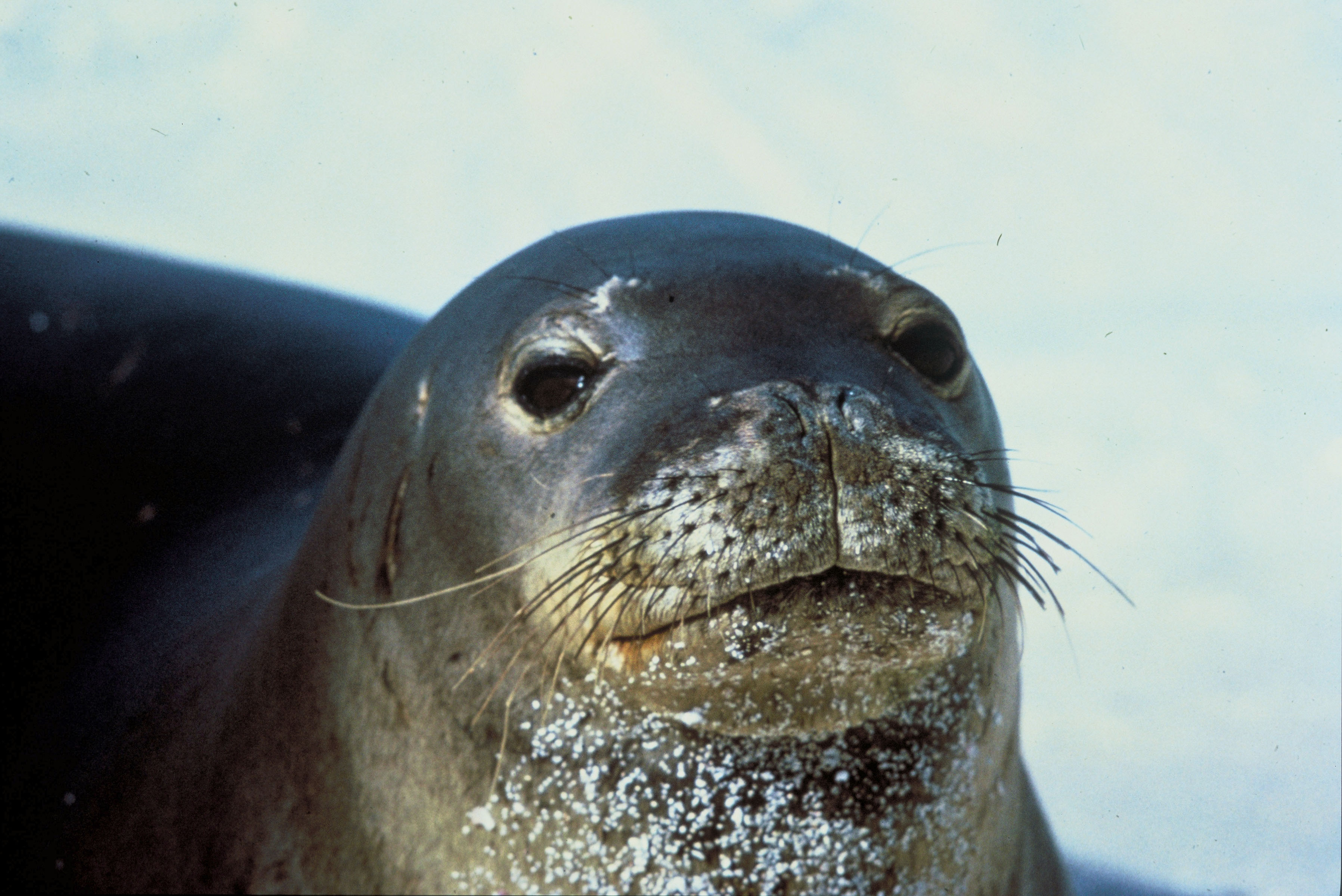
Hawaiian Monk Seal
Neomonachus schauinslandi
Hawaiian Monk Seal.
- Status
- EN
- Guild
- pinnipeds
- Reading level
- beginner
- Sources
- 3
Hawaiian Monk Seal (Neomonachus schauinslandi)
Status: needs expert review. This is an endangered species; conservation, population, and threat claims cite the IUCN Red List and NOAA Fisheries, and a reviewer should confirm currency before approval. The Hawaiian monk seal (Neomonachus schauinslandi) is one of the most endangered seals in the world and is endemic to the Hawaiian Archipelago. This page deliberately publishes no precise haul-out, pupping, or resting locations (ETHICS.md; sensitivity tier: extreme).
At a glance
| Field | Value | Source |
|---|---|---|
| Scientific name | Neomonachus schauinslandi | WoRMS / authority |
| Guild | pinniped (phocid / true seal) | — |
| IUCN status | Endangered | IUCN Red List |
| U.S. legal status | ESA Endangered; MMPA Protected and Depleted | NOAA Fisheries |
| International trade | CITES Appendix I | CITES |
| Population | About 1,600 total — nearly 1,200 in the Northwestern Hawaiian Islands and roughly 400 in the main Hawaiian Islands | NOAA Fisheries |
| Trend | Declined for about six decades; gradual increase since 2013 | NOAA Fisheries |
Identification
A robust true seal with a relatively slender body, a broad, rounded head, and short snout. Coloration is silvery-grey to brown above and lighter below, often with green-tinged algal films or scarring on adults; pups are born with a black natal coat. As a phocid, it lacks external ear flaps and moves on land by undulating. It is the only seal native to Hawaiian waters, which makes identification in range straightforward.
Ecology and behavior
Hawaiian monk seals haul out on beaches to rest, molt, and pup, and forage on fish, cephalopods, and crustaceans, including in deeper waters and at offshore banks. The population spans two groups: the larger, remote subpopulation in the Northwestern Hawaiian Islands (within Papahānaumokuākea) and a smaller, growing group in the main Hawaiian Islands (NOAA Fisheries). Specific haul-out and pupping sites are withheld here by policy. Behavioral specifics should be cited to published research and confirmed in review.
Conservation status and threats
The Hawaiian monk seal is Endangered on the IUCN Red List and listed as Endangered under the U.S. Endangered Species Act, with a total population of about 1,600 (IUCN Red List; NOAA Fisheries). After roughly six decades of decline the population has been increasing gradually since 2013, but it remains far below historic levels (NOAA Fisheries). NOAA identifies food limitation (particularly for juveniles), shark predation, entanglement in marine debris and fishing gear, aggression toward females and pups, habitat loss from erosion and sea-level rise, fishery interactions, disease (toxoplasmosis is a leading cause of death in the main Hawaiian Islands), and human disturbance and intentional harm as primary threats (NOAA Fisheries). Report figures as the cited authorities state them; a reviewer should confirm subpopulation specifics.
How to observe responsibly
If you encounter a monk seal resting on a beach, NOAA's rule of thumb is to stay at least 50 feet (about 15 m) away (NOAA Fisheries) — and farther for a mother with a pup. Do not approach, touch, feed, pour water on, or position yourself between a seal and the water; resting and nursing are essential and easily disrupted. Keep dogs leashed and away. Because this species is endangered with a tiny population, the cumulative effect of many small disturbances matters (WELFARE.md): give every animal a wide berth and follow on-site signage and lifeguard or volunteer guidance. This page keeps all locations to regional granularity (ETHICS.md).
How you can help
- Report any monk seal sighting, and especially any stranded, entangled, injured, or harassed seal, to the NOAA Hawaiian monk seal hotline or the local stranding/response network — do not intervene yourself.
- Keep your distance, keep dogs leashed near beaches, and never share precise locations of resting seals on social media.
- Support marine-debris removal, fishery-interaction reduction, and the volunteer response programs that protect resting and pupping seals.
Sources (3)
Every claim traces to one of the citations below. Anything that could not be sourced was left out.
Related in the commons
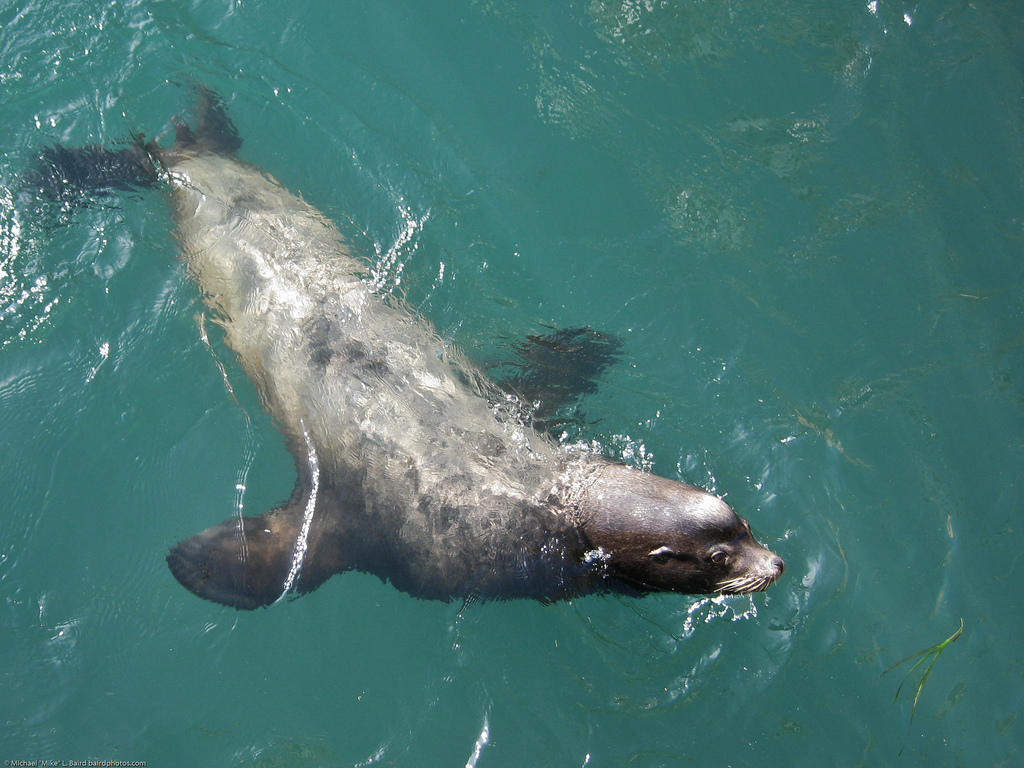
Image: https://www.flickr.com/photos/mikebaird/ Mike Baird / CC BY 2.0
California Sea Lion (Zalophus californianus)
A medium large eared seal: males are much larger than females and develop a raised forehead crest (sagittal crest) with age, often appearing lighter on the crown. Unlike true seals, otariids have visible external ear fla
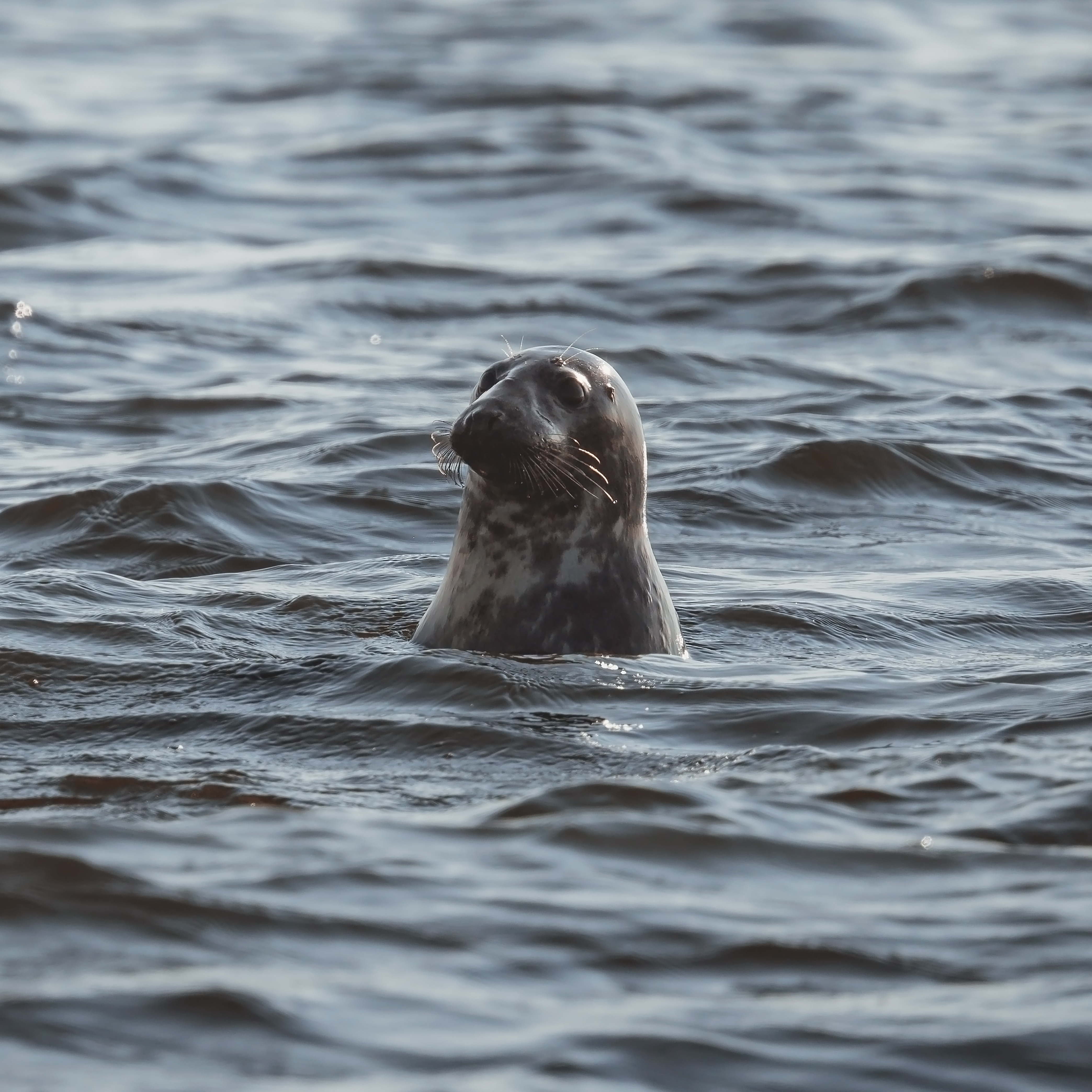
Image: Aneta p / CC BY 4.0
Grey Seal (Halichoerus grypus)
A large phocid with a long, broad muzzle and a relatively flat profile — the genus name Halichoerus ("hook nosed sea pig") points to the distinctive snout. Adult males are darker and noticeably larger than females, with
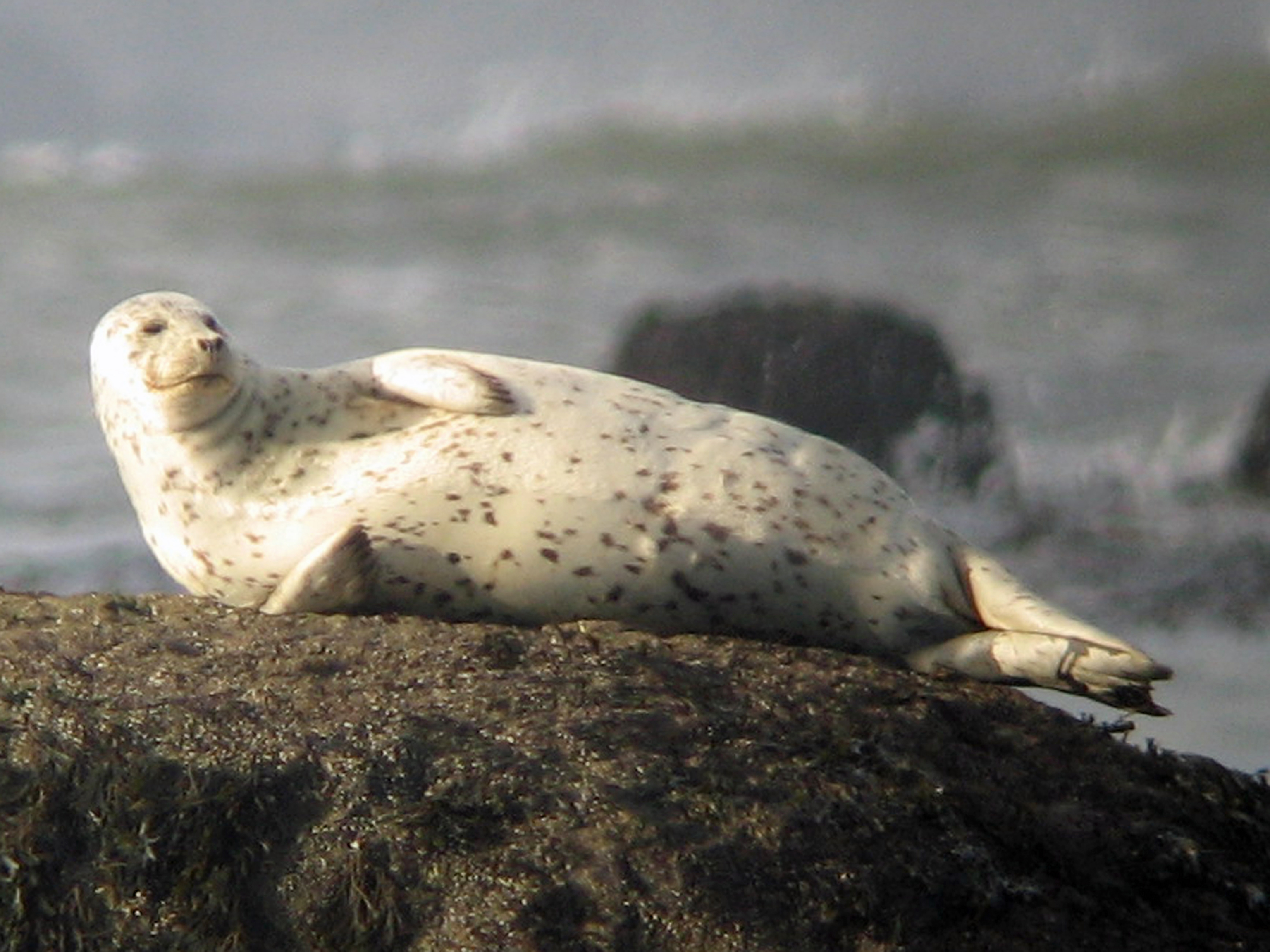
Image: Greg Schechter from San Francisco, USA / CC BY 2.0
Harbor Seal (Phoca vitulina)
A small to medium seal with a rounded head, V shaped nostrils, and a coat of spots and rings on a grey to brown background; no external ear flaps (a "true" / phocid seal). On land it moves by caterpillar like undulation;
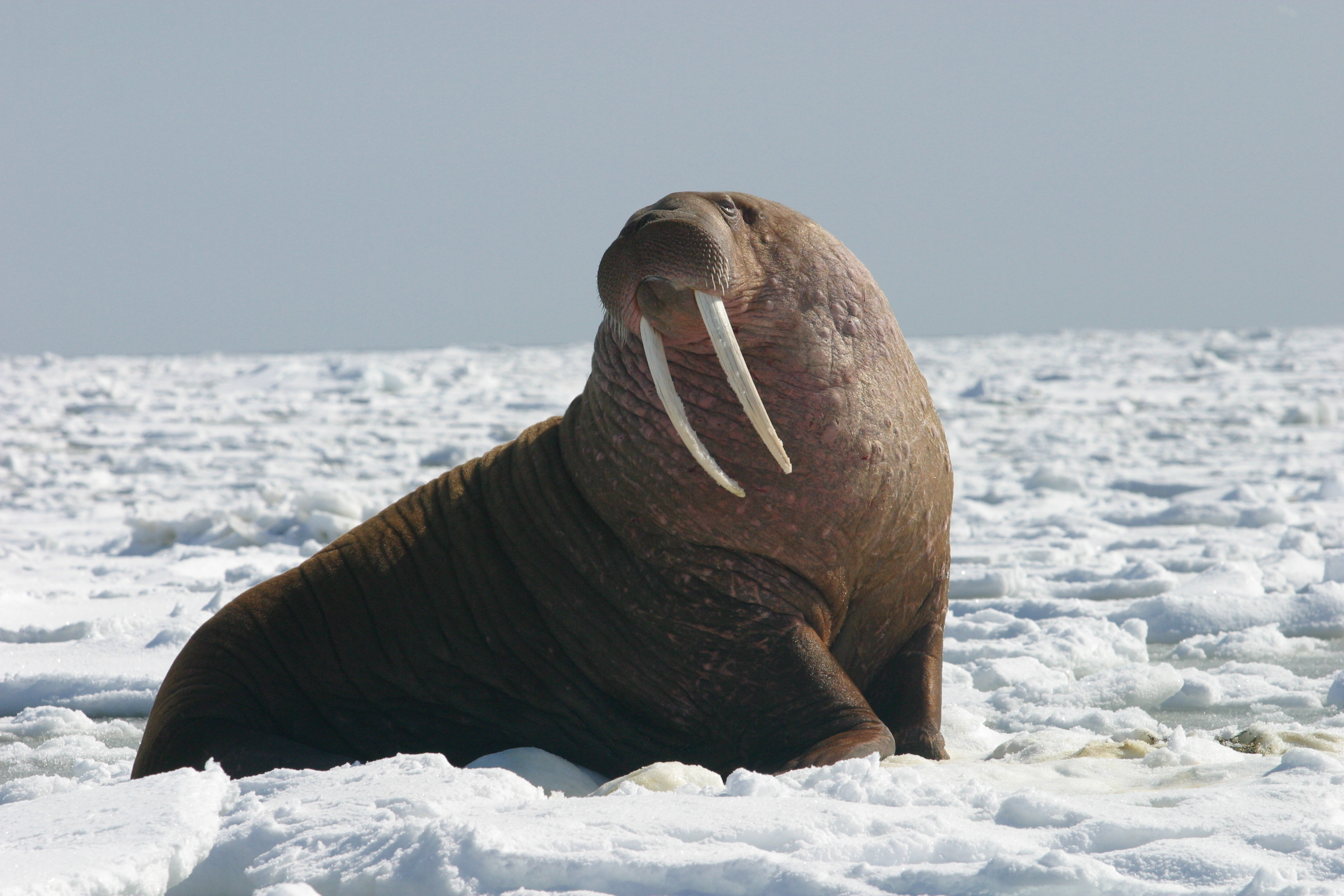
Image: Joel Garlich-Miller, U.S. Fish and Wildlife Service / Public domain
Walrus (Odobenus rosmarus)
Unmistakable among pinnipeds: a very large body, a broad muzzle dense with stiff whiskers (vibrissae), and long tusks (elongated canine teeth) present in both sexes, longer in males. Skin is thick and wrinkled, often app