Basking Shark
Cetorhinus maximus
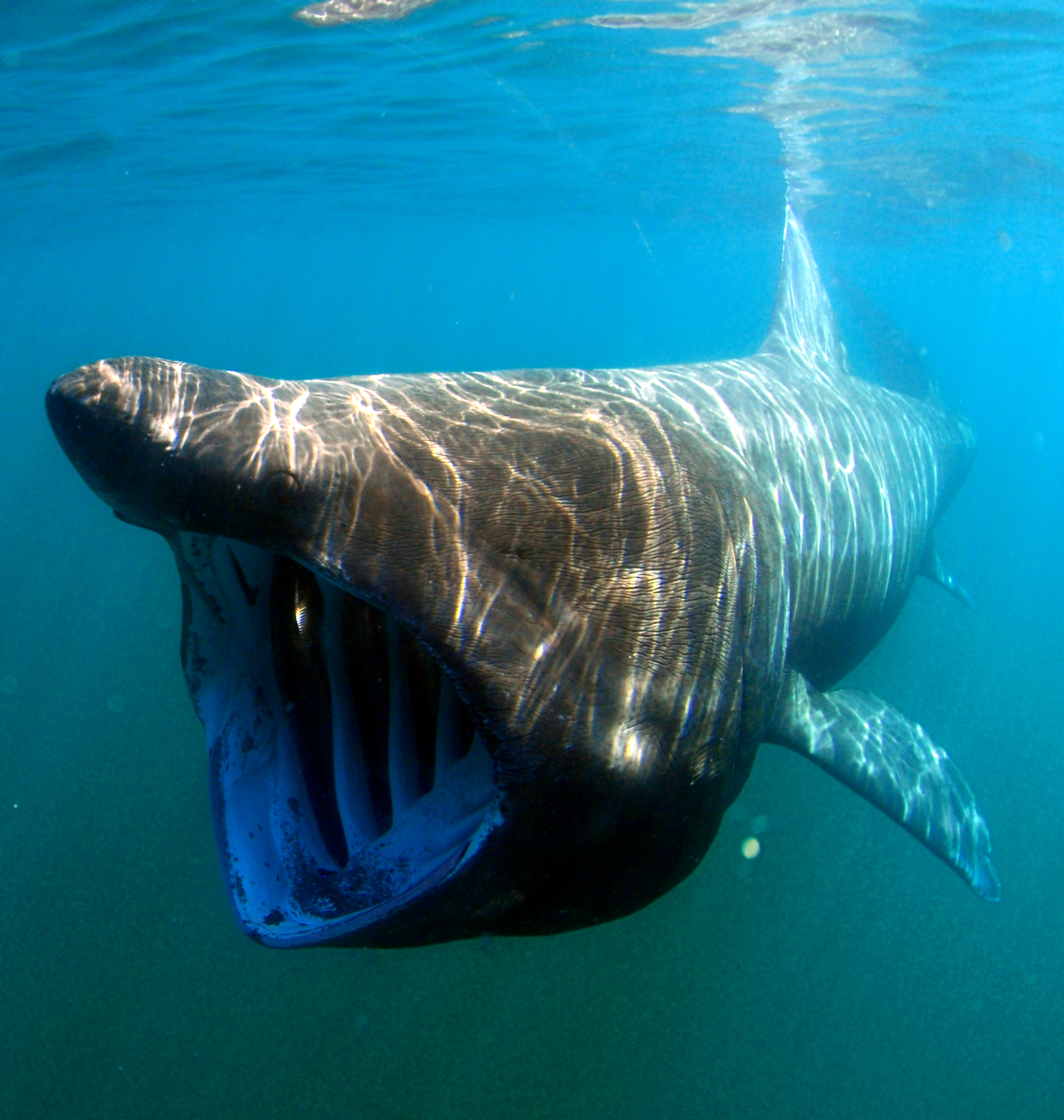
Basking shark (Cetorhinus maximus).
- Status
- EN
- Guild
- sharks rays
- Sources
- 2
Basking Shark (Cetorhinus maximus)
Status: needs expert review. A science reviewer should confirm the current IUCN global category and any regional sub-assessments, the assessment date, and the population trend before approval. The basking shark (Cetorhinus maximus) is a very large, slow-moving, filter-feeding shark of temperate seas — the second-largest fish after the whale shark.
At a glance
| Field | Value | Source |
|---|---|---|
| Scientific name | Cetorhinus maximus | IUCN Red List |
| Guild | shark-ray | — |
| IUCN status | Endangered (assessed 2018; version 2019-1) | IUCN Red List |
| Population trend | Decreasing | IUCN Red List |
| Range | Arctic and temperate waters worldwide, mainly Atlantic and Pacific | Florida Museum |
| Typical size | Adults average ~6.7–8.8 m; reaches up to ~12 m | Florida Museum |
Identification
The basking shark is one of the most recognizable sharks: an enormous body, a bulbous conical snout, and very large gill slits that nearly encircle the head. The mouth is large and subterminal, with many small hooked teeth and numerous large gill rakers modified for filter feeding. Coloration is grayish-brown above, paler below (Florida Museum).
Ecology and behavior
The basking shark is a filter feeder that swims slowly at the surface with its mouth open, straining large volumes of water — by one estimate up to roughly 2,000 tons per hour — to capture zooplankton such as small crustaceans, invertebrate larvae, and fish eggs and larvae. It is highly migratory and appears seasonally in coastal waters, tracking zooplankton availability, sometimes traveling in pairs or larger groups. Reproduction is poorly known; gestation is estimated at three years or longer, with sexual maturity estimated at roughly 12–16 years (Florida Museum). Behavioral specifics should be cited to published research and confirmed in review.
Conservation status and threats
The IUCN Red List assesses the basking shark globally as Endangered (assessed 2018, published in version 2019-1), with a decreasing population trend, reflecting severe historic declines and the species' very low biological productivity (limited fecundity and late maturity). Some regional assessments are more severe than the global category, so a reviewer should report the regional scope precisely (IUCN Red List).
Documented threats include:
- Historic target fisheries (for liver oil, meat, and fins) from which populations have not fully recovered
- Bycatch in trawl, trammel-net, and set-net fisheries, and entanglement in pot lines
- High value of the large fins in the fin trade
Report figures as the cited authorities state them; a reviewer should confirm the current global and regional assessments.
How to observe responsibly
This page does not provide approach guidance. Basking sharks feed at the surface in predictable seasonal aggregations, which makes those areas sensitive — this page keeps them at regional granularity only (ETHICS.md). Any encounter on the water must follow a reviewed observation guide and local regulations, which set minimum vessel distances and no-pursuit rules; in many jurisdictions the species is legally protected and approach is restricted. Never drive a vessel through a feeding aggregation.
How you can help
- Report sightings to recognized basking-shark monitoring or citizen-science programs (see the iNaturalist dataset card).
- Support fin-trade reduction and basking-shark protection through credible organizations.
- On the water, keep clear of surface-feeding sharks and slow down in known seasonal areas.
Sources (2)
Every claim traces to one of the citations below. Anything that could not be sourced was left out.
Related in the commons
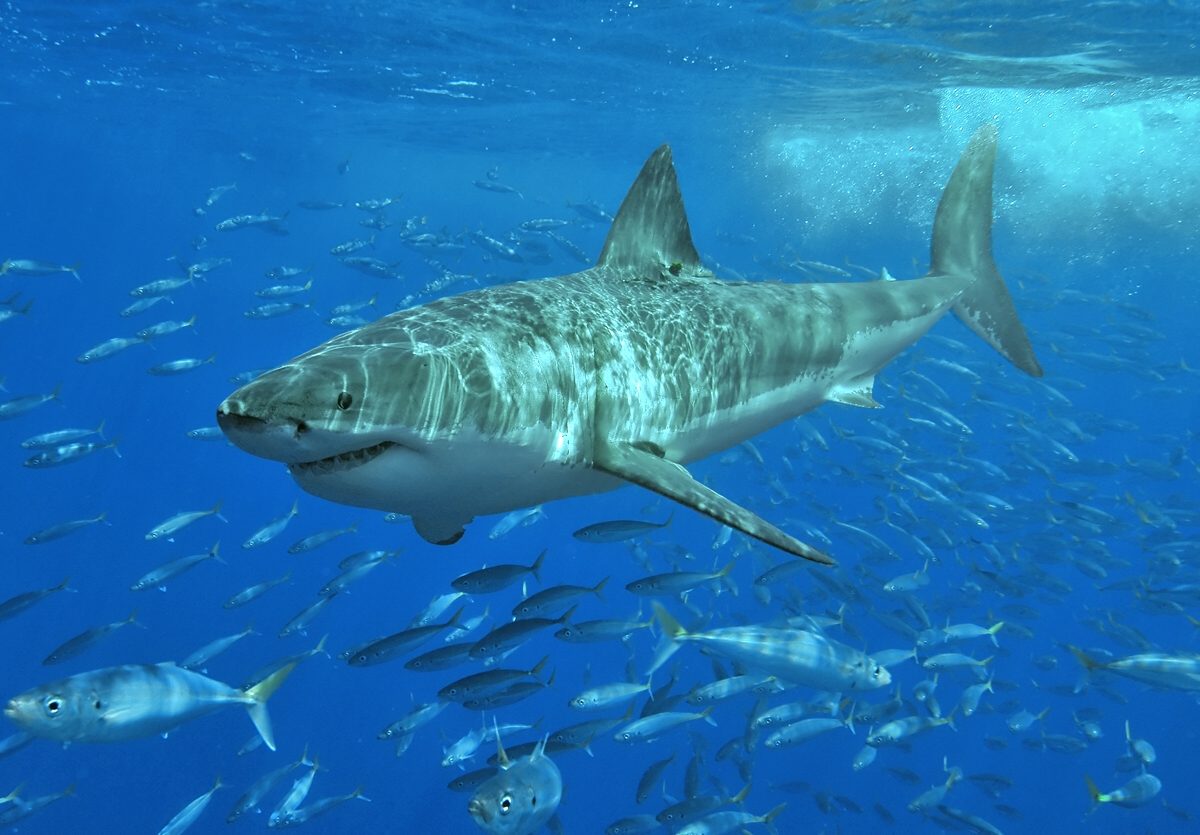
Image: Pterantula (Terry Goss) at en.wikipedia / CC BY 2.5
Great White Shark
The great white shark, also known as the white shark, is a species of large lamniform shark found in the coastal surface waters of all major oceans. It is notable for its size, predatory capabilities, and role as an apex
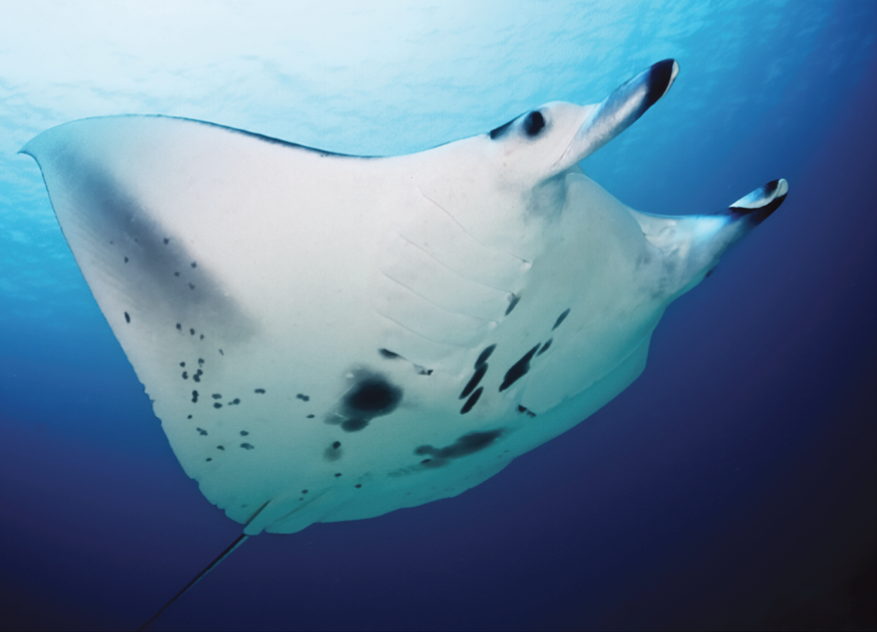
Image: Jaine FRA, Couturier LIE, Weeks SJ, Townsend KA, Bennett MB, et al. (2012) / CC BY 2.5
Reef Manta Ray (Mobula alfredi)
The reef manta ray is a very large ray with a kite shaped disc, broad wing like pectoral fins, and a pair of long, flexible cephalic ("head") lobes flanking a wide, terminal mouth. Individuals carry unique natural spot p
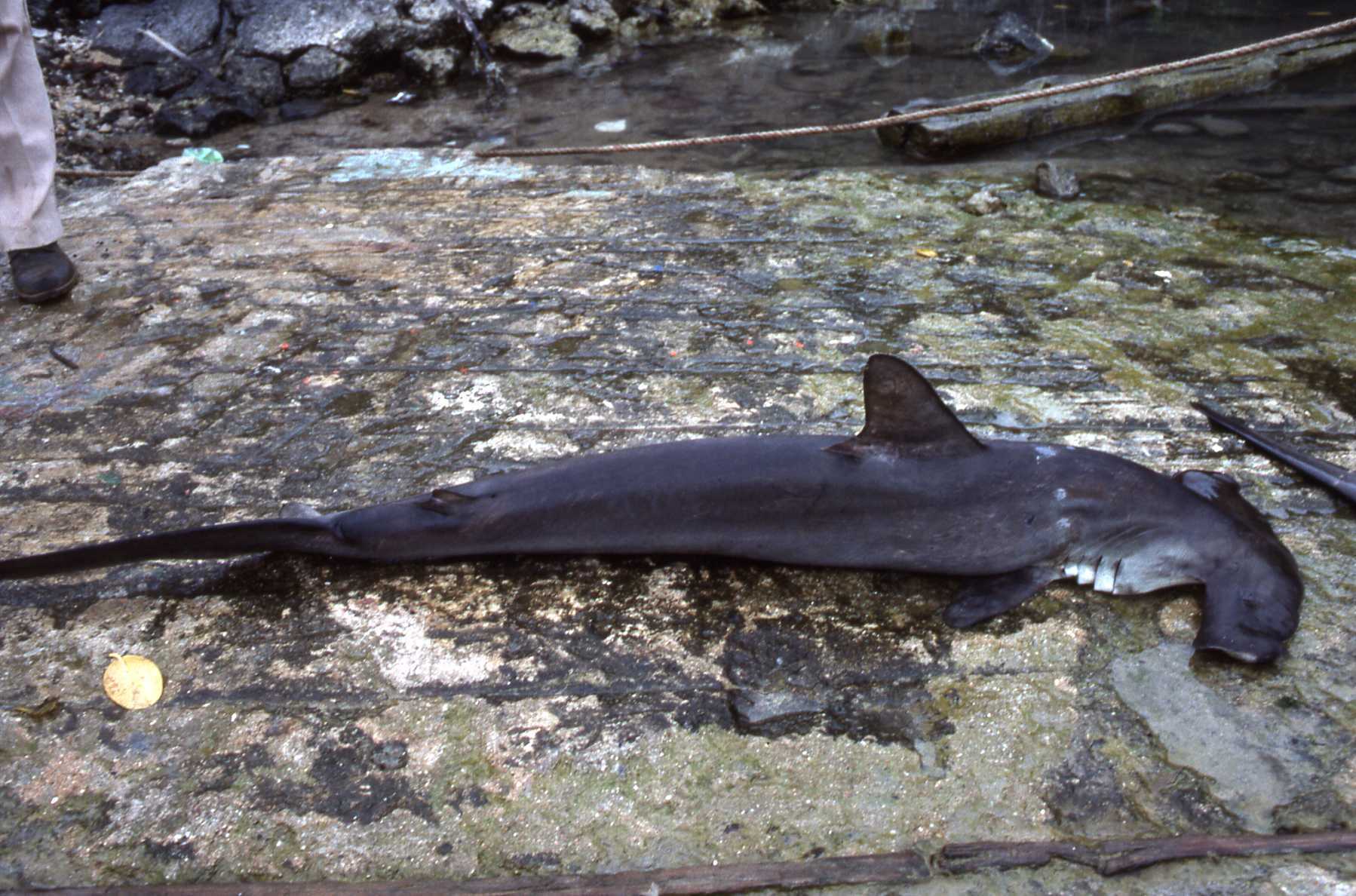
Image: iNaturalist.org (Simon Tonge) (Simon%20Tonge) / CC0
Scalloped Hammerhead (Sphyrna lewini)
The scalloped hammerhead is named for the broad, flattened "hammer" (cephalic) head, the front edge of which is curved with a central indentation and lateral scallops — a feature that separates it from the great and smoo
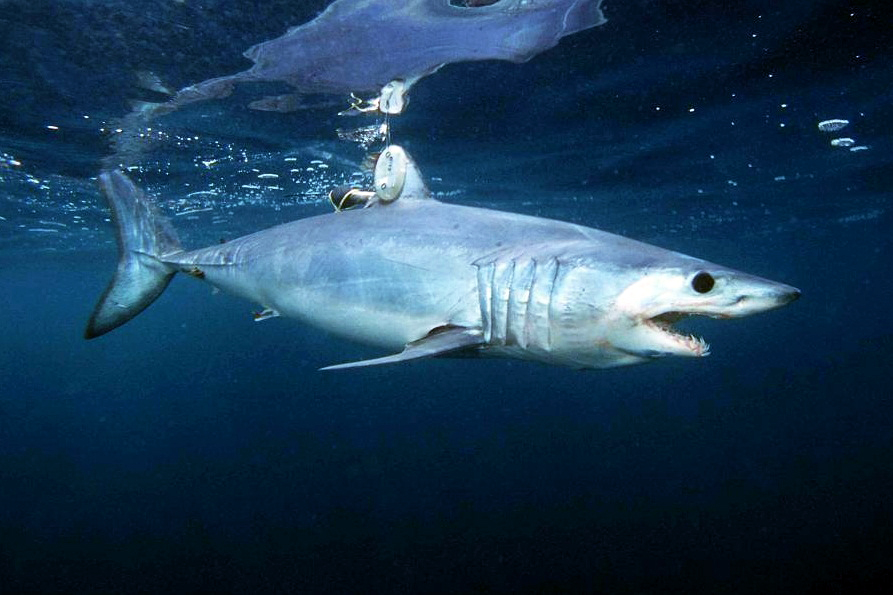
Image: Mark Conlin, SWFSC Large Pelagics Program / Public domain
Shortfin Mako (Isurus oxyrinchus)
The shortfin mako is a large, highly migratory shark with a pointed (conical) snout, light metallic blue sides, and a white underside. It has relatively small eyes and pectoral fins compared with the closely related long