Welfare Assessment: Hawaiian Monk Seal
Welfare Assessment: Hawaiian Monk Seal
Read WELFARE.md and ETHICS.md before writing. Center the animal's interests, not its feelings. Every welfare claim is cited and confidence-tagged.
Summary
The Hawaiian monk seal (Neomonachus schauinslandi) is in a pressured welfare state — the most endangered pinniped in the United States, ESA-listed since 1976 and IUCN Endangered, but with a slowly increasing total population of roughly 1,600 animals at an average of about 2% per year over 2013-2021 [NOAA Fisheries]. The framing is "pressured rather than critical" because the trajectory is upward overall; that aggregate, however, masks a near-critical juvenile cohort in the Northwestern Hawaiian Islands, where food limitation and entanglement depress survival [NOAA Fisheries]. The dominant stressors are marine-debris entanglement and prey limitation in the remote north and cumulative human disturbance in the inhabited main islands. The confidence basis is measured — entanglement counts, juvenile-survival drivers, and subpopulation trends come from NOAA monitoring.
Five Domains
- Nutrition — Food limitation is described by NOAA as a major factor driving decline in the Northwestern Hawaiian Islands, particularly through low juvenile survival; the main Hawaiian Islands subpopulation has better foraging success and is the engine of overall growth (NOAA Fisheries) — measured.
- Environment — The Papahanaumokuakea range accumulates derelict fishing gear and marine debris, and low-lying terrestrial pupping habitat is exposed to sea-level rise that erodes haul-out and nursing beaches (NOAA Fisheries) — measured.
- Health — This species has one of the highest documented entanglement rates of any pinniped; NOAA recorded 437 entanglements in Papahanaumokuakea from 1974 to 2022, and shark predation removes pre-weaned and recently weaned pups at French Frigate Shoals (NOAA Fisheries) — measured.
- Behaviour — In the main Hawaiian Islands, human disturbance of resting and nursing animals, intentional feeding, and fishery interaction alter natural haul-out and provisioning behaviour (NOAA Fisheries) — measured.
- Mental state (inferred) — Not narrated and not asserted. No population-wide physiological stress proxy is cited here; the welfare harm is documented through entanglement, starvation, and disturbance records, not through any affect claim (NOAA Fisheries) — expert-opinion on the absence of a proxy.
Cumulative pressure (disturbance budget)
The monk seal shows why the disturbance budget in WELFARE.md must be scoped per subpopulation, not averaged. In the remote Northwestern Hawaiian Islands, the dominant cumulative pressures are derelict-gear entanglement and food limitation acting on juveniles — a budget already near its ceiling, where each entangled or starved juvenile is a direct loss to recruitment (NOAA Fisheries). In the main Hawaiian Islands, the dominant pressure is cumulative human disturbance: the fiftieth beachgoer who flushes a nursing pair imposes an energetic and provisioning cost no single-actor distance rule fully captures. Treating these as one averaged budget would hide the near-critical northern juvenile cohort behind the growing southern one. Utilization is high in both, for different reasons.
What supports recovery
Cited, concrete interventions that would move the welfare state toward recovering:
- Marine-debris and derelict-gear removal in Papahanaumokuakea, directly reducing the leading entanglement vector (NOAA Fisheries) — measured / expert-opinion.
- Juvenile-survival interventions — including documented translocation of at-risk juveniles to better-foraging areas — to lift the food-limited northern cohort (NOAA Fisheries) — measured.
- Disturbance management and outreach in the main Hawaiian Islands — enforced approach distances and no-feeding messaging to protect resting and nursing seals (NOAA Fisheries; ETHICS.md distance-first rule) — expert-opinion.
No precise haul-out, pupping, or aggregation sites are published here, per ETHICS.md; granularity is held to island-group level.
Sources (4)
Every claim in this artifact traces to one of the citations below. Anything that could not be sourced was left out.
- [1]Tier 2 · InstitutionalNOAA Fisheries: Hawaiian Monk Seal species profileAccessed 2026-06-16
- [2]Tier 2 · InstitutionalNOAA Fisheries: Hawaiian Monk Seal Updates 2024Accessed 2026-06-16
- [3]Tier 1 · Peer-reviewedHawaiian Monk Seal Population Summary 2024 (NOAA Technical Report)Accessed 2026-06-16
- [4]Tier 2 · InstitutionalMarine Mammal Commission: Hawaiian Monk SealAccessed 2026-06-16
Related in the commons
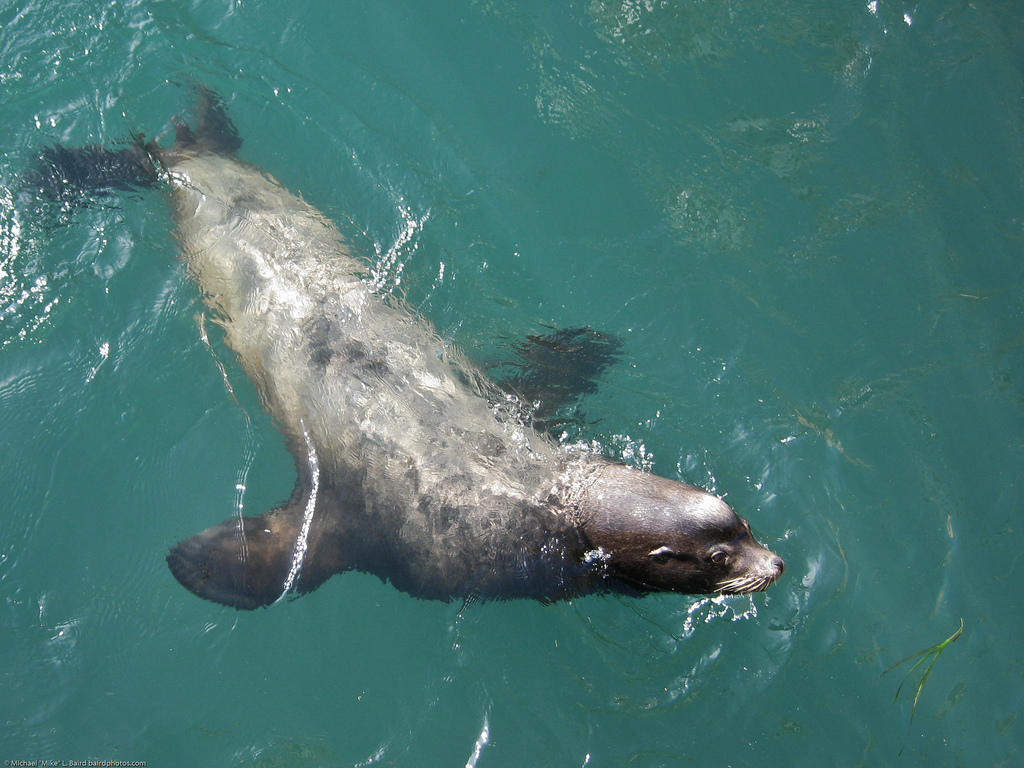
Image: https://www.flickr.com/photos/mikebaird/ Mike Baird / CC BY 2.0
California Sea Lion (Zalophus californianus)
A medium large eared seal: males are much larger than females and develop a raised forehead crest (sagittal crest) with age, often appearing lighter on the crown. Unlike true seals, otariids have visible external ear fla
Galápagos Marine Reserve, Ecuador
The Galápagos Marine Reserve is one of the largest marine protected areas in the world, surrounding the Galápagos Islands roughly 1,000 km off the coast of Ecuador. The reserve was created by Ecuador in 1998 and covers o
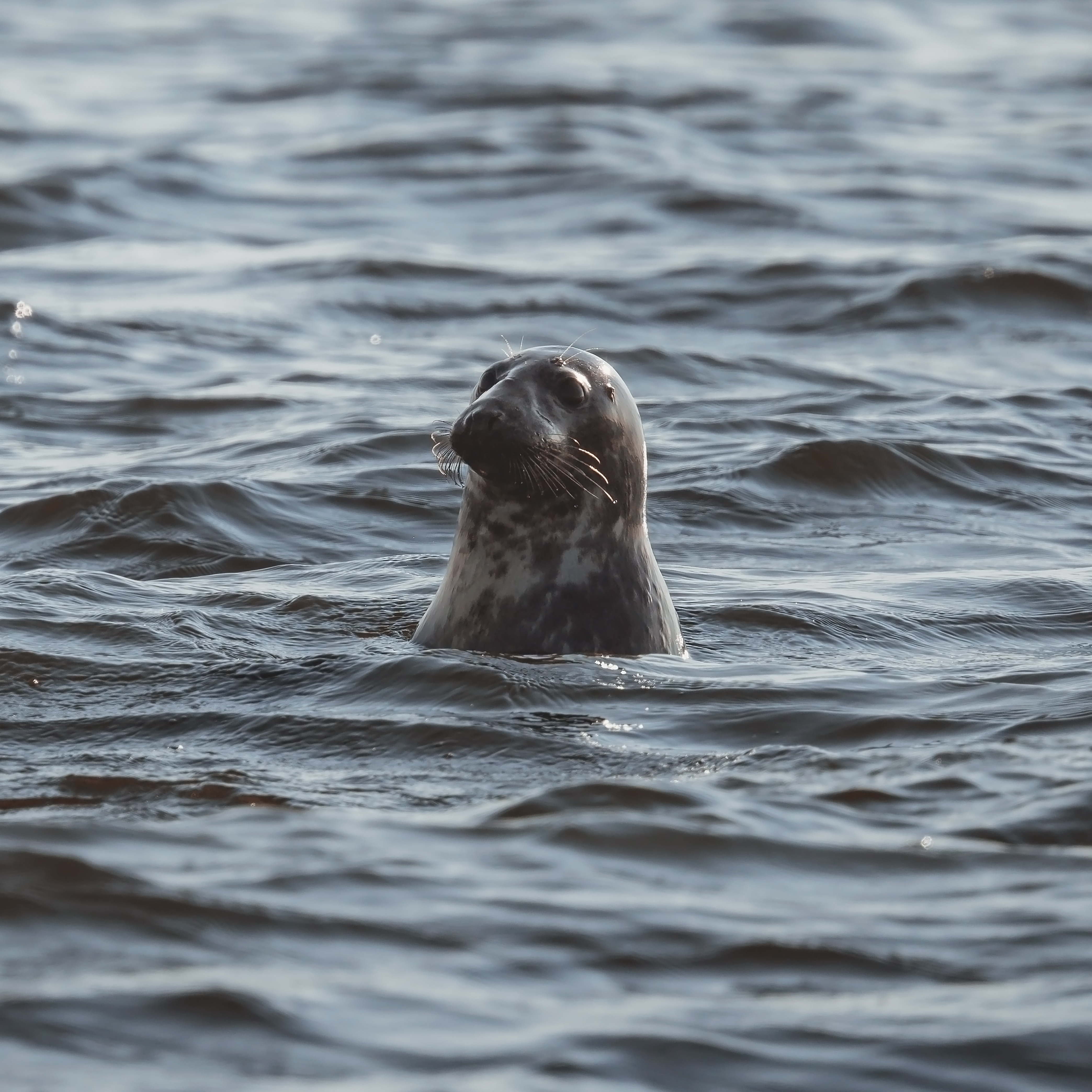
Image: Aneta p / CC BY 4.0
Grey Seal (Halichoerus grypus)
A large phocid with a long, broad muzzle and a relatively flat profile — the genus name Halichoerus ("hook nosed sea pig") points to the distinctive snout. Adult males are darker and noticeably larger than females, with
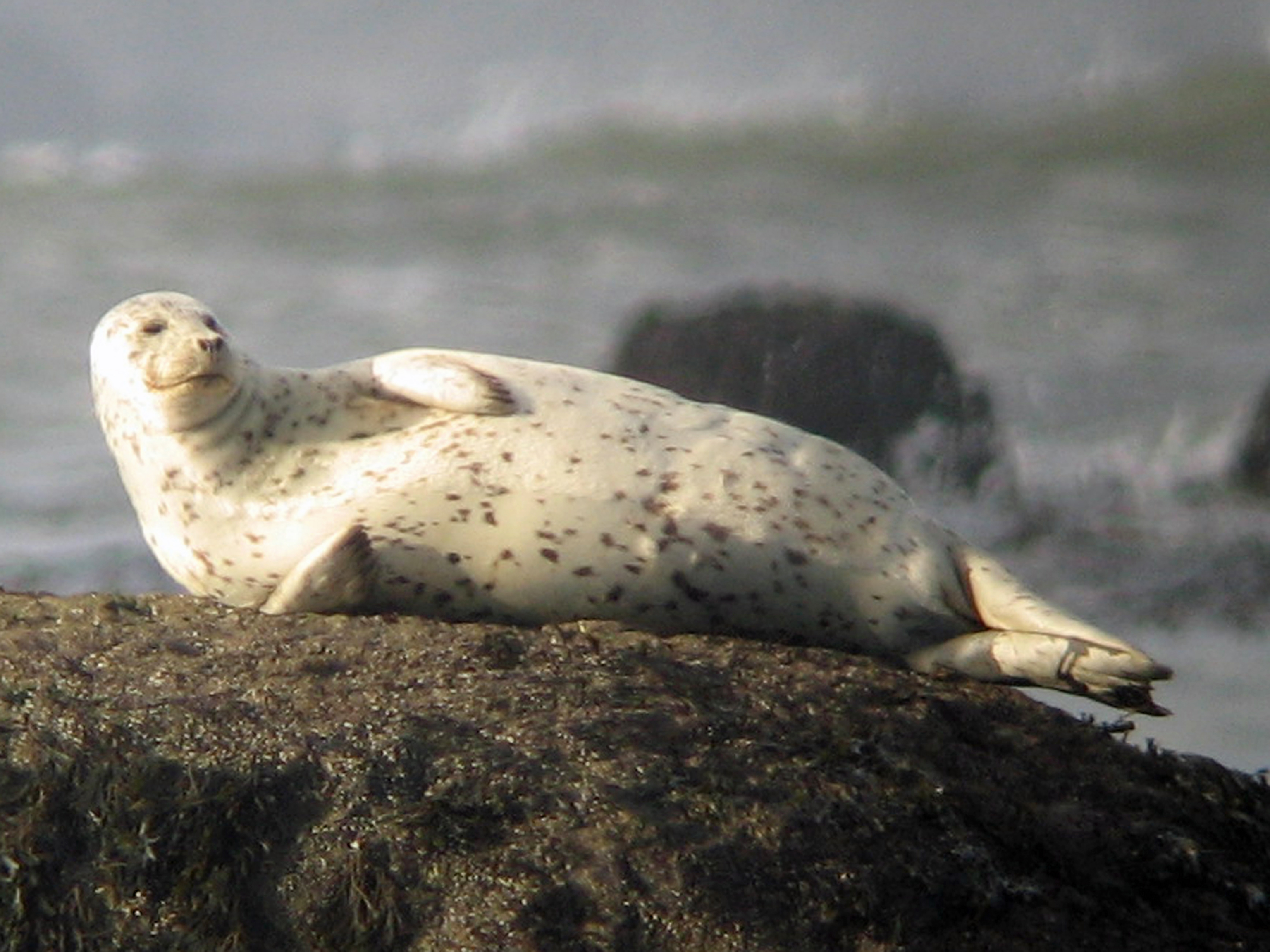
Image: Greg Schechter from San Francisco, USA / CC BY 2.0
Harbor Seal (Phoca vitulina)
A small to medium seal with a rounded head, V shaped nostrils, and a coat of spots and rings on a grey to brown background; no external ear flaps (a "true" / phocid seal). On land it moves by caterpillar like undulation;