Skip to content
Blue Life CommonsOcean Intelligence
MissionIn expert review

Ethical Whale Shark Observation at Ningaloo (with a licensed operator)

NingalooWestern Australia

Ethical Whale Shark Observation at Ningaloo (with a licensed operator)

Status: needs expert + ethics review. Distances and rules below are cited to the Western Australian DBCA whale shark management page; an ethics reviewer must confirm they are current before this mission is published. The whale shark is assessed Endangered by the IUCN — observation is a privilege that must never cost the animal.

Mission overview

Join a licensed whale shark tour at Ningaloo Marine Park during the season and observe the world's largest fish without disturbing it — then contribute your observation to citizen science. This is a beginner-friendly in-water experience run entirely under a licensed operator's legal protocols. You do not freelance this.

What you'll need

  • A booking with a department-licensed Ningaloo whale shark operator (only licensed operators may run commercial whale shark tours here).
  • Snorkel gear (usually provided by the operator), reef-safe sun protection, a swim shirt.
  • Optional: an underwater camera for photo-ID contributions (no flash, no chasing for a shot).

Where and when

The Ethical observation rules below override everything in this section.

Ningaloo Coast, Western Australia (near Exmouth). Whale sharks aggregate here roughly March–August, following mass coral spawning and seasonal upwelling — the largest documented aggregation in the world. This is regional guidance; your licensed operator decides exact daily locations under their protocol.

Ethical observation rules (do no harm)

This section overrides everything else. These are legislated interaction rules in Western Australia (DBCA); your operator enforces them, and so do you.

  • Swimmer distance: stay at least 3 metres from the shark's body and 4 metres from its tail. Never close the gap; let the animal set the distance.
  • Vessel rules (operator's responsibility): a 250 m approach zone applies around any whale shark, only one vessel in the zone at a time, for a maximum of 90 minutes, at 6 knots or less.
  • Group size: a maximum of 10 swimming guests plus two crew in the water at a time.
  • Never touch, chase, feed, block the path of, or dive down onto a whale shark. Do not use flash.
  • Signs you are too close / causing disturbance — banking away, diving steeply, changing direction sharply, or shaking the head/tail. If you see these, withdraw. If the animal changes its behaviour because of you, you are too close.
  • These are the legal floor. If conditions or the operator's judgment call for more space, give more.

Mission steps

  1. Book with a licensed operator and attend their briefing — the briefing is part of the protocol, not a formality.
  2. Enter the water calmly when and where the crew directs; spread out to keep within group limits.
  3. Float and observe; keep the 3 m / 4 m distances; move with the animal, never toward it.
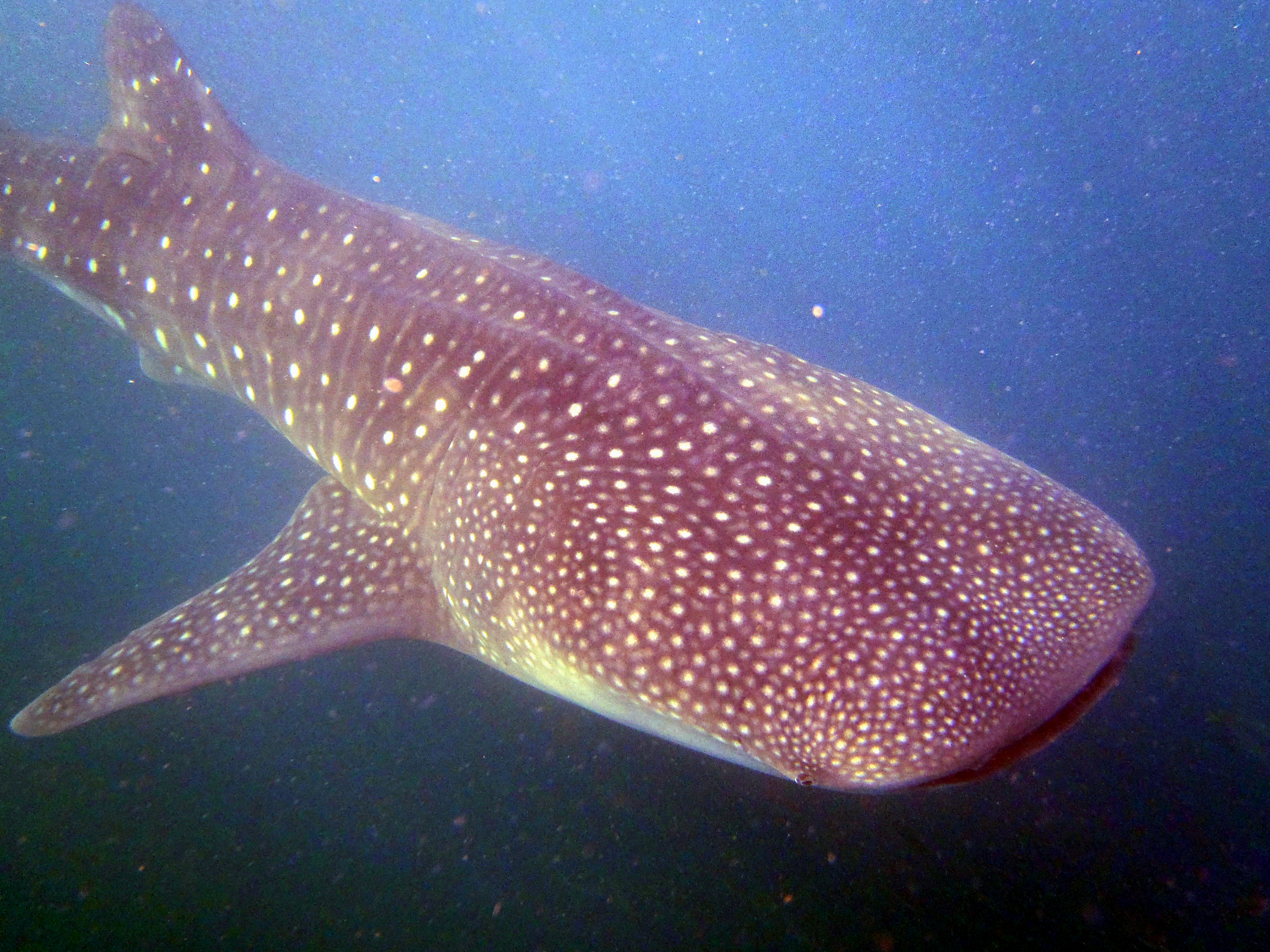
  4. If photographing for ID, capture the left-side flank behind the gills (the spot pattern used for individual identification) without manoeuvring closer.
  5. Exit when the crew calls it; leave the animal and site undisturbed.

Recording your observations

  • Submit flank photos to a recognized whale-shark photo-ID program so the individual can be matched and tracked over time.
  • Log the encounter (species, date, regional location, conditions) to a recognized citizen-science platform — see the iNaturalist dataset card. Note that sensitive-species locations are generalized; that is correct and intended.

What your observations contribute to

Photo-ID and sighting data help researchers estimate population, residency, and movement of an Endangered species — see the whale shark species page and the Ningaloo region briefing. Your careful, distant observation is data; your restraint is conservation.

Sources (3)

Every claim in this artifact traces to one of the citations below. Anything that could not be sourced was left out.

  1. [1]
    Whale shark management in Western Australia — DBCAAccessed 2026-06-11
  2. [2]
    Ningaloo Coast — UNESCO World Heritage CentreAccessed 2026-06-11
  3. [3]
    IUCN — Whale sharks slide towards extinction (Endangered)Accessed 2026-06-11