Acoustic Monitoring of Cetaceans 2026
Acoustic Monitoring of Cetaceans 2026
Passive Acoustic Monitoring (PAM) is a powerful method for surveying marine mammal distributions, migratory timings, and behavior patterns. By using deep-ocean hydrophone arrays, researchers capture vocalizations across large oceanic sectors without disrupting animal behavior.
Acoustic arrays
The research network includes deep-sea hydrophone arrays located at key submarine intersections:
- Point Reyes Escarpment Station: Monitoring deep-water migrations and shipping lane noise overlap.
- Monterey Canyon Array: Cataloging resident foraging clicks and low-frequency vocalizations.
Key findings
- Migratory Shifts: Humpback whale song detections in late winter indicate extended residences on feeding grounds, possibly linked to shifting prey densities.
- Noise Masking: Ocean shipping noise below 100 Hz overlaps with blue whale vocal ranges, reducing effective communication distances by up to 60% in heavy traffic corridors.
- Daily Cycle: Foraging clicks of odontocetes (toothed whales) peak between 22:00 and 02:00, matching the vertical migration of prey species.
Sources (1)
Every claim traces to one of the citations below. Anything that could not be sourced was left out.
Related in the commons
Antarctic Peninsula, Southern Ocean
The Antarctic Peninsula is the northernmost reach of the Antarctic continent, extending toward South America and bordered by some of the most biologically productive waters in the Southern Ocean. It is also one of the fa
Azores, Portugal
The Azores are a Portuguese archipelago in the central North Atlantic, sitting atop the Mid Atlantic Ridge. The volcanic islands rise from a seafloor studded with seamounts, and the deep water close to shore makes the ar
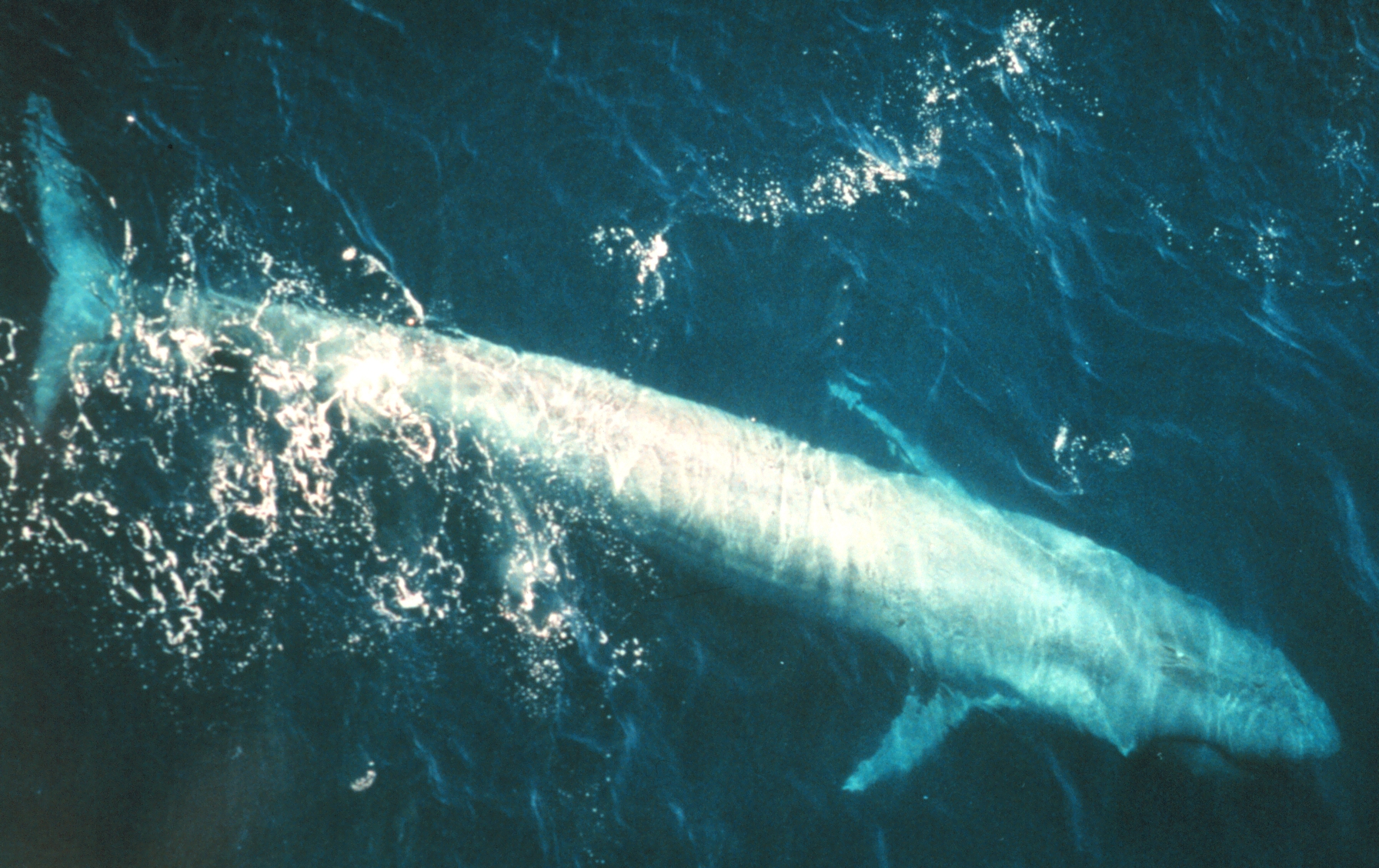
Image: NMFS Northeast Fisheries Science Center (NOAA) / Public domain
Blue Whale (Balaenoptera musculus)
A very large, slender baleen whale (rorqual). NOAA Fisheries describes animals that can reach roughly 110 feet (about 33 m) in the Antarctic, with a long mottled blue grey body, a small dorsal fin set far back, and a bro
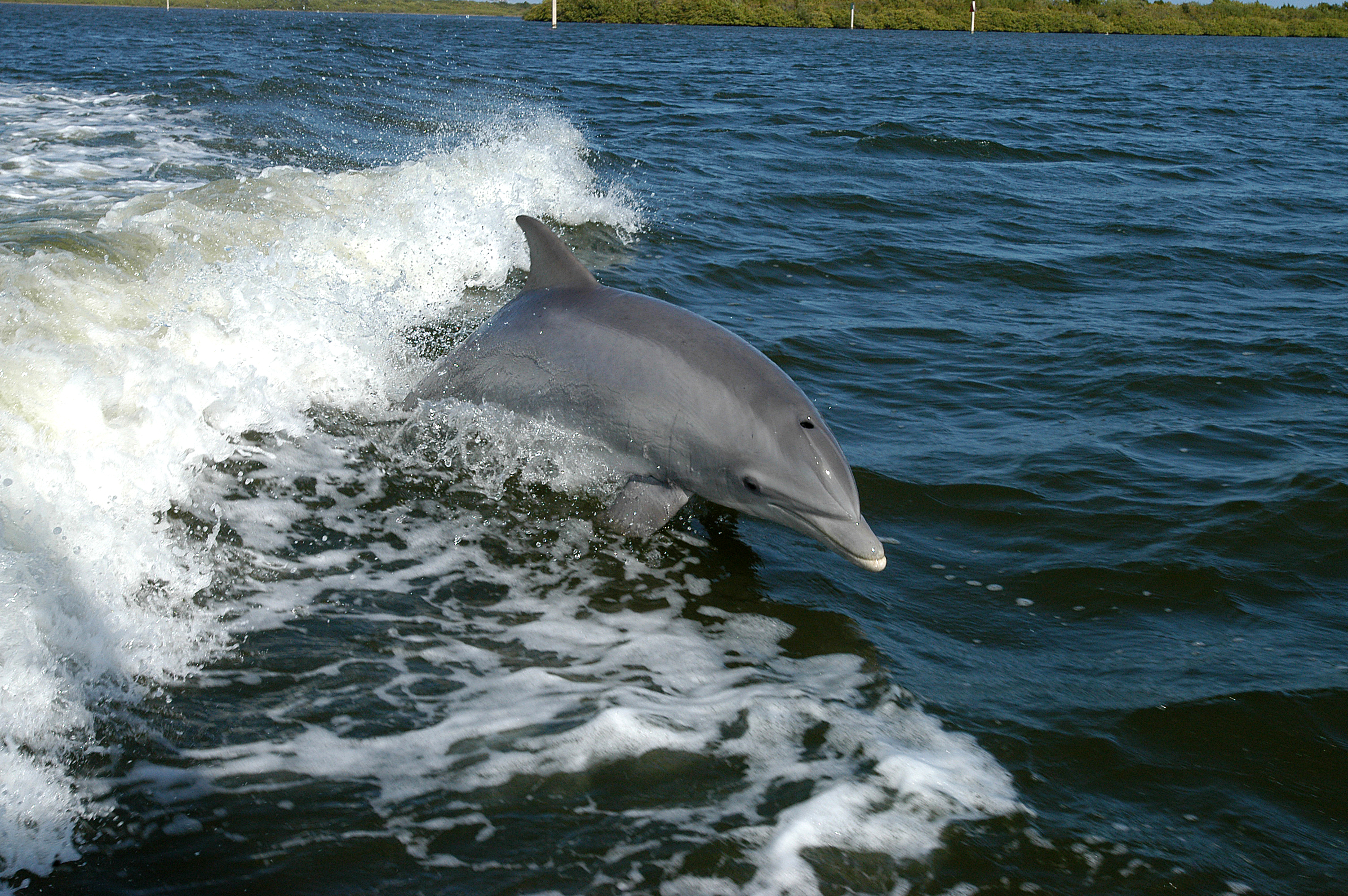
Image: NASA / Public domain
Common Bottlenose Dolphin (Tursiops truncatus)
A robust grey dolphin with a short, distinct beak and a curved (falcate) dorsal fin. NOAA Fisheries reports lengths of about 6 to 13 feet (roughly 2 to 4 m) and weights of about 300 to 1,400 pounds, with coastal and offs