Common Bottlenose Dolphin
Tursiops truncatus
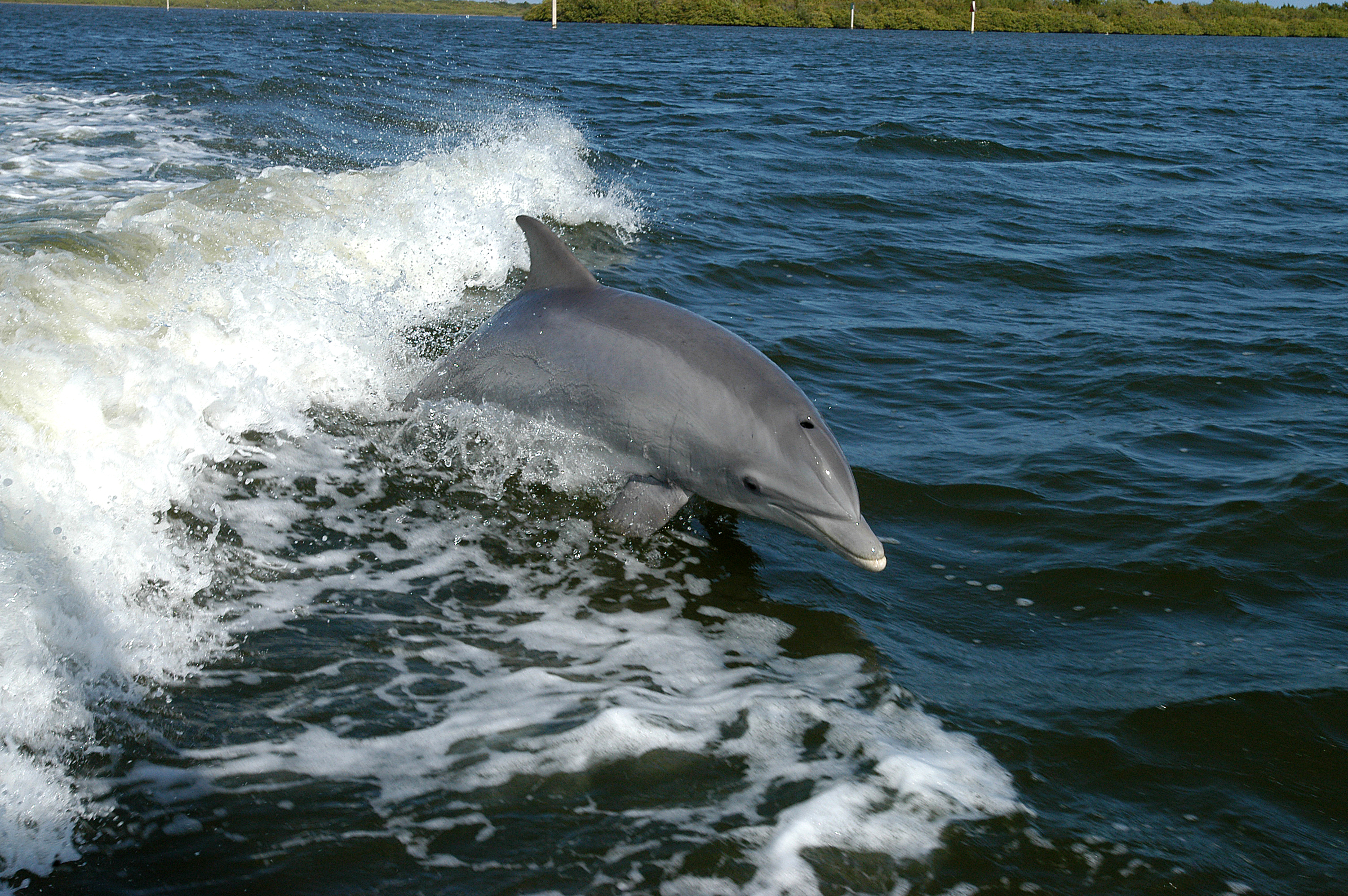
Bottlenose Dolphin - Tursiops truncatus A dolphin surfs the wake of a research boat on the Banana River - near the Kennedy Space Center.
- Status
- LC
- Guild
- cetaceans
- Reading level
- beginner
- Sources
- 3
Common Bottlenose Dolphin (Tursiops truncatus)
Status: needs expert review. Conservation claims cite the IUCN Red List (assessed 2018) and NOAA Fisheries; a science reviewer should confirm the assessment is current and verify that regional populations (some assessed separately) are represented accurately before approval. The common bottlenose dolphin (Tursiops truncatus) is a widespread, adaptable toothed cetacean found in coastal and offshore waters worldwide.
At a glance
| Field | Value | Source |
|---|---|---|
| Scientific name | Tursiops truncatus | WoRMS / authority |
| Guild | cetacean (oceanic dolphin) | — |
| IUCN status | Least Concern (assessed 2018) | IUCN Red List |
| US ESA status | Not ESA-listed; MMPA-protected (five Atlantic stocks designated depleted) | NOAA Fisheries |
| International trade | CITES Appendix II | CITES |
| Range | Temperate and tropical waters worldwide | IUCN Red List / NOAA Fisheries |
Identification
A robust grey dolphin with a short, distinct beak and a curved (falcate) dorsal fin. NOAA Fisheries reports lengths of about 6 to 13 feet (roughly 2 to 4 m) and weights of about 300 to 1,400 pounds, with coastal and offshore forms differing in size and coloration. Individuals are commonly identified by nicks and notches on the dorsal fin — the basis for photo-ID citizen science.
Ecology and behavior
NOAA Fisheries lists a diet of fish, squid, and crustaceans, and gives a lifespan of about 40 to 60 years. Bottlenose dolphins live in fluid social groups and use varied foraging strategies. The species' adaptability lets it occupy estuaries, bays, and open ocean. Behavioral specifics should be cited to published research and confirmed in review.
Conservation status and threats
The IUCN Red List assesses the species globally as Least Concern (assessed 2018), reflecting its wide distribution and large overall numbers — though several regional populations (for example the Mediterranean and Black Sea subspecies) are assessed separately and more at risk; confirm regional detail in review. The species is not listed under the US Endangered Species Act but is protected under the Marine Mammal Protection Act, with five Atlantic stocks designated depleted (NOAA Fisheries). NOAA Fisheries lists threats including fisheries entanglement and gear ingestion, biotoxins, chemical contaminants, disease, habitat alteration, ocean noise, vessel strikes, and illegal feeding and harassment. It is on CITES Appendix II. Report figures as the cited authorities state them.
How to observe responsibly
NOAA Fisheries advises observing all dolphins from a safe distance of at least 50 yards (about 46 m) and limiting observation to 30 minutes or less, and is explicit: never feed or attempt to feed wild dolphins. Feeding causes dolphins to lose natural caution and associate humans with food, increasing entanglement and vessel-strike risk. Do not chase, surround, or swim with wild dolphins. Follow the reviewed observation guide and the strictest applicable local rule; if an animal changes its behavior because of your presence, withdraw. This page keeps to regional granularity (ETHICS.md) and does not publish precise locations.
How you can help
- Contribute dorsal-fin photos to recognized photo-ID catalogs.
- Log sightings to a recognized citizen-science platform (see the iNaturalist dataset card).
- Never feed wild dolphins, and report feeding or harassment you witness to the responsible authority. Support entanglement-response programs through credible organizations such as Whale and Dolphin Conservation.
Sources (3)
Every claim traces to one of the citations below. Anything that could not be sourced was left out.
Related in the commons
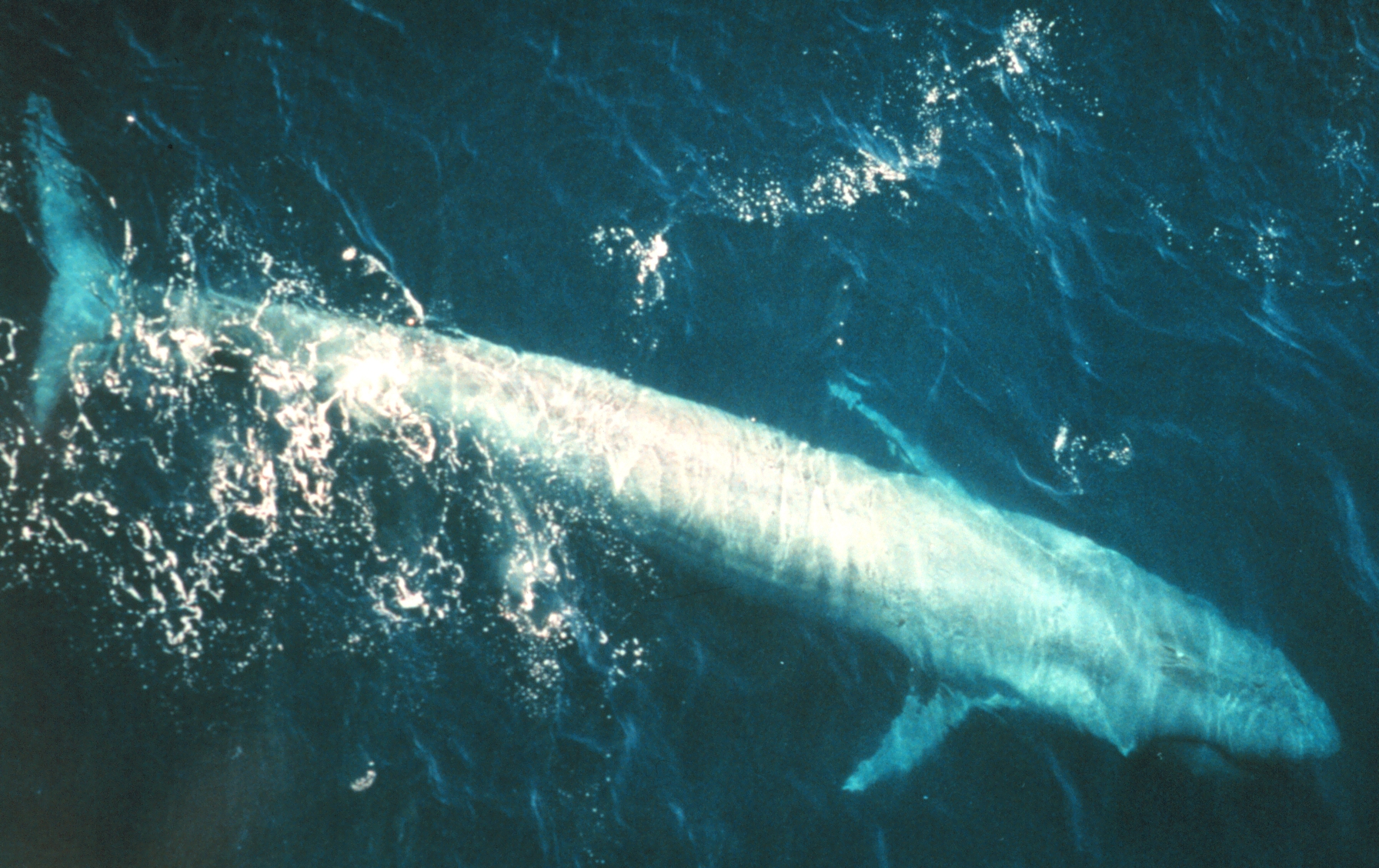
Image: NMFS Northeast Fisheries Science Center (NOAA) / Public domain
Blue Whale (Balaenoptera musculus)
A very large, slender baleen whale (rorqual). NOAA Fisheries describes animals that can reach roughly 110 feet (about 33 m) in the Antarctic, with a long mottled blue grey body, a small dorsal fin set far back, and a bro
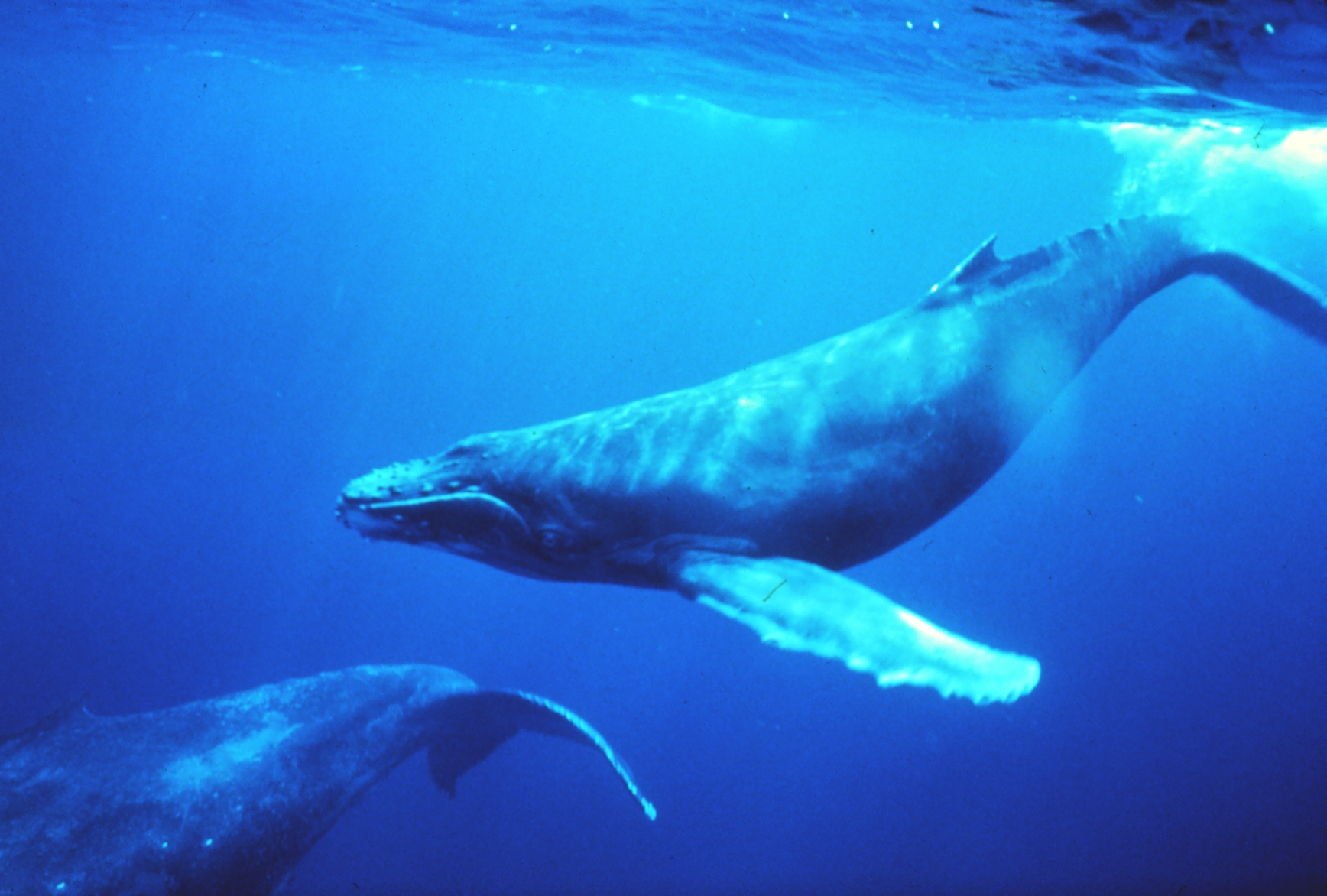
Image: Dr. Louis M. Herman. / Public domain
Humpback Whale (Megaptera novaeangliae)
A large baleen whale with very long pectoral fins (up to roughly a third of body length), a knobbly head (tubercles), and a small dorsal fin on a humped back. Often identified individually by the unique pattern on the un
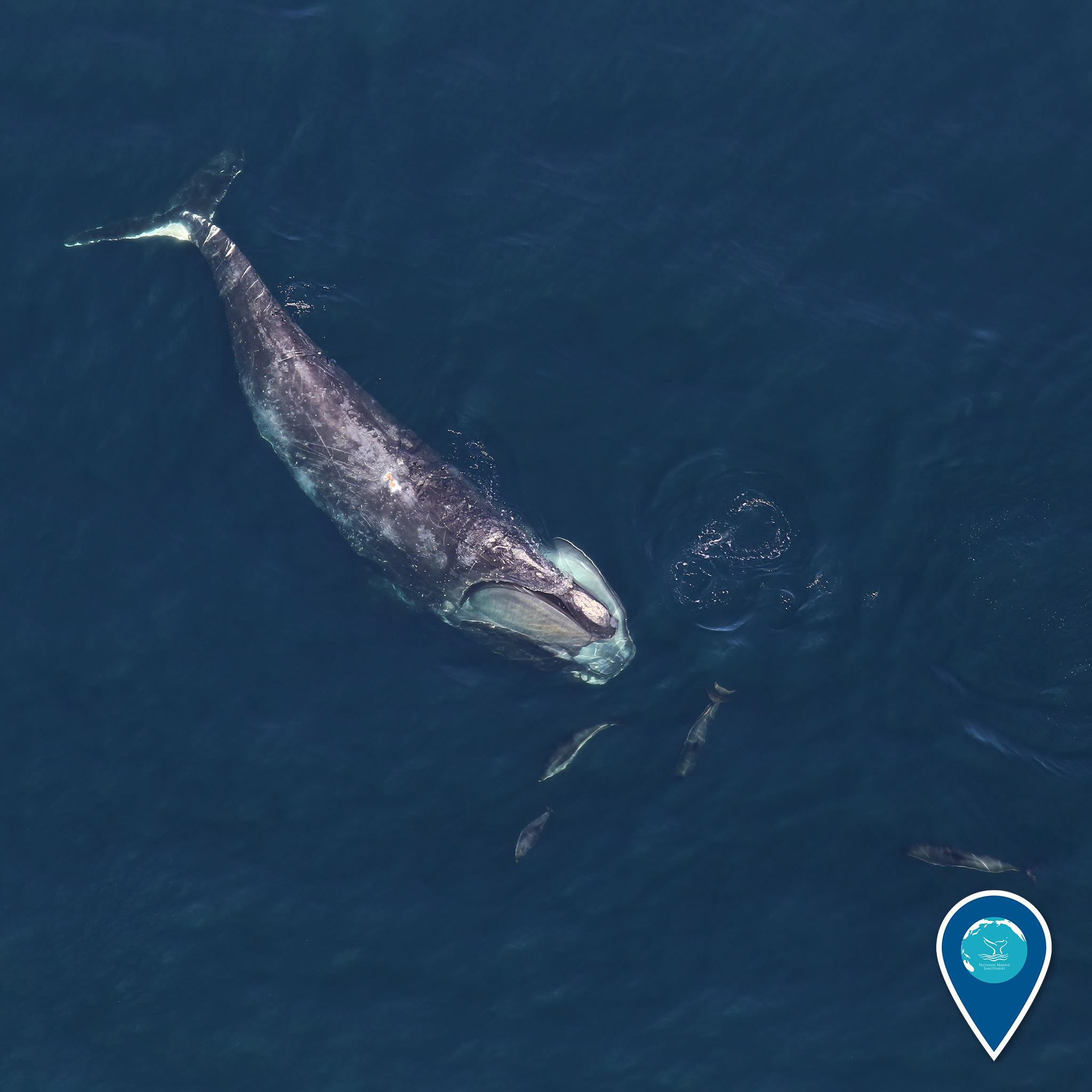
Image: NOAA Gray's Reef NMS / Public domain
North Atlantic Right Whale (Eubalaena glacialis)
A stocky black baleen whale with no dorsal fin, a broad back, and a strongly arched mouthline. The head bears rough patches of thickened skin (callosities) whose pattern is unique to each individual — the basis for photo
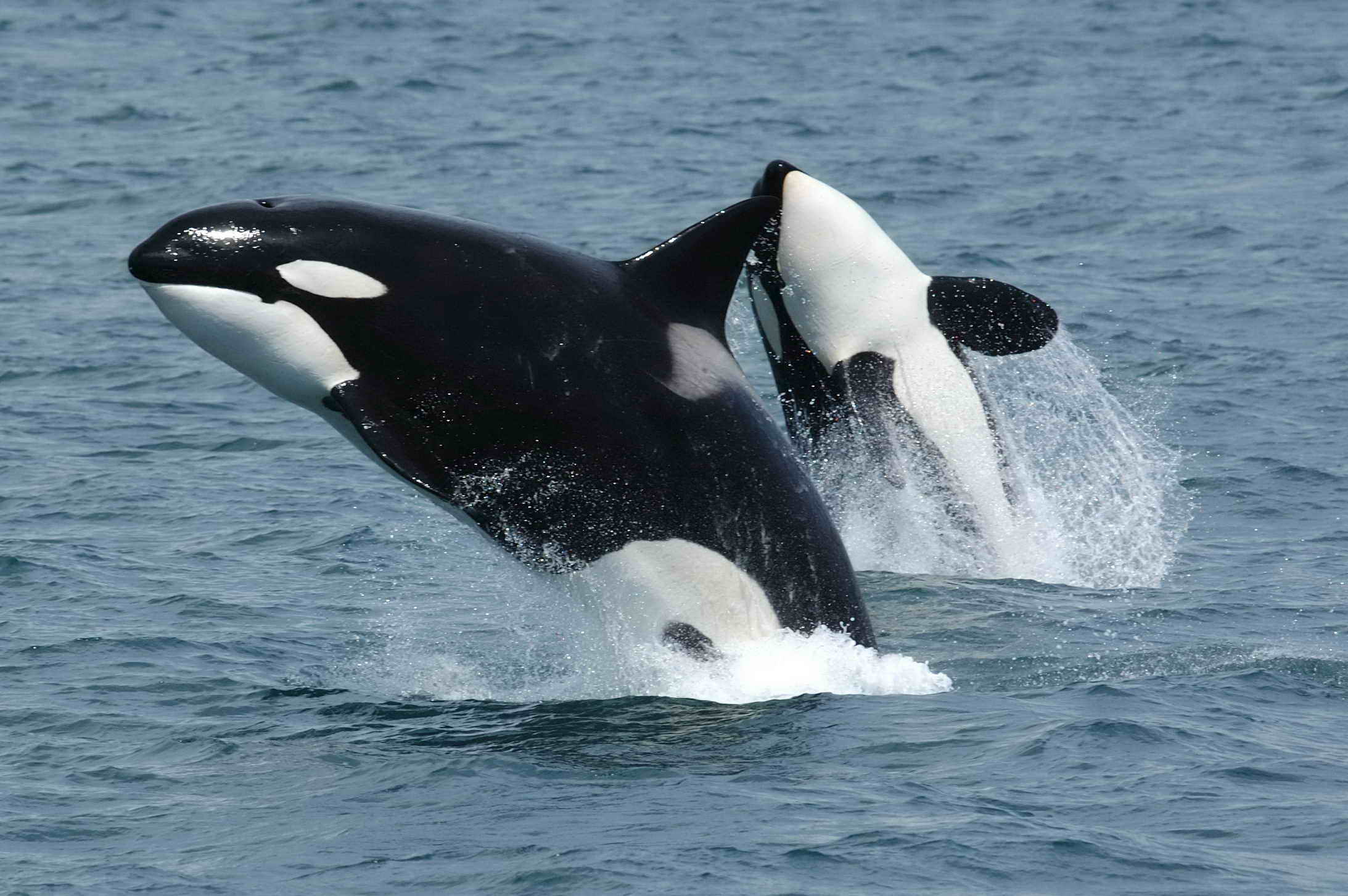
Image: Robert Pittman / Public domain
Orca (Orcinus orca)
A large black and white toothed cetacean. NOAA Fisheries reports lengths up to about 32 feet (roughly 10 m) and weights up to about 11 tons. Distinctive features include the tall dorsal fin (taller and straighter in adul