West Indian Manatee
Trichechus manatus
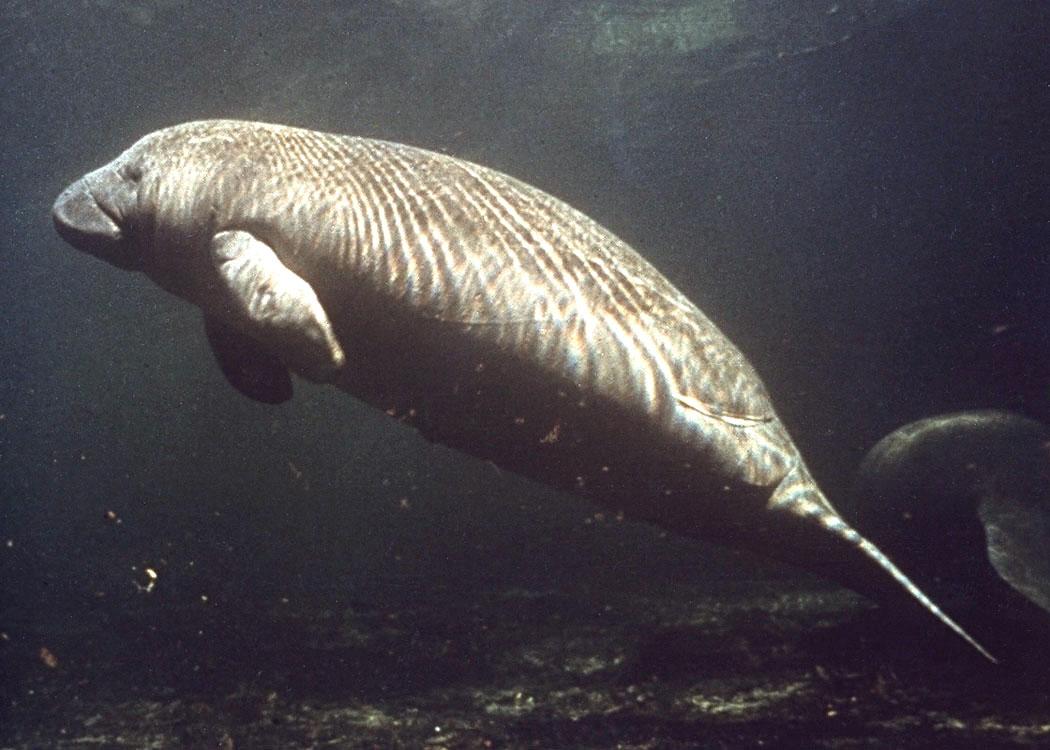
West Indian manatee (Trichechus manatus) at Merritt Island's National Wildlife Refuge in Florida next to Kennedy Space Center.
- Status
- VU
- Reading level
- beginner
- Sources
- 3
West Indian Manatee (Trichechus manatus)
Status: needs expert review. Taxonomic note: the West Indian manatee is a sirenian (order Sirenia, family Trichechidae), not a pinniped or cetacean. Because Blue Life Commons'
species_groupenum covers only cetaceans, pinnipeds, turtles, sharks-rays, and reefs, this page omitsspecies_grouprather than misclassify the taxon. Conservation and threat claims cite the IUCN Red List and U.S. Fish & Wildlife Service; a reviewer should confirm currency and subspecies detail before approval.
At a glance
| Field | Value | Source |
|---|---|---|
| Scientific name | Trichechus manatus | WoRMS / authority |
| Taxon | sirenian (order Sirenia — "sea cows"); not a pinniped | — |
| IUCN status | Vulnerable (assessed 2023) | IUCN Red List |
| Population trend | Decreasing (global) | IUCN Red List |
| Subspecies | Florida manatee (T. m. latirostris) and Antillean manatee (T. m. manatus) | IUCN Red List |
| U.S. legal status | ESA Threatened (reclassified from Endangered, effective 2017); existing protections retained | USFWS |
| Range | Southeastern U.S., Gulf of Mexico, Caribbean, and to northeastern South America | IUCN Red List |
Identification
A large, slow-moving, fully aquatic herbivore with a rounded, seal-shaped body, paddle-like fore-flippers, and a broad, flattened, spoon-shaped tail (distinguishing manatees from the fluke-tailed dugong). The face has a squared, whiskered muzzle adapted for grazing. Manatees surface periodically to breathe and are often seen grazing on seagrass and other aquatic vegetation in warm, shallow coastal and riverine waters.
Ecology and behavior
Manatees graze on seagrasses and other aquatic plants and depend on warm water in winter at the northern edge of their range, gathering at natural springs and industrial warm-water outflows when temperatures drop (USFWS). The species comprises two subspecies — the Florida manatee and the Antillean manatee — with different regional conservation pictures (IUCN Red List). Specific aggregation sites are kept to regional granularity here. Behavioral specifics should be cited to published research and confirmed in review.
Conservation status and threats
The West Indian manatee is assessed Vulnerable by the IUCN (2023), with a decreasing global trend (IUCN Red List). In the United States it was reclassified from Endangered to Threatened under the Endangered Species Act effective in 2017, on the basis of population increases and habitat improvements — while keeping existing federal protections and Florida critical-habitat designations in place (USFWS). "Threatened" is not "safe": watercraft collisions are a leading cause of injury and death, and the species is also pressured by loss of warm-water refuges, cold stress, seagrass habitat degradation, harmful algal blooms (red tide), entanglement, and (in parts of the Antillean range) hunting. Subspecies status differs, with Antillean populations in some countries facing more severe risk. Report figures as the cited authorities state them; a reviewer should confirm subspecies and regional specifics.
How to observe responsibly
Practice passive observation: keep at least 50 feet (about 15 m) from manatees, observe quietly from the surface, and never chase, touch, feed, give water to, or surround them — harassment is unlawful and even gentle contact can habituate manatees or alter behavior in ways that harm them (FWC). Paddlers should keep at least two kayak-lengths away, avoid splashing, and never separate a calf from its mother. Where in-water viewing is permitted, float at the surface and let the animal choose the distance. Warm-water winter aggregation sites are sensitive; follow site rules and the strictest local regulation (ETHICS.md).
How you can help
- Boat slow in posted manatee zones and wear polarized sunglasses to spot animals; most lethal strikes involve fast vessels.
- Report sick, injured, entangled, or dead manatees to the state or federal wildlife hotline rather than intervening yourself.
- Support seagrass restoration, warm-water-refuge protection, and credible manatee conservation organizations; never feed or give fresh water to wild manatees.
Sources (3)
Every claim traces to one of the citations below. Anything that could not be sourced was left out.
- [1]Tier 1 · Peer-reviewedIUCN Red List — Trichechus manatus (West Indian Manatee)Accessed 2026-06-16
- [2]Tier 2 · InstitutionalManatee Reclassified from Endangered to Threatened — U.S. Fish & Wildlife ServiceAccessed 2026-06-16
- [3]Tier 2 · InstitutionalManatee Viewing Guidelines — Florida Fish and Wildlife Conservation CommissionAccessed 2026-06-16
Related in the commons
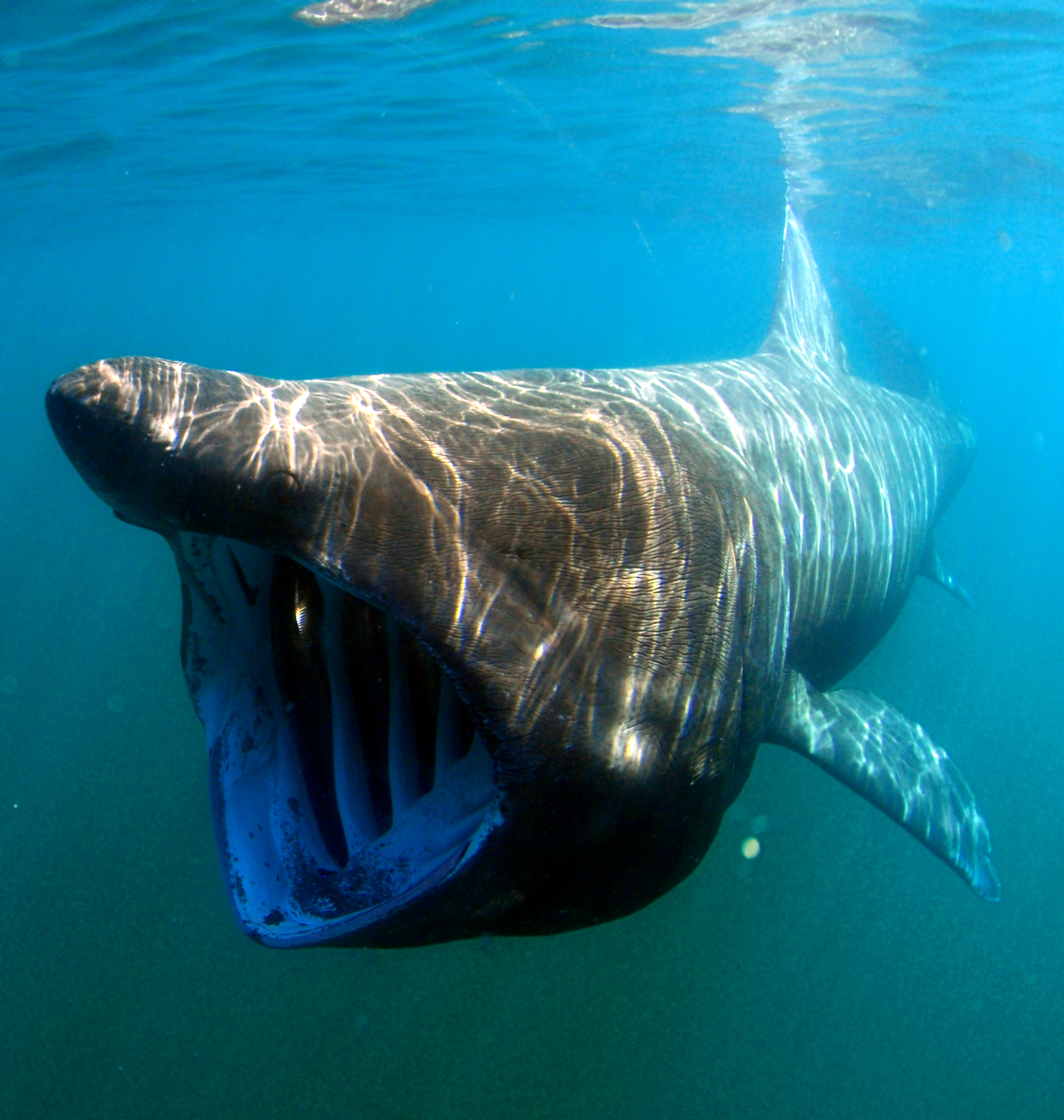
Image: Greg Skomal / NOAA Fisheries Service / Public domain
Basking Shark (Cetorhinus maximus)
The basking shark is one of the most recognizable sharks: an enormous body, a bulbous conical snout, and very large gill slits that nearly encircle the head. The mouth is large and subterminal, with many small hooked tee
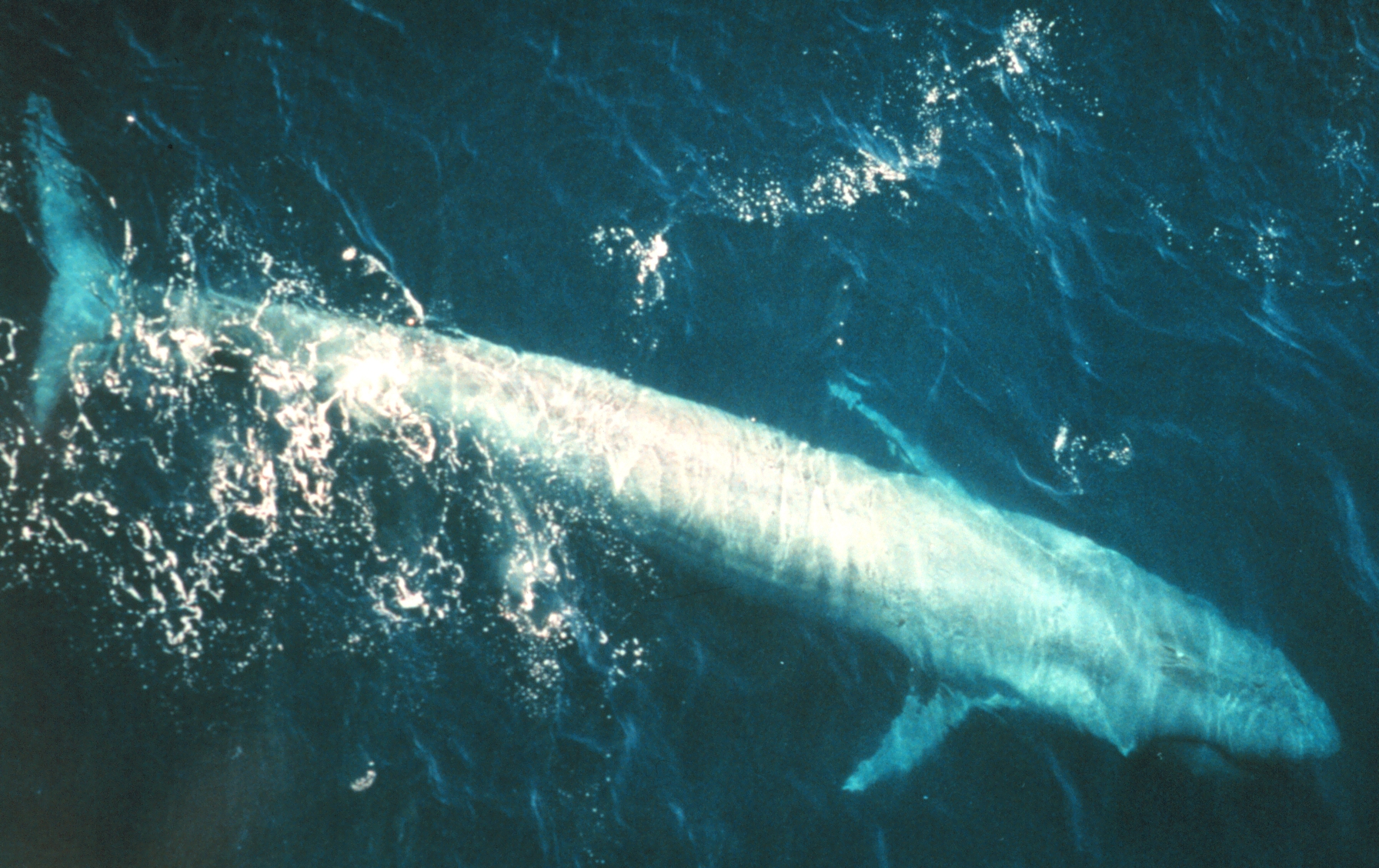
Image: NMFS Northeast Fisheries Science Center (NOAA) / Public domain
Blue Whale (Balaenoptera musculus)
A very large, slender baleen whale (rorqual). NOAA Fisheries describes animals that can reach roughly 110 feet (about 33 m) in the Antarctic, with a long mottled blue grey body, a small dorsal fin set far back, and a bro
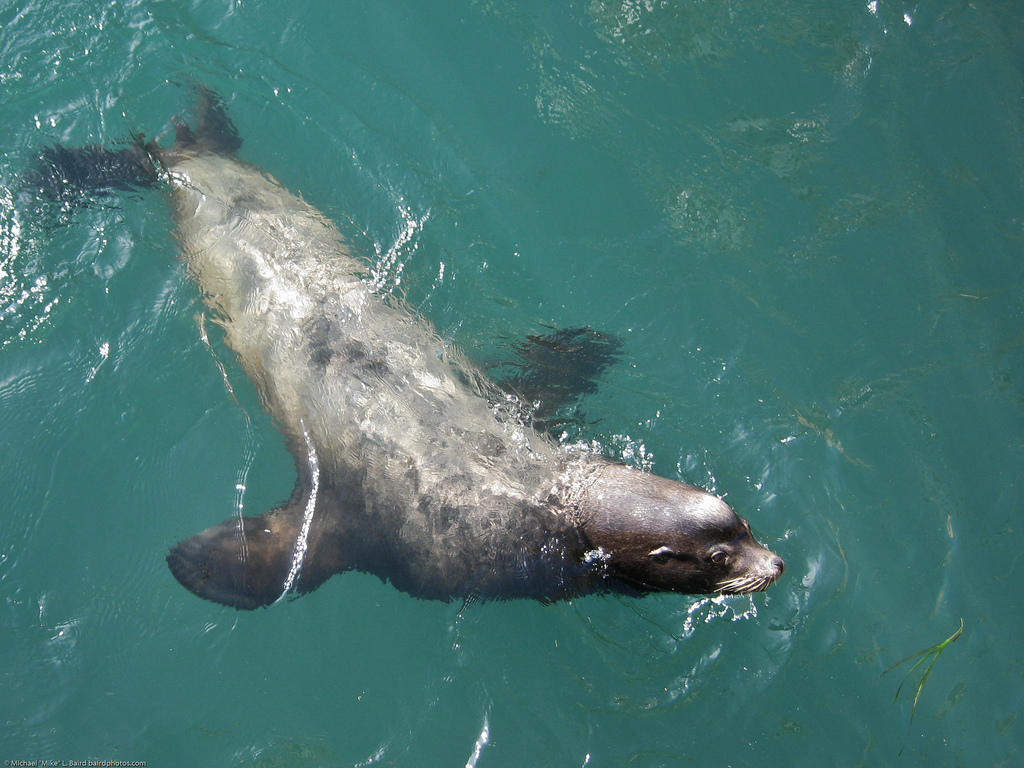
Image: https://www.flickr.com/photos/mikebaird/ Mike Baird / CC BY 2.0
California Sea Lion (Zalophus californianus)
A medium large eared seal: males are much larger than females and develop a raised forehead crest (sagittal crest) with age, often appearing lighter on the crown. Unlike true seals, otariids have visible external ear fla
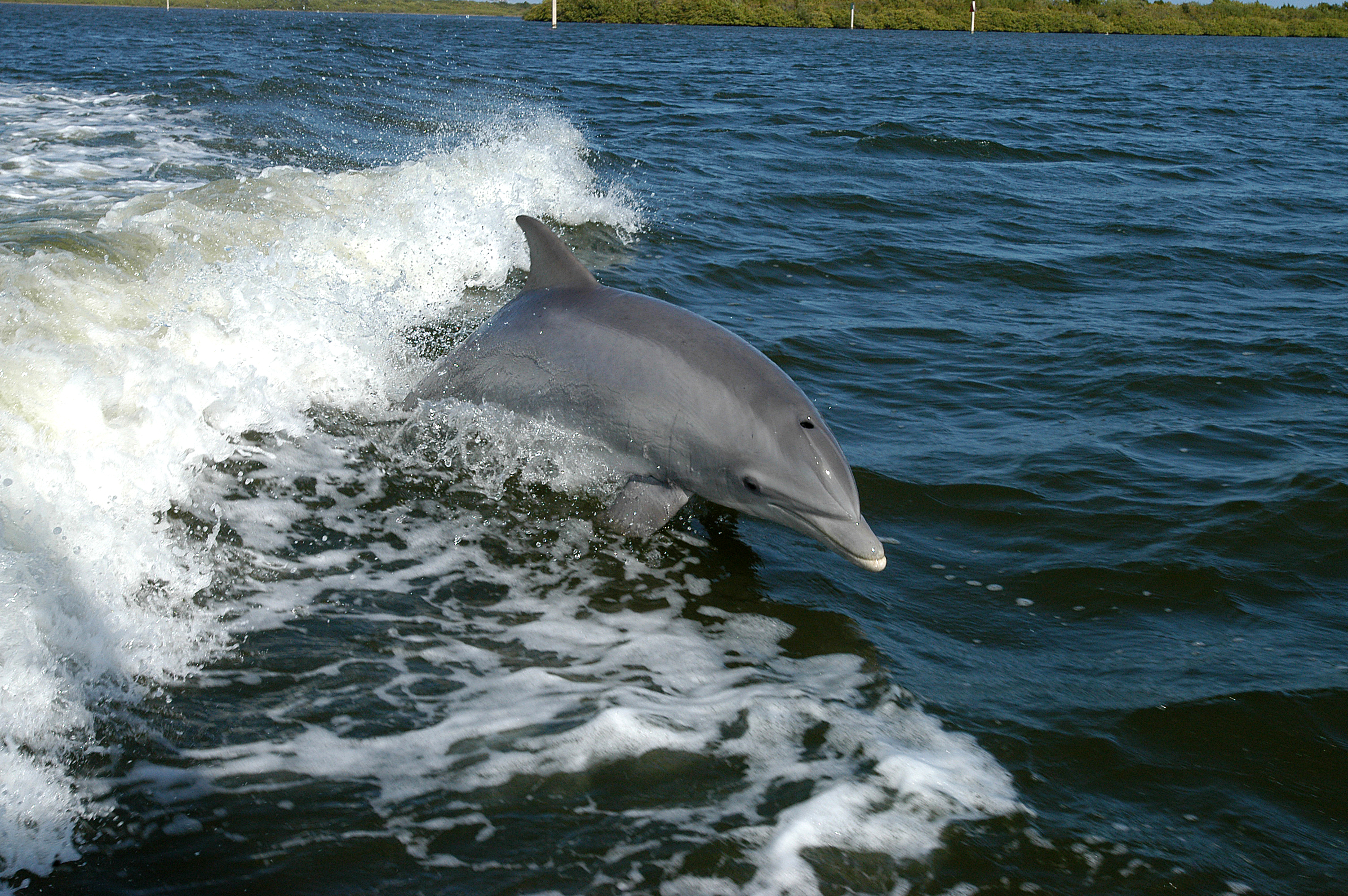
Image: NASA / Public domain
Common Bottlenose Dolphin (Tursiops truncatus)
A robust grey dolphin with a short, distinct beak and a curved (falcate) dorsal fin. NOAA Fisheries reports lengths of about 6 to 13 feet (roughly 2 to 4 m) and weights of about 300 to 1,400 pounds, with coastal and offs